
Other Plants of Alaska
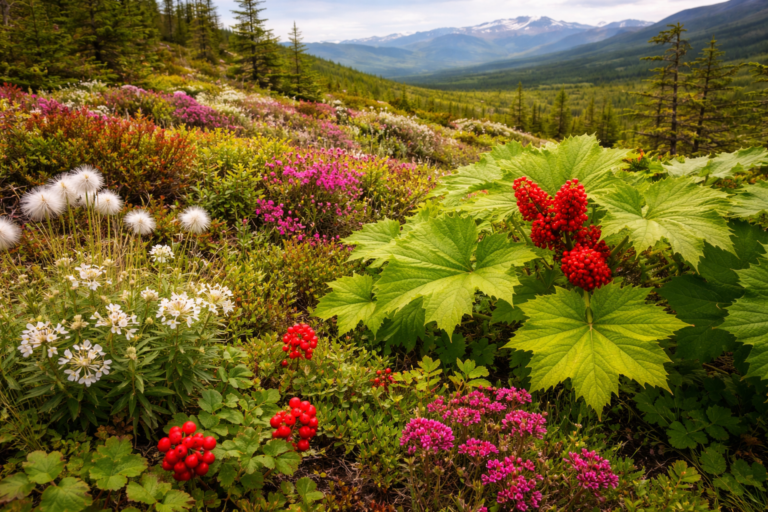
Not all plants in Alaska fall into berries, flowers, or herbs. Across the state, entire groups of plants shape the landscape — from dense shrubs to low-growing tundra vegetation and even species that require caution.
These plants are part of what makes Alaska’s ecosystems function. They cover the ground, stabilize soil, provide habitat, and define the look of each region.
Many of them are easy to overlook at first, but once you start noticing them, they are everywhere.
Types of Plants Found in Alaska
Alaska’s plant life can be grouped by how and where it grows. Soil, moisture, temperature, and elevation all play a role in what you’ll find in each area.
Shrubs of Alaska
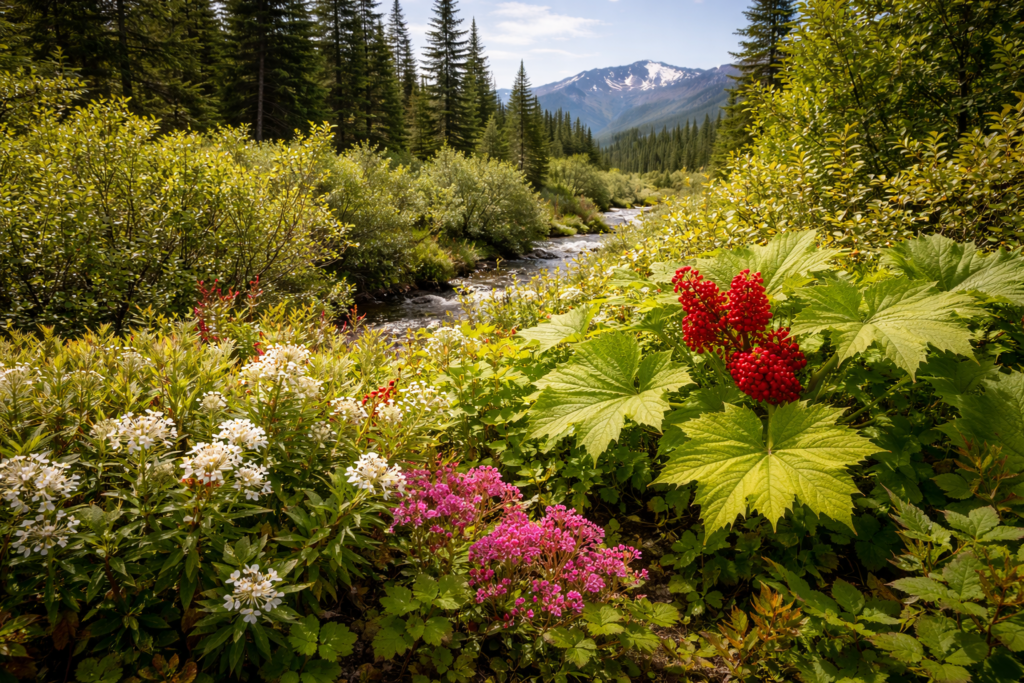
Shrubs are one of the most common plant types across Alaska. They grow in forests, along riverbanks, and across open landscapes, often forming dense patches or low thickets.
Examples include Dwarf Birch, Alaska Willow, and Sitka Alder. Some shrubs stay low to the ground in colder regions, while others grow taller in protected areas.
Shrubs are especially important in Alaska’s ecosystems. They provide food and cover for wildlife and are commonly found along trails, waterways, and forest edges.
Tundra Plants of Alaska
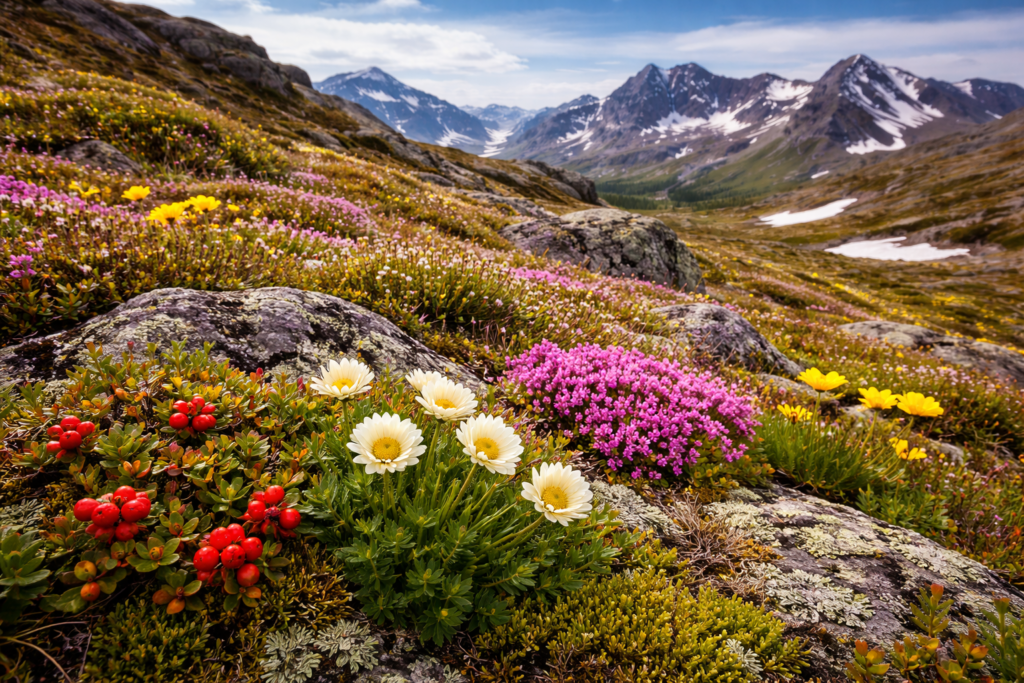
Tundra plants grow in some of the harshest environments in the state, including Arctic and alpine regions. These plants are typically low-growing and adapted to cold temperatures, wind exposure, and shallow or frozen soils.
Examples include Moss Campion, Arctic Willow, Mountain Avens, and Purple Saxifrage.
Many tundra plants grow close to the ground to retain heat and avoid wind damage. Despite the short growing season, they are highly resilient and spread across large open areas.
Dangerous Plants of Alaska
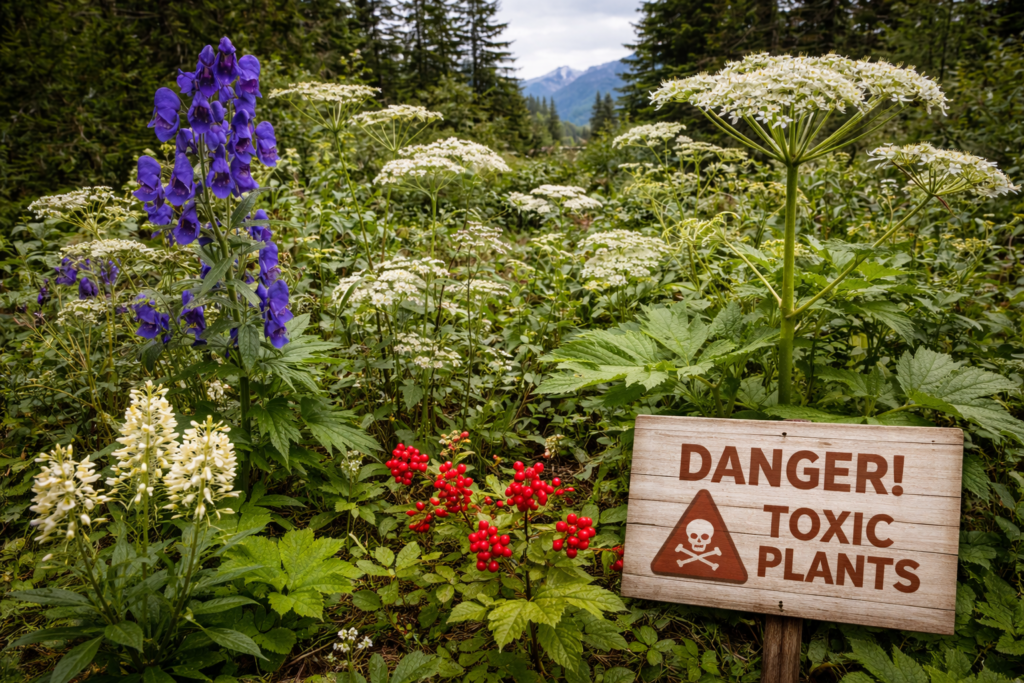
Some plants in Alaska require caution. While they are a natural part of the landscape, they can be harmful if touched or consumed.
Examples include Water Hemlock, Monkshood, Baneberry, and Cow Parsnip.
These plants may cause illness, skin irritation, or more serious reactions depending on the species.
Dangerous plants are often found in the same environments as edible or harmless plants, which makes identification important when exploring outdoors.
Where These Plants Grow
These plant types are found across nearly every region of Alaska, including boreal forests, tundra and alpine zones, riverbanks and wetlands, coastal rainforest environments, and open meadows.
Plant distribution varies widely depending on moisture, soil type, and climate conditions.
Why These Plants Matter
These plants form the foundation of Alaska’s ecosystems.
They support wildlife habitats, help stabilize soil and prevent erosion, grow in areas where few other plants can survive, and shape the landscape across regions. Even when they are not the main focus, they play a major role in how Alaska looks and functions.
Explore Other Plants of Alaska:
Below are the different types of plants that don’t fall into berries, flowers, or herbs. Each category includes species commonly found across Alaska, along with where they grow and how to recognize them.
Shrubs of Alaska
Devil’s Club — Oplopanax horridus
Sitka Alder — Alnus viridis subsp. sinuata
Alaska Willow — Salix alaxensis
Dwarf Birch — Betula nana
Bog Blueberry — Vaccinium uliginosum
Crowberry — Empetrum nigrum
Soapberry — Shepherdia canadensis
Bog Labrador Tea — Rhododendron groenlandicum
Alaska Spirea — Spiraea stevenii
Shrubby Cinquefoil — Dasiphora fruticosa
Tundra Plants
Moss Campion — Silene acaulis
Arctic Willow — Salix arctica
Mountain Avens — Dryas octopetala
Arctic Poppy — Papaver radicatum
Bearberry — Arctostaphylos uva-ursi
Alpine Azalea — Kalmia procumbens
Bog Rosemary — Andromeda polifolia
Lapland Rosebay — Rhododendron lapponicum
Purple Saxifrage — Saxifraga oppositifolia
Arctic Lupine — Lupinus arcticus
Dangerous Plants
Monkshood — Aconitum delphiniifolium
Poison Hemlock — Conium maculatum
Water Hemlock — Cicuta douglasii
Cow Parsnip — Heracleum maximum
Death Camas — Zigadenus elegans
False Hellebore — Veratrum viride
Baneberry — Actaea rubra
Bog Rosemary — Andromeda polifolia
Foxglove — Digitalis purpurea
Lupine — Lupinus nootkatensis
Black Twinberry — Lonicera involucrata
Red Elderberry — Sambucus racemosa