
Willow Trees in Alaska
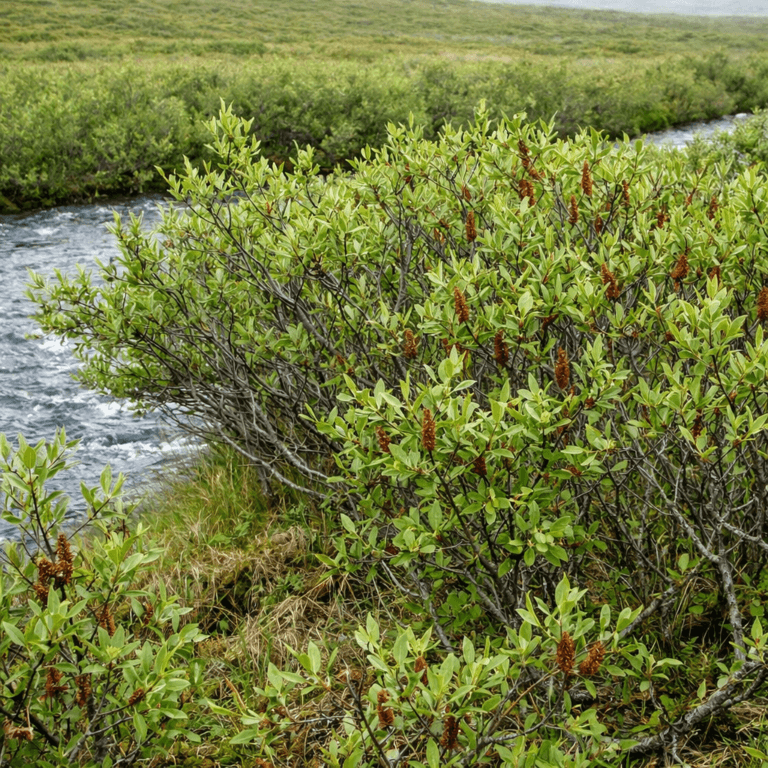
Willow in Alaska
Willow is one of the most important and widespread plants in Alaska. It grows low in tundra regions and tall along rivers and wetlands. In some places it forms dense thickets; in others it hugs the ground to survive wind and cold. In Alaska, willow is not just one type of plant. It includes a wide range of species that grow as dwarf shrubs, medium-sized brush, or small trees depending on the environment. If you’ve seen moose browsing along a riverbank, they were likely feeding on willow. It may not look dramatic, but it quietly supports much of Alaska’s wildlife.
Where Willow Grows
Willow can be found in:
• Interior Alaska
• Arctic tundra
• River corridors
• Wetlands
• Floodplains
• Recently disturbed ground
It thrives in moist soil and areas with good sunlight. Along braided rivers, willow often forms thick shrub layers and tree-like stands that stabilize banks and protect young vegetation. In tundra, it stays low and spreads as dwarf shrubs, adapted to wind and cold.
Identifying Willow
There are many species of willow in Alaska, but most share:
• Narrow, lance-shaped leaves
• Flexible branches
• Smooth gray or reddish bark
• Shrub or small tree form
Some tundra willows grow only a few inches tall, creeping along the ground. Others, especially along rivers and wetlands, can grow into tall shrubs or small trees reaching 20 feet or more. Growth form depends almost entirely on location and conditions.
Wildlife Value
Willow is one of the most important browse plants in Alaska. It provides:
• Primary winter food for moose
• Cover for birds
• Habitat for small mammals
• Erosion control along waterways
Without willow, many ecosystems would look very different.
Traditional and Practical Uses
Willow has been used historically for:
• Basket weaving
• Simple tools
• Structural supports
• Firewood
The flexible branches make it useful for binding and weaving. Willow bark also contains salicin, a natural compound historically associated with pain relief, though it should not be used casually without proper knowledge.
A Keystone Plant
Willow is not flashy. It doesn’t dominate skylines like spruce or bloom like fireweed. But it holds ecosystems together. It feeds animals. It protects rivers. It stabilizes soil after floods. Whether growing as a low tundra shrub or a small riverside tree, willow is one of Alaska’s quiet backbone species.