
Elderberry ( Red Elderberry) In Alaska
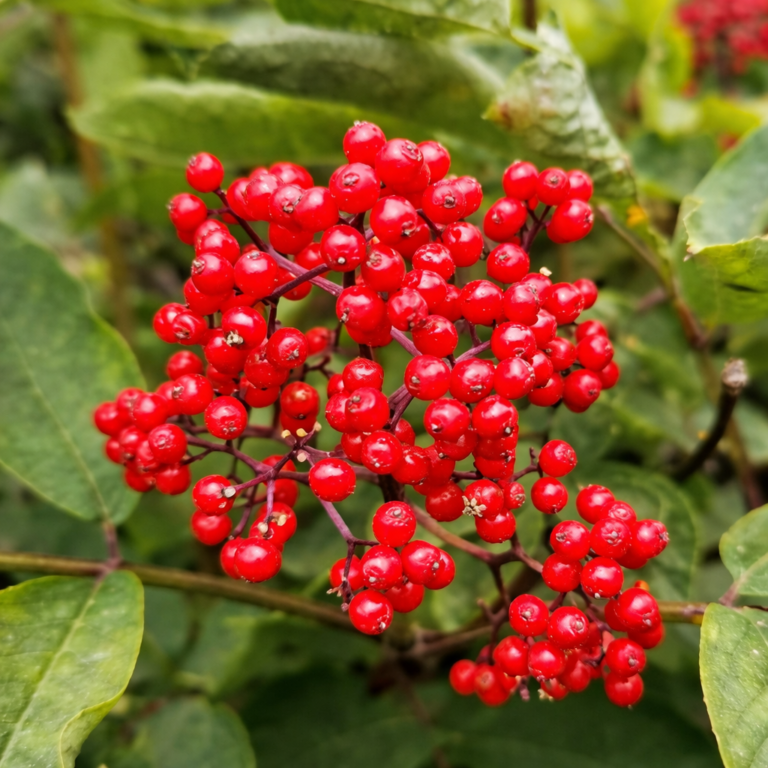
Red Elderberry in Alaska
Red elderberry is a common shrub in parts of Alaska, known for its bright red berry clusters and widespread growth in forested and coastal areas. While it may look similar to edible berries, it is important to understand that it can be toxic if handled or consumed improperly.
What It Is
Red Elderberry (Sambucus racemosa) is a deciduous shrub that produces clusters of small red berries.
It is often found in the wild and is sometimes mistaken for other edible berry-producing plants.
Where It Grows
Red elderberry is commonly found in:
Coastal regions of Alaska
Southeast Alaska rainforest environments
Southcentral Alaska forests
Roadsides and disturbed areas
Forest edges and open clearings
It thrives in moist soils and areas with partial sunlight.
Plant Characteristics
Red elderberry grows as a multi-stem shrub, typically reaching 6 to 12 feet in height.
Key features include:
Clusters of bright red berries
Compound leaves with multiple leaflets
Smooth grayish bark
Bushy, spreading growth pattern
Its berry clusters are one of the most recognizable features.
Flowers & Seasonal Changes
Red elderberry blooms in late spring to early summer with clusters of small white flowers.
By mid to late summer, these flowers develop into bright red berry clusters.
The berries often stand out against the green foliage, making the plant easy to spot.
Toxicity & Danger
Red elderberry is considered toxic when raw.
The berries, stems, leaves, and seeds contain compounds that can produce cyanide when metabolized.
Eating raw berries can cause:
Nausea and vomiting
Stomach cramps
Diarrhea
Weakness or dizziness
In larger amounts, symptoms can become more severe.
Why It’s Dangerous
Red elderberry can be risky because:
It closely resembles edible berry species
The bright red berries look appealing
It often grows near other berry-producing plants
Many people assume all berries are safe
Improper identification is one of the biggest risks.
Medicinal & Historical Notes
Red elderberry has been used traditionally in some cultures, but typically only after proper preparation such as cooking.
Cooking can reduce toxic compounds, but this process must be done correctly.
It is not considered a beginner-friendly plant and should not be consumed casually.
Identification Tips
Clusters of small, bright red berries
Shrub with multiple stems
Compound leaves with several leaflets
White flower clusters in early season
Berries grow in dense, cone-shaped clusters
Its bright color and cluster shape make it easier to recognize.
Why It Matters in Alaska
Red elderberry is important to recognize because:
It is commonly found in accessible areas
It can be mistaken for edible berries
It poses a risk if eaten raw
It appears in many regions people explore
Understanding plants like red elderberry helps prevent mistakes when foraging or spending time outdoors.