
Dwarf Birch in Alaska
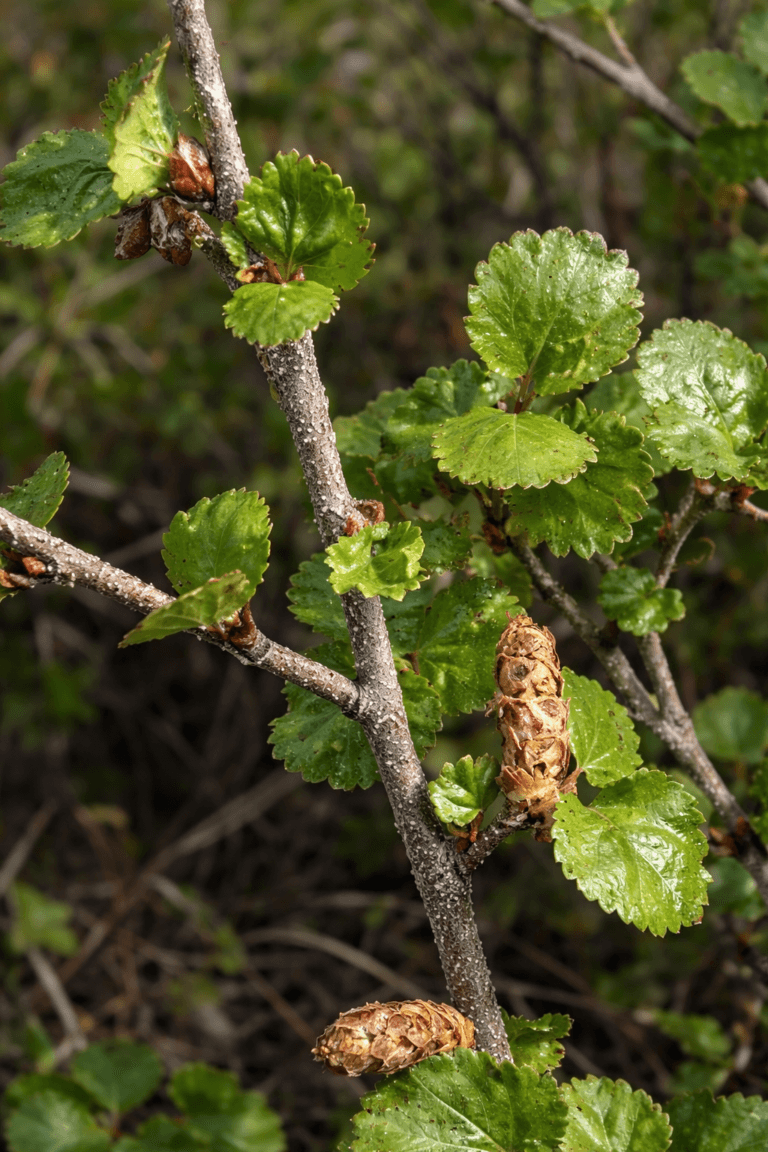
Dwarf Birch in Alaska
Dwarf birch is a low-growing shrub found in tundra and northern regions of Alaska. Unlike tall paper birch trees, dwarf birch hugs the ground to survive wind and cold. It is part of the classic Arctic plant community.
Where Dwarf Birch Grows
Dwarf birch is found in:
• Arctic tundra
• Western Alaska
• Open northern slopes
• Cold, exposed environments
It tolerates extreme cold and poor soil.
Identifying Dwarf Birch
Look for:
• Small rounded leaves
• Low shrub form
• Thin flexible stems
• Yellow fall foliage
It rarely grows taller than a few feet.
Shrub Growth & Ground Cover
Dwarf birch grows as a spreading, ground-level shrub rather than anything resembling a tree. It often forms low mats or patches across the tundra, weaving between mosses, lichens, and other low plants.
Instead of growing upward, it spreads outward, staying close to the ground where wind is less intense and temperatures are slightly more stable. This growth pattern is what allows it to survive in some of the harshest environments in Alaska.
In many tundra areas, it becomes part of a continuous shrub layer that shapes the look and feel of the landscape.
Wildlife & Landscape Value
Dwarf birch provides:
• Browse for caribou
• Shelter for small mammals
• Soil stabilization in tundra
It is an important food source in northern ecosystems and helps hold fragile ground together in areas where erosion can happen quickly.
A Low but Vital Plant
Though small, dwarf birch plays a major role in Arctic landscapes. It represents adaptation — growing low to avoid wind damage and conserve heat.
It’s one of those plants that doesn’t stand out at first glance, but once you notice it, you realize how much of the tundra it quietly covers.