
Bearberry
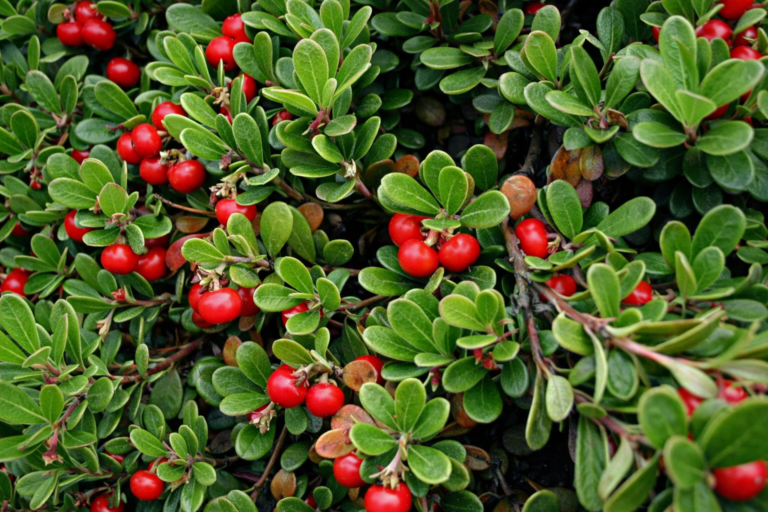
Bearberry in Alaska
Bearberry is a tough, low-growing shrub found across Alaska’s tundra, forests, and coastal landscapes. It produces small red berries and spreads across the ground in dense mats, making it one of the most recognizable ground-cover plants in the state.
What It Is
Bearberry (Arctostaphylos uva-ursi), also known as kinnikinnick, is an evergreen shrub that grows close to the ground. It forms thick mats that can cover large areas, especially in dry or rocky environments.
Its name comes from the fact that bears are known to eat the berries.
Where It Grows
Bearberry is widespread across Alaska and thrives in well-drained, open environments. It commonly grows:
- In tundra and alpine areas
- Along coastal regions
- In sandy or rocky soils
- In open forests and clearings
It often grows alongside lichens, mosses, and low shrubs like dwarf birch and crowberry.
Shrub Characteristics
Bearberry is a low, spreading shrub that typically stays under a foot tall but can spread widely.
Key features include:
- Small, thick, glossy evergreen leaves
- Reddish creeping stems
- Dense, mat-forming growth
- Bright red berries
Its leathery leaves help it retain moisture in dry and windy conditions.
Flowers & Seasonal Changes
Bearberry blooms in late spring to early summer, producing small, bell-shaped flowers that are pale pink or white.
By late summer, these flowers develop into red berries that often remain on the plant into fall.
The leaves stay green year-round, even under snow.
Edibility & Use
Bearberries are technically edible but have a dry, mealy texture and very mild flavor. They are not typically eaten fresh in large amounts.
However, they have been used traditionally:
- Mixed with other berries
- Dried and stored
- Occasionally used in simple preparations
A light use in recipes might include combining them with sweeter berries to balance flavor.
Medicinal & Traditional Use
Bearberry has a long history of traditional use in northern regions.
It has been used for:
- Urinary tract support (in controlled, prepared forms)
- Mild antiseptic properties
- Traditional teas made from leaves
The leaves, rather than the berries, are the primary part used medicinally.
Identification Tips
- Low, creeping ground-cover shrub
- Small, shiny evergreen leaves
- Red berries growing close to the ground
- Pink or white bell-shaped flowers
It can resemble other low shrubs, but its glossy leaves and trailing growth pattern are strong identifiers.
Why It Matters in Alaska
Bearberry plays an important role in Alaska’s ecosystems:
- Provides food for wildlife, including bears and birds
- Helps stabilize soil in exposed areas
- Thrives in dry, nutrient-poor environments
It’s one of the most dependable ground-cover plants across Alaska and a key part of tundra and coastal plant communities.