
Lapland Rosebay
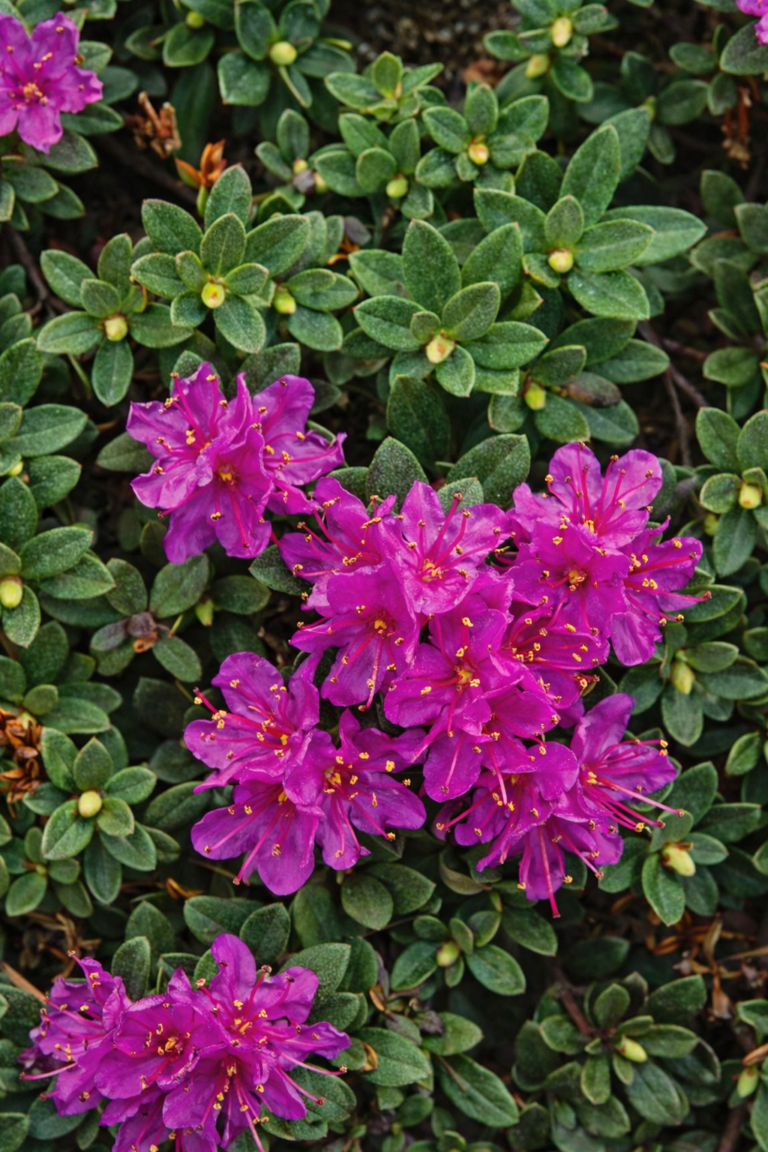
Lapland Rosebay in Alaska
Lapland Rosebay is a small but striking shrub found across Alaska’s tundra and alpine regions. Its purple-pink flowers bloom low to the ground, adding color to some of the harshest environments in the state.
What It Is
Lapland Rosebay (Rhododendron lapponicum) is a low-growing evergreen shrub adapted to cold, windy, and nutrient-poor conditions. It stays close to the ground, often forming small mats or patches.
Despite its size, it produces vibrant blooms that stand out against the muted tones of tundra landscapes.
Where It Grows
Lapland Rosebay is found primarily in northern and alpine areas of Alaska. It commonly grows:
- In tundra and Arctic regions
- On rocky slopes and alpine ridges
- In mossy, well-drained soils
- In exposed, windy environments
It often grows alongside mosses, lichens, dwarf willows, and other tundra plants.
Shrub Characteristics
This shrub is very low-growing, often only a few inches tall, spreading outward rather than upward.
Key features include:
- Small, thick evergreen leaves
- Woody, creeping stems
- Compact, mat-like growth
- Bright purple to pink flowers
Its low profile helps protect it from wind and extreme cold.
Flowers & Seasonal Changes
Lapland Rosebay blooms in late spring to early summer, producing clusters of small purple or pink flowers.
The flowers are one of the more vibrant colors found in tundra environments and can stand out dramatically against moss and rock.
Because it is evergreen, its leaves remain year-round, even under snow cover.
Edibility & Use
Lapland Rosebay is not considered an edible plant and is not used as a food source.
Like many rhododendrons, parts of the plant can be toxic if consumed.
Medicinal & Traditional Notes
There is limited traditional use of Lapland Rosebay in Alaska, and it is generally not used medicinally compared to other native plants.
Due to its potential toxicity, it is not typically harvested for remedies.
Identification Tips
- Very low-growing shrub, often just inches tall
- Purple or pink flowers in small clusters
- Small, thick evergreen leaves
- Found in tundra or alpine terrain
It can be mistaken for other small flowering tundra plants, but its woody structure and evergreen leaves help set it apart.
Why It Matters in Alaska
Lapland Rosebay plays an important role in tundra ecosystems:
- Helps stabilize fragile soils
- Survives extreme Arctic conditions
- Adds seasonal color to otherwise sparse landscapes
It’s a good example of how plants adapt to Alaska’s harshest environments while still producing vibrant blooms.