
Poison Hemlock
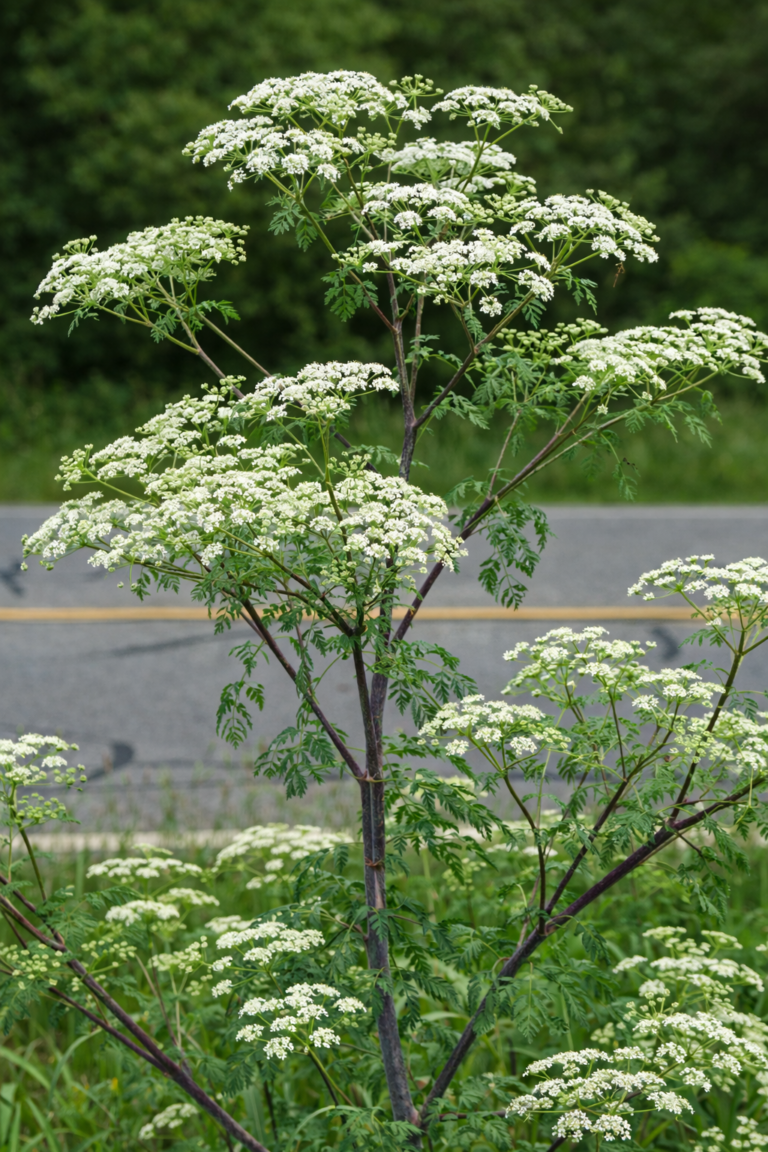
Poison Hemlock in Alaska
Poison Hemlock is one of the most dangerous plants you can encounter. It may look harmless—similar to parsley or other common plants—but it is extremely toxic and potentially fatal if misidentified or consumed.
What It Is
Poison Hemlock (Conium maculatum) is a tall, fast-growing plant in the carrot family. It produces clusters of small white flowers and can spread aggressively in open areas.
It is infamous for its toxicity and historical use as a poison.
Where It Grows
Poison Hemlock is found in parts of Alaska, especially in disturbed or moist environments. It commonly grows:
- Along roadsides and trails
- Near riverbanks and streams
- In fields and open areas
- Around disturbed soil or construction zones
It thrives where soil has been disrupted.
Plant Characteristics
Poison Hemlock can grow 3 to 8 feet tall, making it stand out once mature.
Key features include:
- White umbrella-shaped flower clusters (umbels)
- Smooth, hollow stems with purple blotches or streaks
- Fern-like, finely divided leaves
- Strong, unpleasant odor when crushed
The purple-spotted stem is one of the most important identifiers.
Flowers & Seasonal Changes
The plant blooms in summer, producing wide clusters of tiny white flowers.
These flowers closely resemble other plants in the same family, which is what makes it so dangerous.
Looks Similar To (Important Warning)
Poison Hemlock is often confused with plants like yarrow, wild carrot, or parsley—but they are very different once you know what to look for.
Key Differences from Yarrow
Yarrow:
- Flat, tight flower clusters (more compact)
- Feathery, soft leaves
- No purple markings on stems
- Usually shorter and more bushy
Poison Hemlock:
- Larger, umbrella-shaped flower clusters (more open)
- Leaves resemble parsley or carrot tops
- Smooth stems with purple blotches (major warning sign)
- Much taller (often 5–8 feet)
The One Thing You Never Ignore
If you see a plant that looks similar to something edible but has:
Purple-spotted stems — do not touch it
That is one of the clearest signs of Poison Hemlock.
Toxicity & Danger
Poison Hemlock is extremely toxic in all parts of the plant.
It contains alkaloids that affect the nervous system, leading to:
- Muscle weakness
- Tremors
- Respiratory failure
- Paralysis
Even small amounts can be fatal.
Why It’s Dangerous
Poison Hemlock is especially dangerous because:
- It closely resembles edible plants
- It grows in accessible, everyday environments
- All parts of the plant are toxic
- It is easy to misidentify
Misidentification is the biggest risk.
Medicinal & Historical Notes
Historically, Poison Hemlock was used as a poison.
It has no safe medicinal use in the wild and should never be used for remedies.
Identification Tips
- Purple-spotted or streaked stems
- White umbrella-shaped flower clusters
- Tall, hollow stalks
- Fern-like leaves
If you see those purple blotches—walk away.
Why It Matters in Alaska
Poison Hemlock is important to recognize for safety:
- It poses a serious risk to people and pets
- It grows in common, accessible areas
- It is one of the easiest plants to misidentify
Knowing how to identify Poison Hemlock can prevent dangerous and potentially fatal mistakes.