
Arctic Poppy
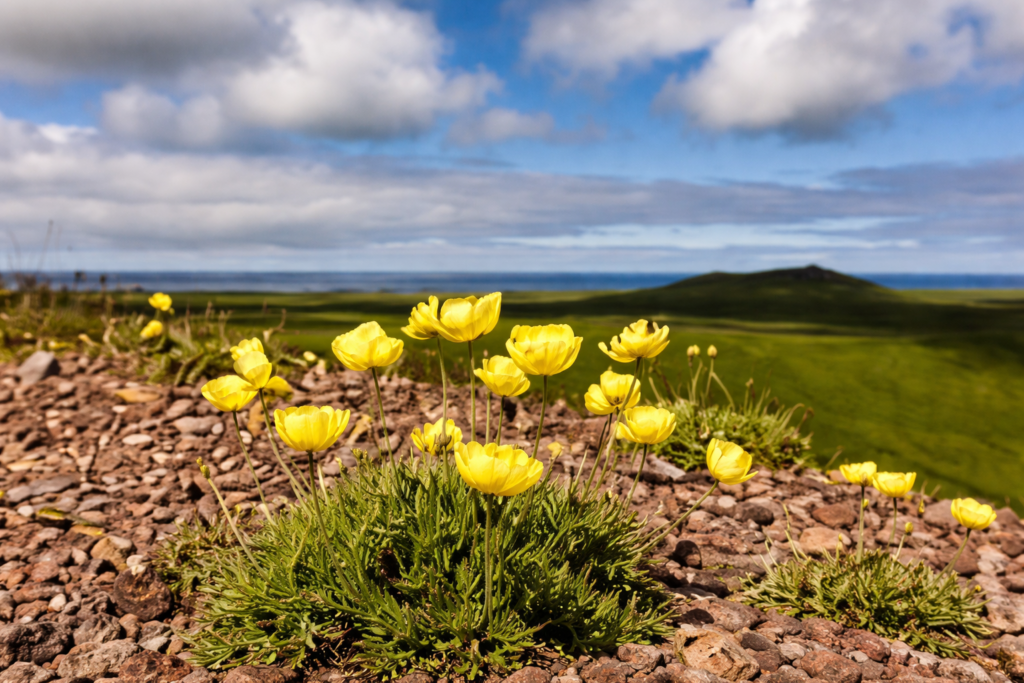
Arctic Poppy in Alaska
Arctic Poppy is one of the most recognizable flowers in Alaska’s tundra. Its bright yellow blooms stand out against rocky, windswept ground, bringing color to some of the harshest environments in the state.
What It Is
Arctic Poppy (Papaver radicatum) is a hardy flowering plant adapted to extreme cold, wind, and short growing seasons. It grows low to the ground but sends up delicate flower stems that move with the sun.
This plant is built for survival in places where few others can grow.
Where It Grows
Arctic Poppy is found across Alaska, especially in northern and alpine regions. It commonly grows:
- In tundra and Arctic environments
- On rocky slopes and gravel areas
- In alpine zones above tree line
- In disturbed or exposed soils
It often grows alongside moss campion, alpine azalea, and other low tundra plants.
Plant Characteristics
Arctic Poppy is a small plant, but its flowers rise above the ground on thin stems.
Key features include:
- Bright yellow, cup-shaped flowers
- Hairy stems that help trap heat
- Deep root system anchoring into rocky soil
- Low, compact base growth
The stems are flexible and covered in fine hairs, which help protect the plant from cold and wind.
Flowers & Sun Tracking
One of the most unique features of Arctic Poppy is its ability to track the sun.
The flowers turn throughout the day to face sunlight, helping:
- Increase warmth inside the flower
- Improve pollination success
- Maximize energy during short growing seasons
This adaptation is critical for survival in Alaska’s cold climates.
Edibility & Use
Arctic Poppy is not commonly used as a food source and is not typically harvested for consumption.
While not considered highly toxic, it is not a plant used in foraging or traditional food preparation.
Medicinal & Traditional Notes
There is limited traditional use of Arctic Poppy in Alaska.
Some poppy species elsewhere have medicinal properties, but Arctic Poppy is generally valued more for its ecological role than for practical use.
Identification Tips
- Bright yellow flowers with soft, rounded petals
- Thin, hairy stems
- Low-growing base with flowers rising above
- Found in rocky, open tundra or alpine areas
Its color and sun-tracking behavior make it one of the easiest tundra flowers to identify.
Why It Matters in Alaska
Arctic Poppy plays an important role in tundra ecosystems:
- Provides nectar for pollinators
- Survives extreme Arctic conditions
- Adds color to otherwise barren landscapes
It’s one of the best examples of how plants adapt to Alaska’s shortest and toughest growing seasons.