
Mountain Avens in Alaska
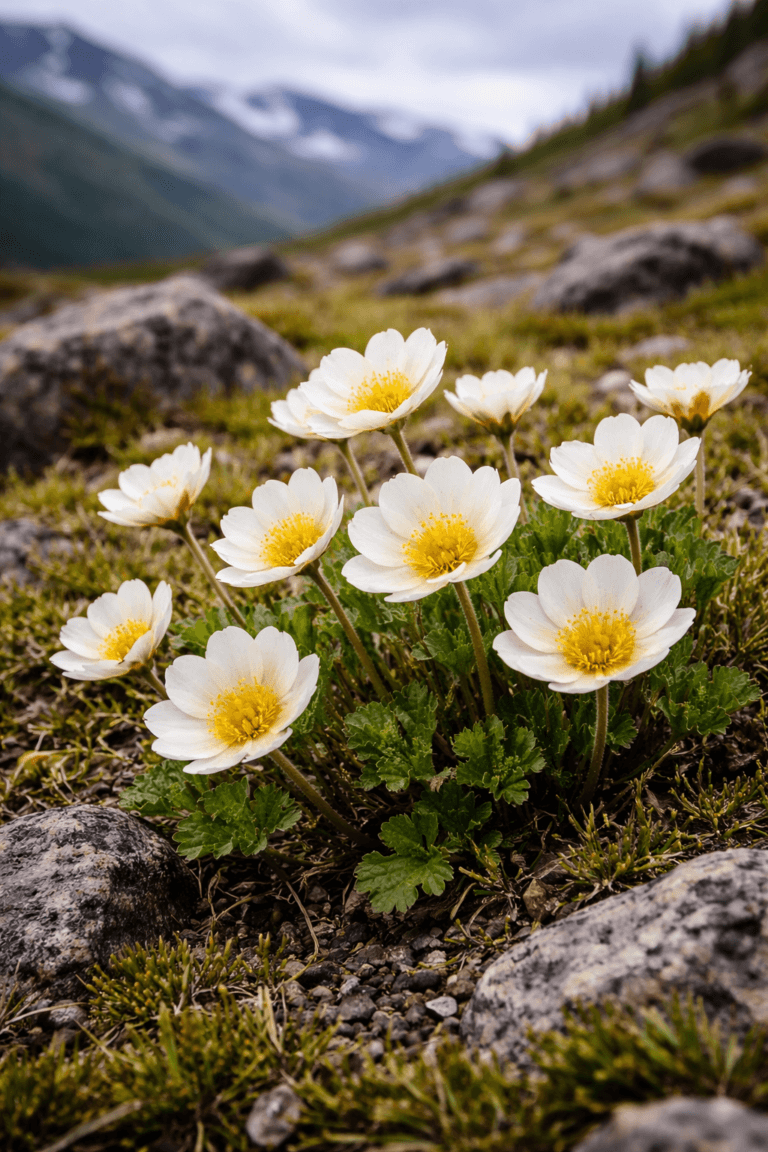
Mountain Avens in Alaska
Mountain avens is one of those flowers that looks simple at first — white petals, yellow center — but it shows up in places that are anything but easy.
You’ll see it in open tundra, on rocky slopes, and along high ridges where wind doesn’t stop and soil barely exists.
It doesn’t grow tall. It spreads low and steady, hugging the ground the way alpine plants have to.
In Alaska, it’s one of the most reliable signs you’re standing in true tundra country.
Where It Grows
Mountain avens prefers:
• Arctic tundra
• Alpine slopes
• Gravel ridges
• Well-drained, rocky soils
• Wind-exposed terrain
You’ll find it across northern Alaska and above tree line further south.
If you’re hiking and the trees disappear behind you, start watching the ground. It often forms low mats in open spaces.
It does not compete in dense vegetation. It thrives where conditions are harsh and open.
When to Notice It
Late spring through mid-summer.
Bloom timing depends on snowmelt and elevation. In lower tundra areas, flowers may appear in early June. At higher elevations, mid-summer is more common.
After blooming, the seed heads are just as recognizable — soft, feathery plumes that catch the light and wind.
Even when not in bloom, the leaves remain low and leathery against the ground.
How to Identify It
Key traits:
• White petals (often eight)
• Bright yellow center
• Low-growing, mat-forming habit
• Small, dark green leaves
• Feathery seed heads after bloom
The flower resembles a small alpine daisy, but the growth pattern is different — tight, ground-hugging, resilient.
The feathery seed heads later in the season are one of the easiest identification markers. They look almost soft and silky in the wind.
Is It Edible?
Mountain avens is not considered a common food plant in Alaska.
It isn’t part of everyday foraging and has no practical culinary use for most people.
While some tundra plants have traditional uses, mountain avens is primarily appreciated as a hardy alpine flower rather than a food source.
If you’re building an Alaska recipe collection, berries and certain mushrooms are far more practical places to focus.
Why It Matters in Alaska
Mountain avens is closely tied to tundra identity.
It grows where weather changes fast, where wind is constant, and where winters are long.
Seeing it bloom means the short growing season is in full swing.
Recognizing mountain avens helps you understand alpine Alaska — exposed, resilient, and built for extremes.
Learn more tundra and alpine species in Flowers of Alaska.