
Baneberry
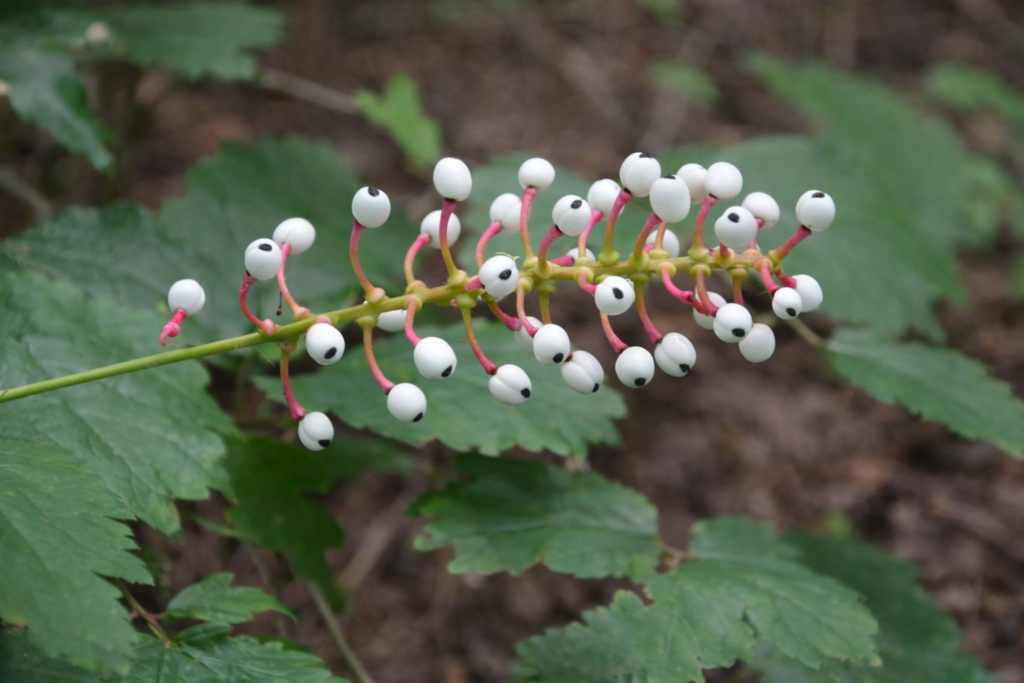
Baneberry in Alaska
Baneberry is a forest plant that produces some of the most eye-catching berries in Alaska. Its bright red or white fruits stand out against green foliage, but despite their appearance, they are toxic and should never be eaten.
What It Is
Baneberry (Actaea species), including red baneberry (Actaea rubra) and white baneberry (Actaea pachypoda), is a perennial plant found in wooded areas.
It grows low to medium height and produces clusters of berries that are visually striking but dangerous.
Where It Grows
Baneberry is found throughout Alaska, especially in forested environments. It commonly grows:
- In shaded forests and woodlands
- Along forest edges and clearings
- In moist, rich soil
- In areas with partial sunlight
It prefers cool, shaded conditions.
Plant Characteristics
Baneberry typically grows 1 to 3 feet tall and has a soft, leafy structure.
Key features include:
- Bright red or white berries in clusters
- Thin stems supporting the fruit
- Broad, divided leaves
- Low to mid-height growth
White baneberry is sometimes called “doll’s eyes” because of its white berries with dark centers.
Flowers & Seasonal Changes
Baneberry blooms in late spring to early summer with small white flowers.
These develop into berries by mid to late summer, which remain visible into early fall.
Red vs White Baneberry (Key Differences)
There are two main types of baneberry you may encounter in Alaska: red baneberry and white baneberry. Both are toxic, but they look noticeably different once you know what to look for.
Red Baneberry (Actaea rubra)
- Produces bright red berries
- Berries grow in tight clusters
- More commonly found across Alaska
- Can be mistaken for edible red berries
White Baneberry (Actaea pachypoda)
- Produces white berries with a dark dot (often called “doll’s eyes”)
- Berries are more spaced out and distinct
- Has thicker, often reddish stems
- Less common in Alaska but still present in some areas
The white berries with dark centers make this one easier to identify.
Toxicity & Danger
Baneberry is toxic, especially the berries.
Consumption can cause:
- Burning sensation in the mouth
- Nausea and stomach cramps
- Dizziness
In larger amounts, it can affect the heart and nervous system.
While not always immediately fatal, it can cause serious illness and should be treated as a dangerous plant.
Why It’s Dangerous
Baneberry is especially risky because:
- The berries look appealing and edible
- It grows in common hiking and forest areas
- It can be confused with safe berries
The bright color is misleading and often draws attention.
Important Safety Note
Both red and white baneberry are toxic. The color difference does not make one safer than the other.
If you see:
- Bright red clustered berries
- OR white berries with dark centers
Do not consume them.
Medicinal & Traditional Notes
Baneberry has very limited traditional use and is generally avoided due to its toxicity.
It is not considered a safe or practical medicinal plant.
Identification Tips
- Clusters of bright red or white berries
- Berries held on thin stems
- Broad, jagged leaves
- Grows in shaded forest environments
If you cannot confidently identify a berry in the wild, do not eat it.
Why It Matters in Alaska
Baneberry plays a role in forest ecosystems but is most important for awareness:
- It highlights the risks of wild berry identification
- It grows in common outdoor areas
- It reinforces the importance of caution when foraging
Understanding plants like baneberry helps prevent avoidable mistakes in the wild.