
Black Twinberry in Alaska
Black Twinberry in Alaska
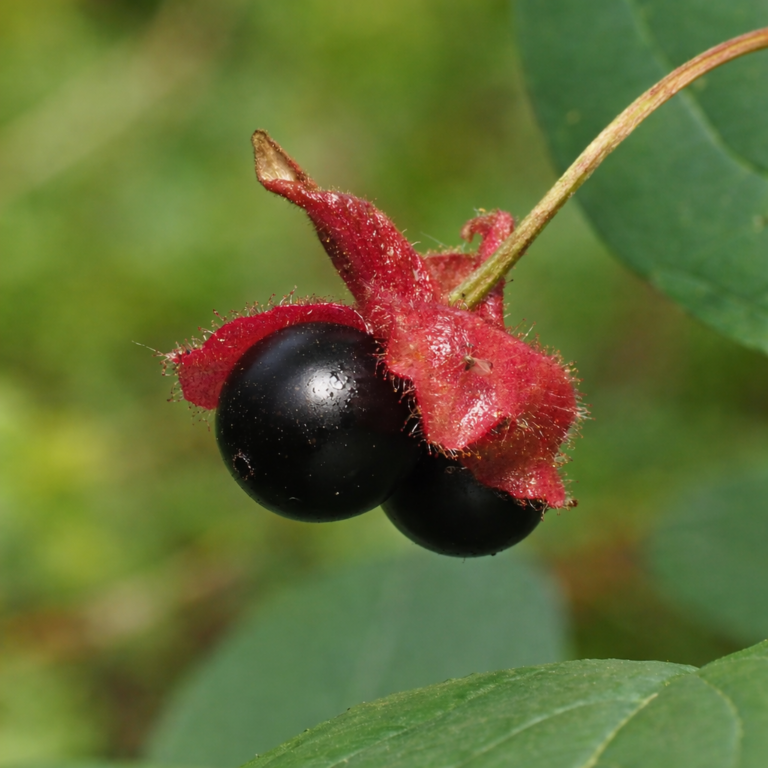
Black twinberry is a native shrub found across much of Alaska, recognized by its paired black berries and distinctive red bracts. While it may look interesting or even edible at first glance, it is considered a toxic plant and should not be consumed.
What It Is
Black Twinberry (Lonicera involucrata) is a deciduous shrub in the honeysuckle family that produces pairs of dark berries.
It is known for its unique appearance, with two berries growing together from a single point.
Where It Grows
Black twinberry is commonly found in:
Moist forests and woodland edges
Riverbanks and stream corridors
Coastal regions of Alaska
Southcentral and Interior Alaska
Shaded or partially shaded areas
It prefers damp soil and is often found near water.
Plant Characteristics
Black twinberry grows as a medium-sized shrub, typically reaching 3 to 10 feet in height.
Key features include:
Pairs of glossy black berries
Bright red or maroon bracts beneath the berries
Opposite leaves along the stem
Soft, slightly fuzzy leaves
Bushy, spreading growth pattern
The red bracts are one of the easiest ways to identify it.
Flowers & Seasonal Changes
Black twinberry produces small yellow flowers in late spring to early summer.
These flowers develop into paired black berries by mid to late summer.
The red bracts remain visible beneath the berries, creating a strong color contrast.
Toxicity & Danger
Black twinberry is considered mildly to moderately toxic.
The berries can cause:
Nausea and vomiting
Diarrhea
Stomach discomfort
Weakness if consumed in larger amounts
While not typically deadly, it should still be avoided.
Why It’s Dangerous
Black twinberry can be risky because:
It resembles edible berries at a glance
The berries grow in pairs, which can attract curiosity
It often grows near other edible plants
People unfamiliar with it may assume it is safe
Misidentification is the main concern.
Medicinal & Historical Notes
Some Indigenous groups have historically used parts of the plant in controlled ways, but the berries themselves are not considered a safe food source.
It is not recommended for casual or experimental use.
Identification Tips
Pairs of black berries growing together
Bright red bracts directly beneath the berries
Yellow flowers earlier in the season
Opposite leaves on the stem
Found in moist, shaded environments
The combination of black berries and red bracts is a strong identifier.
Why It Matters in Alaska
Black twinberry is important to recognize because:
It is widespread and easy to encounter
It can be mistaken for edible berries
It adds to the list of potentially harmful plants
It commonly grows in areas people explore
Knowing how to identify plants like black twinberry helps prevent mistakes when foraging or spending time outdoors.