
Lupine in Alaska
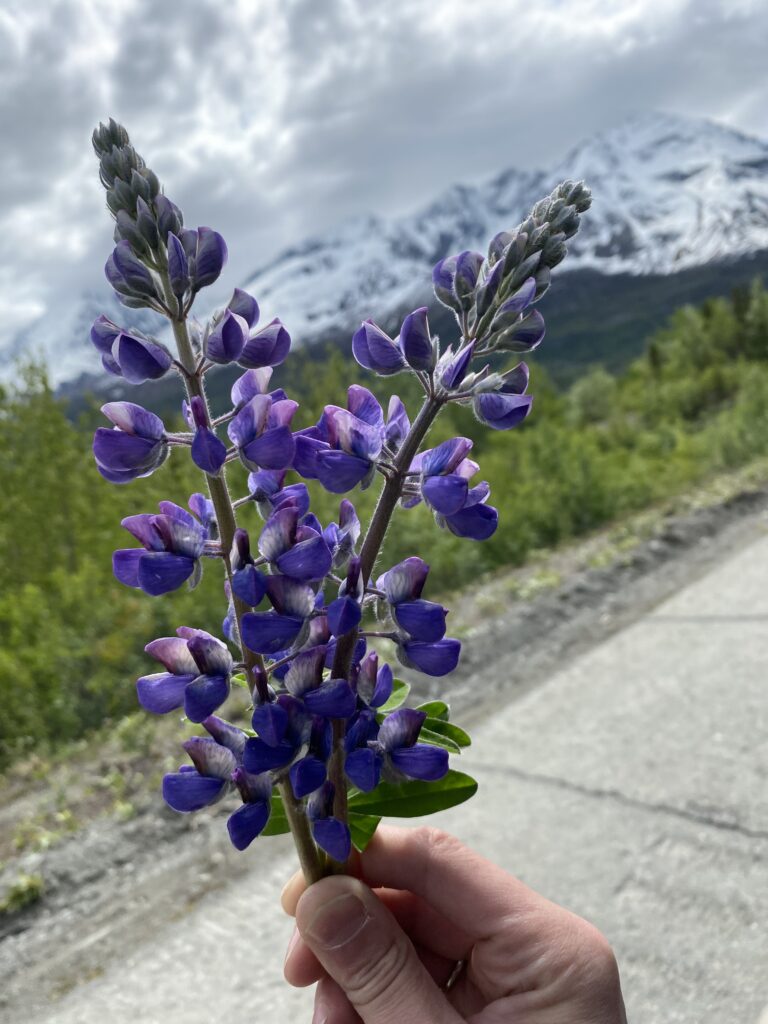
Lupine in Alaska
Lupine is one of the most recognizable summer wildflowers in Alaska. Tall spikes of purple, blue, and sometimes pink blooms rise above open fields and roadside clearings. When lupine is in bloom, it’s usually a sign that summer has fully arrived.
While often called Arctic lupine, much of what you see along highways and disturbed areas is introduced species that have spread across the state.
Where It Grows
Lupine commonly grows in:
• Roadside clearings
• Open meadows
• Recently disturbed ground
• Gravel bars and river edges
It thrives in full sunlight and often appears in large, dense patches.
Identification
Lupine can be identified by:
• Tall, upright flower spikes
• Pea-shaped blossoms
• Palm-like leaf clusters radiating from a central point
• Purple to blue coloration (sometimes pink or white)
The flowers bloom upward along the stalk over several weeks, starting at the base and working toward the top.
Why It Matters in Alaska
Lupine plays a role in Alaska’s landscape beyond its appearance. It helps improve soil quality by fixing nitrogen and is often one of the first plants to establish in disturbed areas. It also supports pollinators like bees during the short growing season.
In many places, especially along highways, lupine has become part of the seasonal look of Alaska, even though it is not native to every region.
Is Lupine Dangerous?
Lupine is not safe to eat. The plant contains toxic compounds that can affect the nervous system if ingested.
Eating lupine can cause nausea, dizziness, slowed heart rate, and in more serious cases, breathing issues. While it is not harmful to touch, it should always be avoided as a food source. Because it grows widely in easy-to-access areas, it can pose a risk to pets, livestock, and children if consumed.
Foraging Note
Lupine is not an edible plant and should never be included in foraging. If you are gathering wild foods in Alaska, proper identification is important, especially in areas where multiple species grow close together.
A simple Alaska wildflower field guide is one of the most useful tools to carry, especially when you’re learning to distinguish between edible and non-edible plants in the same environment.