
Death Camas
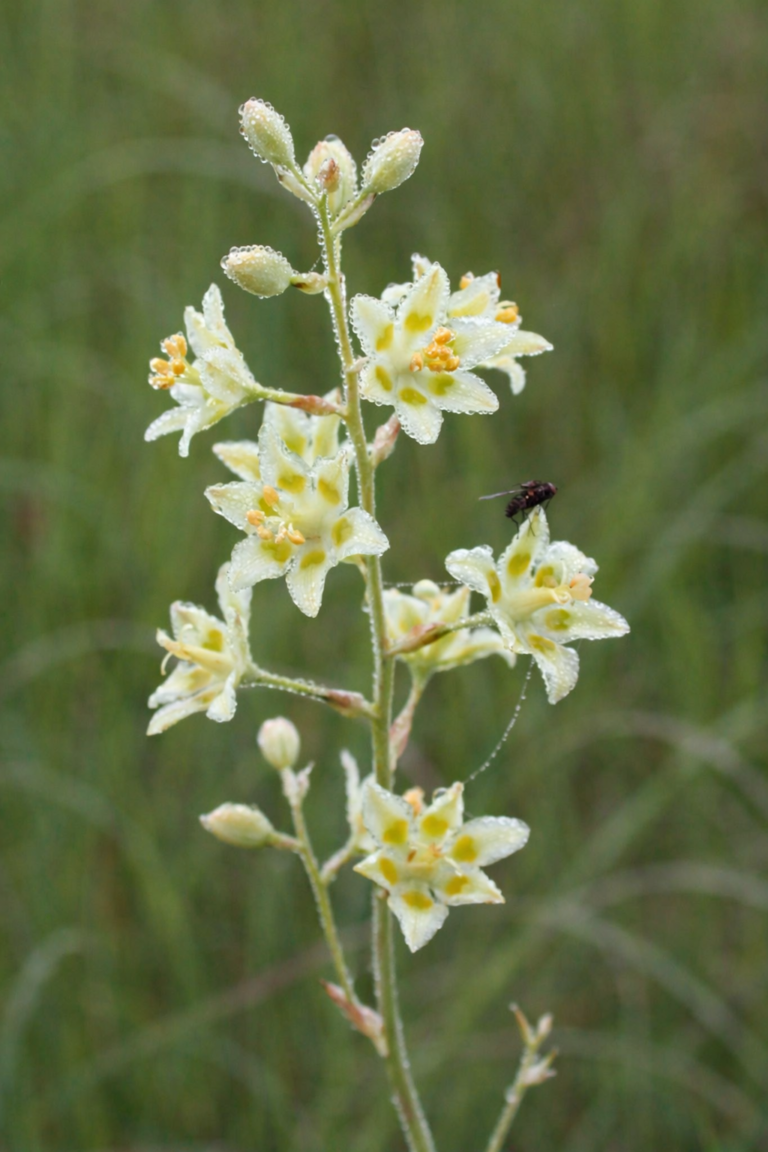
Death Camas in Alaska
Death Camas is one of the most dangerous plants found in Alaska. Its clusters of small white flowers may look harmless, but this plant is highly toxic and can be fatal if ingested. It is especially dangerous because it can be mistaken for edible plants.
What It Is
Death Camas (Zigadenus elegans and related species) is a perennial plant that grows in grassy areas and produces tall spikes of small white flowers.
Despite its name, it is not a true camas and is not related to edible camas species.
Where It Grows
Death Camas is found in parts of Alaska, especially in open and grassy environments. It commonly grows:
- In meadows and open fields
- On hillsides and slopes
- In grassy clearings
- In subalpine environments
It prefers well-drained soil and open sunlight.
Plant Characteristics
Death Camas typically grows 1 to 3 feet tall and has a slender, upright form.
Key features include:
- Tall spikes of small white or cream-colored flowers
- Grass-like leaves at the base
- Narrow, vertical growth pattern
- Bulb-based root system
The plant often blends in with surrounding grasses until it blooms.
Flowers & Seasonal Changes
Death Camas blooms in late spring to early summer, producing clusters of small, star-shaped flowers.
The flowering spike rises above the surrounding grass, making it more visible during bloom season.
Toxicity & Danger
Death Camas is extremely toxic in all parts of the plant, especially the bulb.
It contains alkaloids that affect the nervous system and heart.
Symptoms of poisoning include:
- Nausea and vomiting
- Weakness and dizziness
- Slowed heart rate
- Difficulty breathing
In severe cases, it can be fatal.
Why It’s Dangerous
Death Camas is especially dangerous because:
- It resembles edible bulb plants
- It grows in areas where people may forage
- Its bulb can be mistaken for wild onion or edible camas
- It blends in with grasses when not in bloom
Misidentification is the primary risk.
Looks Similar To (Important Warning)
Death Camas is most often confused with edible plants like wild onion or true camas, which makes it particularly dangerous.
Key Differences
Wild Onion / Edible Camas:
- Onion smell when crushed (wild onion)
- Blue or purple flowers (true camas)
- Generally safer and used traditionally as food
Death Camas:
- No onion smell at all
- White or cream-colored flowers
- Narrow leaves that resemble grass
- Toxic bulb
The One Thing You Never Ignore
If a plant looks like an onion or edible bulb but:
- Has no onion smell
- Has white flowers instead of purple/blue
Do not eat it.
Medicinal & Historical Notes
Death Camas has no safe traditional use as food and is avoided due to its toxicity.
Historically, it has been known primarily as a poisonous plant rather than a medicinal one.
Identification Tips
- White flower clusters on a tall spike
- Grass-like leaves at the base
- No onion scent
- Grows in open, grassy environments
When in doubt, avoid any bulb plant you cannot confidently identify.
Why It Matters in Alaska
Death Camas is important for safety awareness:
- It is one of the most dangerous plants in the region
- It can easily be mistaken for edible species
- It grows in common outdoor environments
Understanding Death Camas helps prevent serious foraging mistakes.