
Cow Parsnip
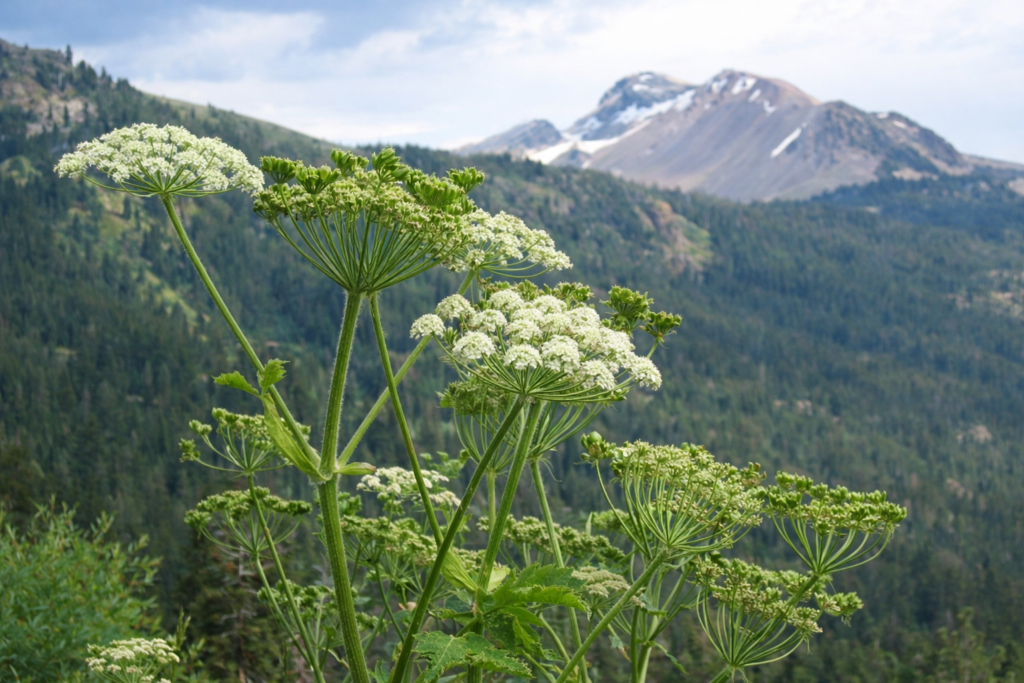
Cow Parsnip in Alaska
Cow Parsnip is one of the largest and most recognizable plants in Alaska. With its massive leaves and tall stems, it stands out in meadows, along roads, and near rivers.
While not deadly like some other plants, it can still cause serious skin irritation and burns, making it important to recognize and avoid.
What It Is
Cow Parsnip (Heracleum maximum) is a perennial plant in the carrot family. It produces large leaves and tall flowering stalks with umbrella-shaped clusters of small white flowers. It is native to Alaska and commonly found across much of the state.
Where It Grows
Cow Parsnip grows in a wide range of environments, especially where moisture is present. It commonly grows:
- Along roadsides and trails
- Near rivers and streams
- In meadows and open areas
- In forest edges and clearings
It thrives in nutrient-rich, moist soil.
Plant Characteristics
Cow Parsnip is a large, bold plant that can grow 4 to 10 feet tall.
Key features include:
- Huge, broad leaves (sometimes over a foot wide)
- Thick, hollow stems
- White umbrella-shaped flower clusters (umbels)
- Coarse, hairy texture
It is one of the easiest plants to spot due to its size.
Flowers & Seasonal Changes
Cow Parsnip blooms in summer, producing wide, flat clusters of small white flowers.
These flowers are similar in shape to other plants in the carrot family, including some dangerous species.
Toxicity & Skin Reaction
Cow Parsnip is not typically poisonous if touched lightly, but its sap can cause a reaction called phytophotodermatitis.
When sap gets on your skin and is exposed to sunlight, it can cause:
- Severe burns
- Blistering
- Skin discoloration
- Long-lasting sensitivity to sunlight
This reaction can happen hours after exposure.
Why It’s Dangerous
Cow Parsnip is especially risky because:
- It grows in areas where people hike or brush past plants
- Its large leaves make contact easy
- Many people do not realize it can cause burns
- The reaction is delayed, so people don’t connect it right away
Contact followed by sunlight is the key trigger.
Looks Similar To (Important Warning)
Cow Parsnip can be confused with other plants in the same family, including both harmless and highly toxic species.
Key Differences
Cow Parsnip:
- Very large leaves
- Thick, hairy stems
- White flower clusters
- Causes skin burns, not typically fatal
Poison Hemlock:
- Smooth stems with purple spots
- Much finer leaves
- Extremely toxic if ingested
Water Hemlock:
- Similar white flowers
- Grows in wet areas
- Highly toxic and often fatal if consumed
The One Thing You Never Ignore
If a plant has:
- Large leaves
- White umbrella-shaped flowers
Avoid touching it directly, especially in sunny conditions.
Medicinal & Traditional Notes
Cow Parsnip has had limited traditional use, but due to its skin reaction risk, it is generally avoided or handled with care.
It is not considered a safe or practical plant for casual use.
Identification Tips
- Very large, jagged leaves
- Thick, hollow stems
- White umbrella-shaped flower clusters
- Grows in moist, open environments
Size is one of the easiest ways to identify it.
Why It Matters in Alaska
Cow Parsnip is important for awareness:
- It is extremely common across the state
- It can cause painful skin reactions
- It grows in everyday outdoor environments
Knowing how to recognize Cow Parsnip helps prevent avoidable injuries.