
Bog Rosemary
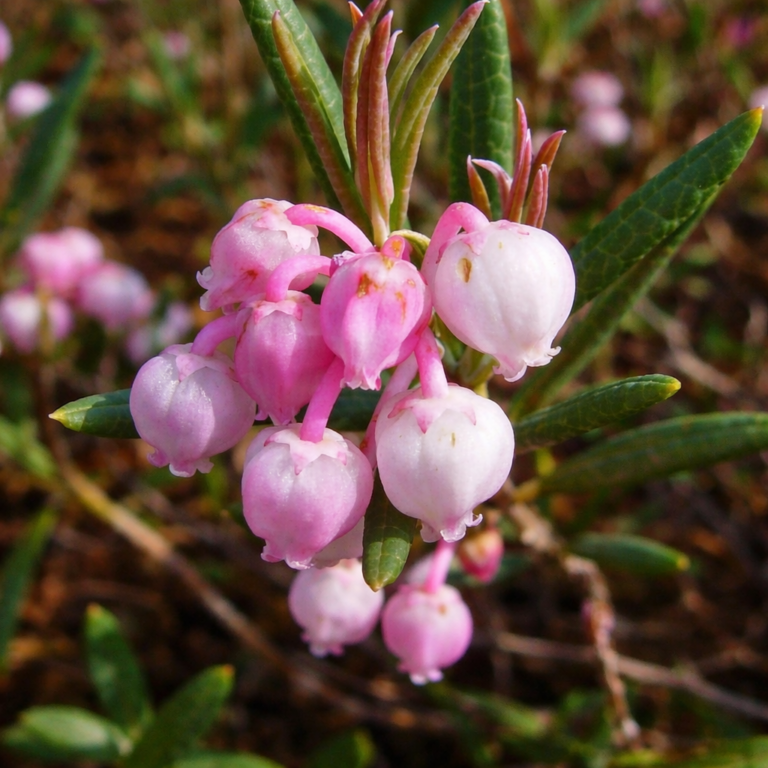
Bog Rosemary in Alaska
Bog Rosemary is a small, low-growing shrub found across Alaska’s wetlands and tundra. Its delicate pink flowers contrast with the harsh, waterlogged environments where it thrives, making it one of the more striking plants in boggy terrain.
What It Is
Bog Rosemary (Andromeda polifolia) is an evergreen shrub adapted to cold, acidic, and water-saturated soils. It grows low to the ground, often forming patches in mossy wetlands.
Despite its soft appearance, it is a hardy plant built for some of Alaska’s toughest growing conditions.
Where It Grows
Bog Rosemary is found throughout Alaska, especially in areas with poor drainage and acidic soils. It commonly grows:
- In peat bogs and muskeg
- In tundra wetlands
- Along slow-moving water and marshes
- In moss-heavy, saturated ground
It often grows alongside sphagnum moss, sedges, and other wetland plants.
Shrub Characteristics
This shrub typically grows only a few inches to about a foot tall, spreading outward in low mats.
Key features include:
- Narrow, leathery leaves with a slightly rolled edge
- Dark green tops with lighter undersides
- Thin woody stems
- Low, spreading growth pattern
Its structure helps it survive in saturated, oxygen-poor soils.
Flowers & Seasonal Changes
Bog Rosemary blooms in late spring to early summer, producing small, drooping pink flowers that resemble tiny bells.
The flowers hang beneath the stems, giving the plant a subtle but distinctive appearance in wetland areas.
As an evergreen, its leaves remain year-round, even through Alaska winters.
Edibility & Toxicity
Bog Rosemary is toxic and should never be consumed.
The plant contains compounds called grayanotoxins, which affect the nervous system and heart. Even small amounts can cause:
- Dizziness
- Nausea
- Vomiting
- Weakness or confusion
In more serious cases, it can lead to dangerous heart rhythm issues.
This is considered a true poisonous plant, not just mildly irritating.
Why It’s Dangerous
Bog Rosemary can be especially risky because:
- It grows near edible plants like berries in wetland areas
- It has an attractive, harmless appearance
- It is easy to overlook if you’re not familiar with tundra plants
Because of this, it’s important to positively identify plants before foraging, especially in boggy terrain.
Wildlife tend to avoid it, which is another sign of its toxicity.
Medicinal & Traditional Notes
Due to its toxicity, Bog Rosemary is not commonly used in traditional medicine in Alaska.
While some related plants have been studied elsewhere, this is not a plant that is safely used for remedies and is best avoided.
Identification Tips
- Low-growing shrub in wet, mossy areas
- Narrow leaves with rolled edges
- Small, drooping pink bell-shaped flowers
- Found in bogs, muskeg, and tundra wetlands
It can sometimes be mistaken for other small shrubs, but its wetland habitat and hanging flowers are key identifiers.
Why It Matters in Alaska
Bog Rosemary plays an important role in wetland ecosystems:
- Thrives in nutrient-poor, acidic soils
- Contributes to bog and tundra plant communities
- Supports specialized insect life
It’s a strong example of how plants adapt to Alaska’s wettest and most challenging environments while still producing delicate, eye-catching blooms.