
Moss Campion in Alaska
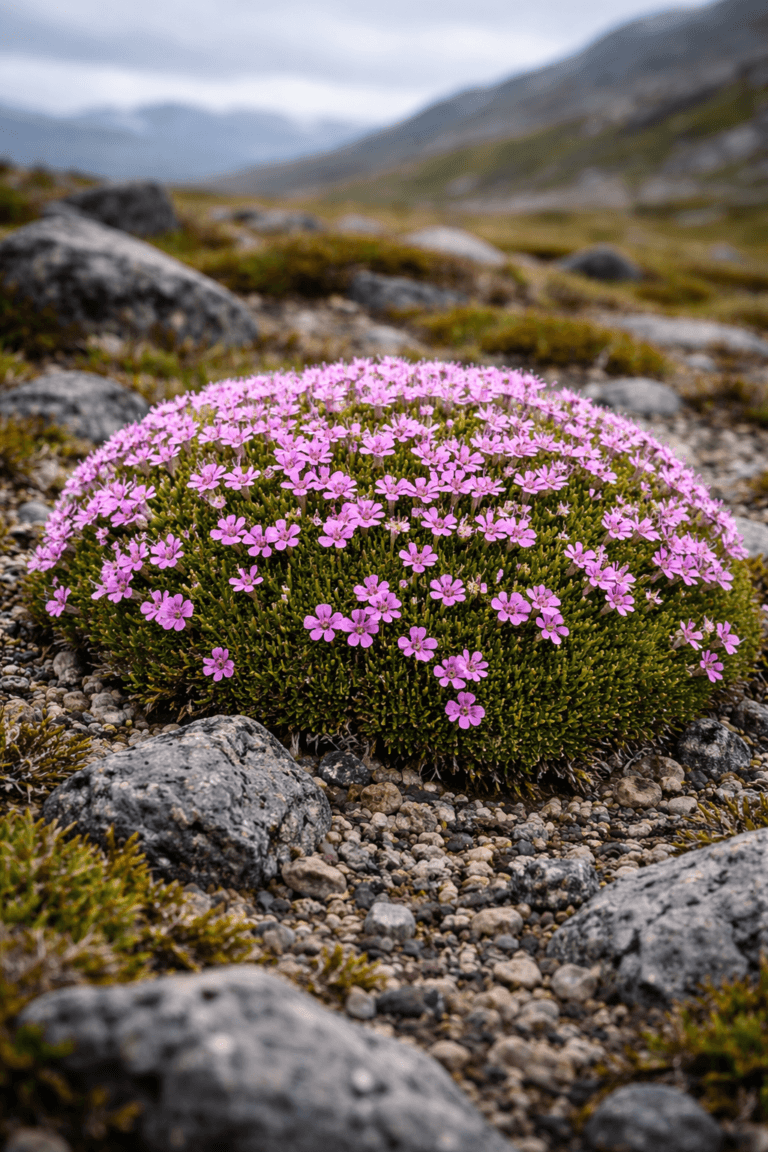
Moss Campion in Alaska
At first glance, it doesn’t even look like a flower.
It looks like a moss-covered rock.
Then you get closer and see dozens — sometimes hundreds — of tiny pink blooms packed tightly together on a dense cushion of green.
Moss campion grows low to the ground, hugging the earth as if it knows the wind is coming. In most places it lives, the wind always is.
This is an alpine and tundra survivor, built to handle exposed, nutrient-poor environments where few other plants can survive.
Where It Grows
Moss campion prefers:
• Alpine ridges
• Exposed mountain slopes
• Arctic tundra
• Gravelly, well-drained soils
• Wind-blown ridgelines
You’ll see it above tree line and across tundra landscapes where soil is thin, drainage is fast, and weather changes quickly.
If you’re hiking high country or moving through open tundra, start scanning the ground. It blends in until it blooms.
It does not compete in forested areas. It belongs where trees can’t grow and where tundra vegetation stays low and tightly packed.
When to Notice It
Late spring through summer.
Bloom time depends on elevation and snowmelt. In alpine and tundra regions, flowers often appear mid-summer once snow recedes.
When it’s in bloom, it’s unmistakable — a tight green cushion dotted with bright pink or magenta flowers.
Outside bloom season, it looks like a compact mound of dense greenery pressed flat against the ground.
How to Identify It
Key traits:
• Dense, dome-shaped cushion growth
• Very small, tightly packed leaves
• Pink to magenta flowers
• Flowers sit just above the cushion surface
• Extremely low-growing
It rarely grows more than a few inches tall.
The cushion shape is the biggest clue. It looks intentional — rounded, compact, almost sculpted.
That shape is an adaptation to tundra and alpine conditions. Staying low helps protect the plant from wind, cold, and moisture loss.
Is It Edible?
No.
Moss campion is not a food plant. It’s not harvested for cooking and has no practical culinary use in Alaska.
It’s best appreciated where it grows.
If you’re interested in edible tundra or alpine plants, focus on species that are clearly known for safe use — not small cushion plants like this one.
Why It Matters in Alaska
Moss campion is a symbol of endurance in Alaska’s tundra and alpine environments.
It grows slowly — very slowly. Some cushions are believed to be decades, even centuries, old.
These plants form part of the low, ground-hugging vegetation that defines tundra landscapes, where survival depends on staying compact and conserving energy.
When you step carefully around it on alpine hikes or tundra terrain, you’re walking near something that has likely been there longer than most people realize.
Recognizing moss campion helps you understand Alaska’s tundra — not flashy, not loud, just quietly resilient.
Learn more tundra and alpine species in Flowers of Alaska.