
Crowberries in Alaska
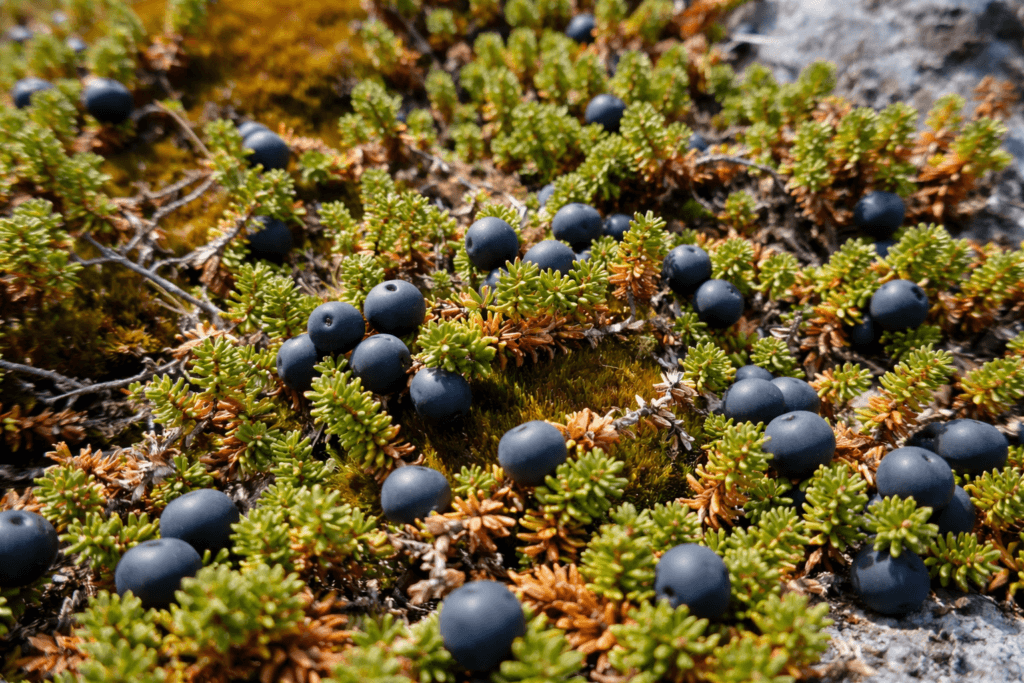
Crowberries in Alaska
Crowberries are low-growing tundra berries found across much of Alaska’s northern and coastal landscapes. They are part of everyday northern life — not flashy, but dependable and widespread. Small, dark, and resilient, crowberries thrive in harsh wind, poor soil, and cold temperatures where other berries struggle. In regions with fewer berry options, they quietly fill buckets. They grow on low, woody plants that spread across the ground, forming dense mats rather than upright bushes.
Where Crowberries Grow
Crowberries are most common in:
• Arctic tundra
• Western Alaska
• Coastal bluffs
• Wind-swept ridges
• Mossy open ground
They grow as evergreen groundcover, spreading as low shrubs across exposed terrain.
If the landscape feels open, windy, and low to the ground, crowberries are often nearby.
Identification
Crowberries grow on low shrubs with:
• Tiny, needle-like evergreen leaves
• Black to deep purple berries
• Spreading, ground-hugging growth habit
These are dwarf shrubs, meaning they have woody stems but stay low and spread outward rather than growing upright.
The berries are firm and glossy, typically ripening in late summer.
Why It Matters in Alaska
Crowberries are built for Alaska’s tougher environments.
They grow where other plants struggle, helping cover and protect exposed ground. Their dense, mat-like growth helps stabilize soil in fragile tundra ecosystems.
They are also a reliable food source for wildlife and people in areas where fewer berry species are available.
Ecological Role
Crowberries provide food for:
• Birds
• Foxes
• Bears
• Small mammals
Because they grow low and densely, they also help stabilize soil in fragile tundra ecosystems.
Is It Edible?
Yes — crowberries are edible.
They have a mild, slightly tart flavor and are often not eaten alone, but instead mixed with sweeter berries.
How People Use Them
Crowberries are commonly used for:
• Jams
• Syrups
• Traditional berry blends
• Frozen storage
Because they are small and grow in dense patches, a wide, shallow container helps prevent crushing during harvest.
Hand-picking is slower but helps keep stems and debris out of your collection.
Why It Matters in Alaska
Crowberries don’t stand out at first glance, but they are one of the most reliable berry plants in northern Alaska.
They grow low, spread wide, and produce consistently in places that seem too harsh for much else.
Learning to recognize them is part of understanding how Alaska’s tundra works — quiet, low to the ground, and more productive than it first appears.