
Alder Trees in Alaska
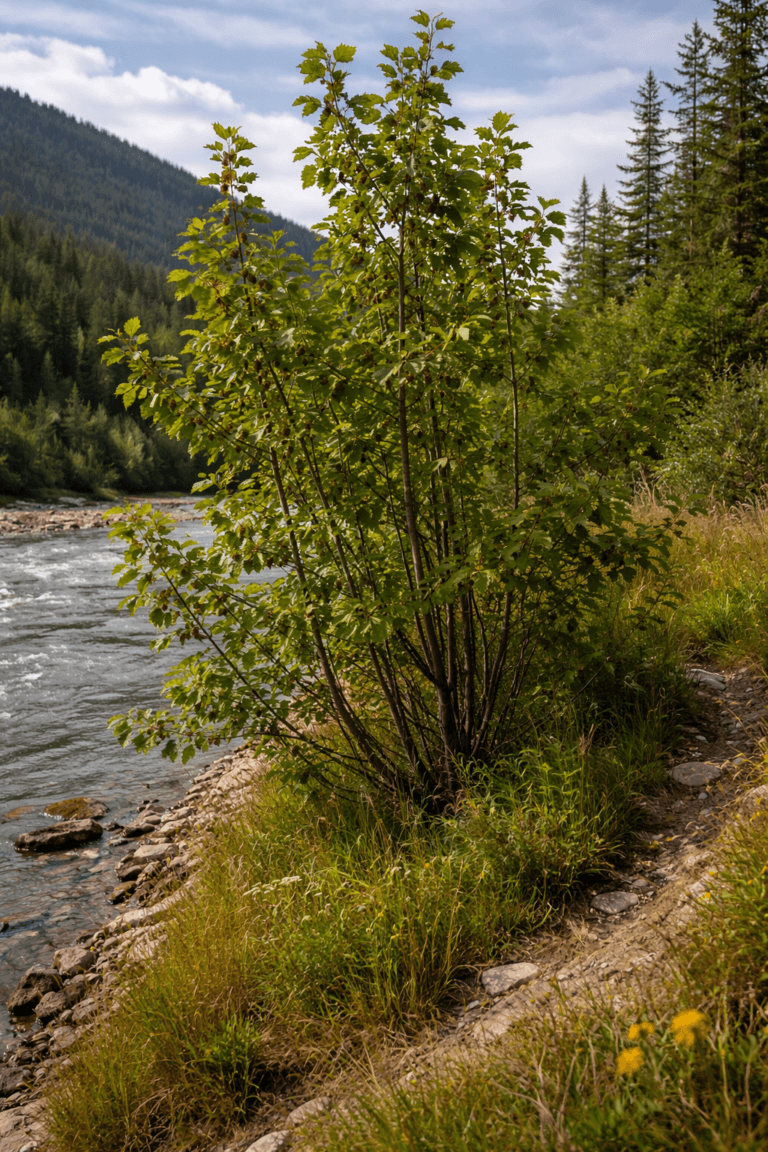
Alder Trees in Alaska
Alder trees are common across Alaska, especially in disturbed areas, riverbanks, and slopes that have recently burned or shifted.
They grow fast, form dense thickets, and often take over open ground before slower-growing trees return.
They’re not towering forest giants. They’re tough, adaptable, and foundational.
Where Alder Grows
Alder is most common in:
• Interior Alaska
• Southcentral Alaska
• River corridors
• Post-wildfire slopes
• Avalanche paths
It thrives in disturbed soil and full sun. If you see a thick wall of green along a river or hillside, it’s probably alder.
Identifying Alder
You can identify alder by:
• Rounded, toothed leaves
• Smooth gray bark
• Small woody cones that persist through winter
• Multi-stem shrub growth
Unlike spruce, alder usually grows as a large shrub or small tree.
In Alaska, you’ll mainly encounter two types. Sitka alder is the most common and forms dense, tangled thickets across hillsides and disturbed ground. Thinleaf alder is more often found along rivers and can grow taller and more upright, sometimes looking more like a small tree than a shrub.
Shrub Growth & Thickets
Alder often grows as a dense, multi-stem shrub rather than a single-trunk tree. It spreads outward quickly, creating thick, tangled stands that can be difficult to move through.
These thickets are common along trails, rivers, and hillsides, especially in areas that have recently been disturbed. In many parts of Alaska, alder forms nearly impenetrable brush that defines the landscape just as much as the larger trees.
It’s one of the most dominant shrub layers in both Interior and Southcentral Alaska.
Soil Builder
Alder plays an important ecological role.
It fixes nitrogen in the soil, improving ground conditions for future plant growth. After fire or erosion, alder is often one of the first plants to return and stabilize the landscape. It prepares the ground for spruce and other trees to follow.
Wildlife Value
Alder thickets provide:
• Cover for moose
• Habitat for birds
• Protection for small mammals
Though not a primary food source, it plays an important structural role in the ecosystem.
Everyday Use
Alder wood burns hot but fast. It’s sometimes used for smoking fish and meat because of its clean, mild smoke.
In coastal areas especially, alder smoke is commonly used when preparing salmon.
This page will later connect to traditional smoking and preservation methods in the Alaska Recipes section.
A Common Alaska Backbone
Alder is one of those plants you stop noticing until you try to walk through it. It fills in the gaps, takes over open ground, and quietly shapes the landscape.
It’s not the most celebrated plant in Alaska, but it’s one of the most importan