
Mountains of Alaska
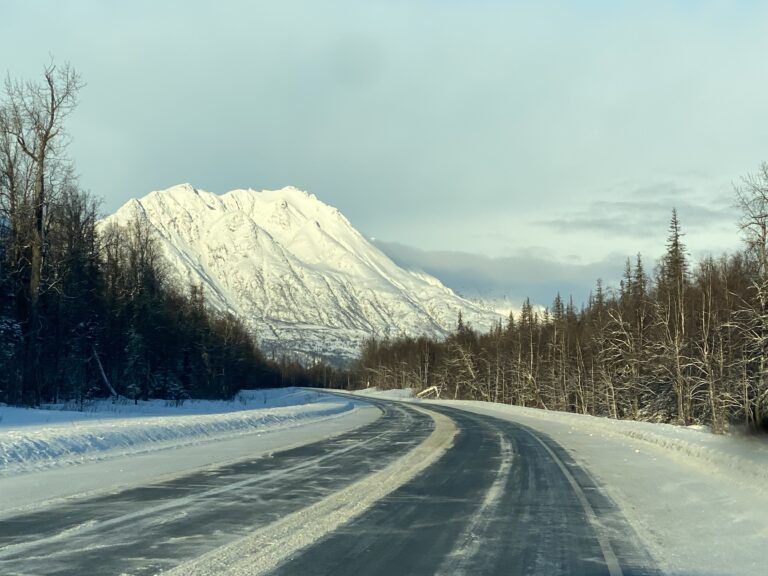
Alaska is home to some of the largest and most rugged mountain landscapes in the world. Long mountain ranges stretch across the state, shaping weather patterns, directing rivers, influencing ecosystems, and affecting how people travel and live in Alaska.
These mountains exist because Alaska sits along active tectonic boundaries. Over millions of years, shifting plates pushed land upward, folded rock layers, and created long chains of peaks across the state. Volcanic activity added new mountains in southern Alaska, while glaciers carved valleys, sharpened ridgelines, and moved enormous amounts of rock and sediment. The landscape seen today is the result of all of these forces working together over time.
From coastal mountains rising straight out of the ocean to broad interior ranges that extend for hundreds of miles, mountains are a defining feature of Alaska’s geography. Many of the state’s glaciers, rivers, and valleys begin in these ranges, making them central to how Alaska looks and functions.
This page provides an overview of the different types of mountain ranges found in Alaska, where they are most commonly located, and why they matter to the state as a whole.
Types of Mountain Ranges Found in Alaska
Alaska’s mountains are grouped into large ranges rather than standing alone as isolated peaks. These ranges vary widely in size, elevation, and character depending on location, climate, and geological history
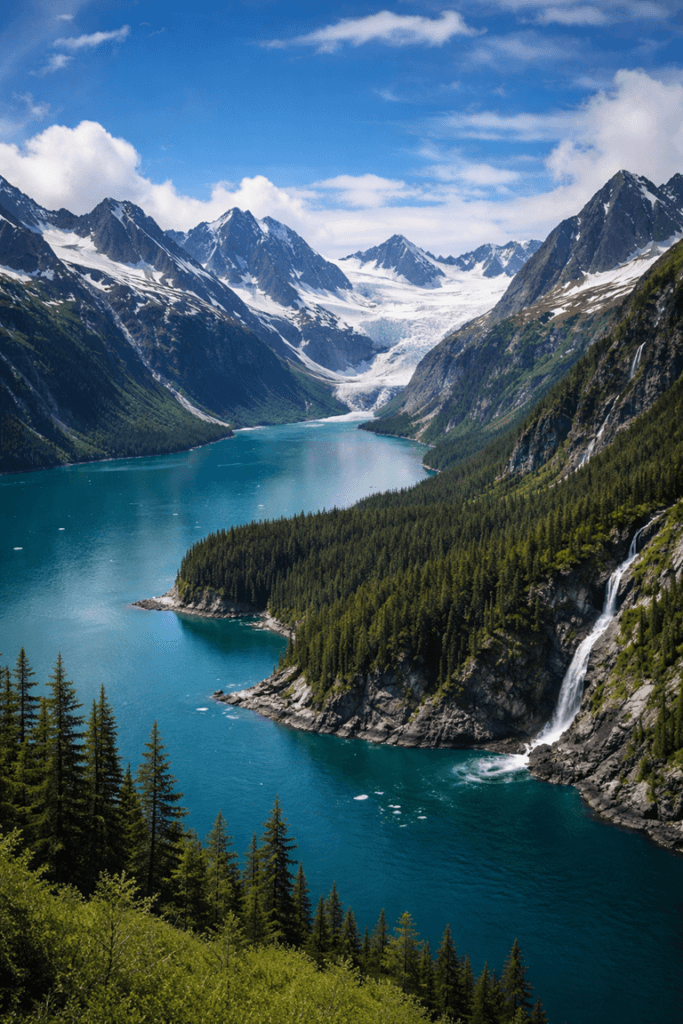
Coastal Mountain Ranges
Coastal mountain ranges rise sharply from the Pacific Ocean and nearby lowlands. These mountains receive heavy moisture from the ocean, which leads to frequent snowfall and supports extensive glaciation.
Coastal ranges are closely tied to Alaska’s fjords and glaciers and are known for steep terrain, dramatic elevation changes, and fast-changing weather conditions.
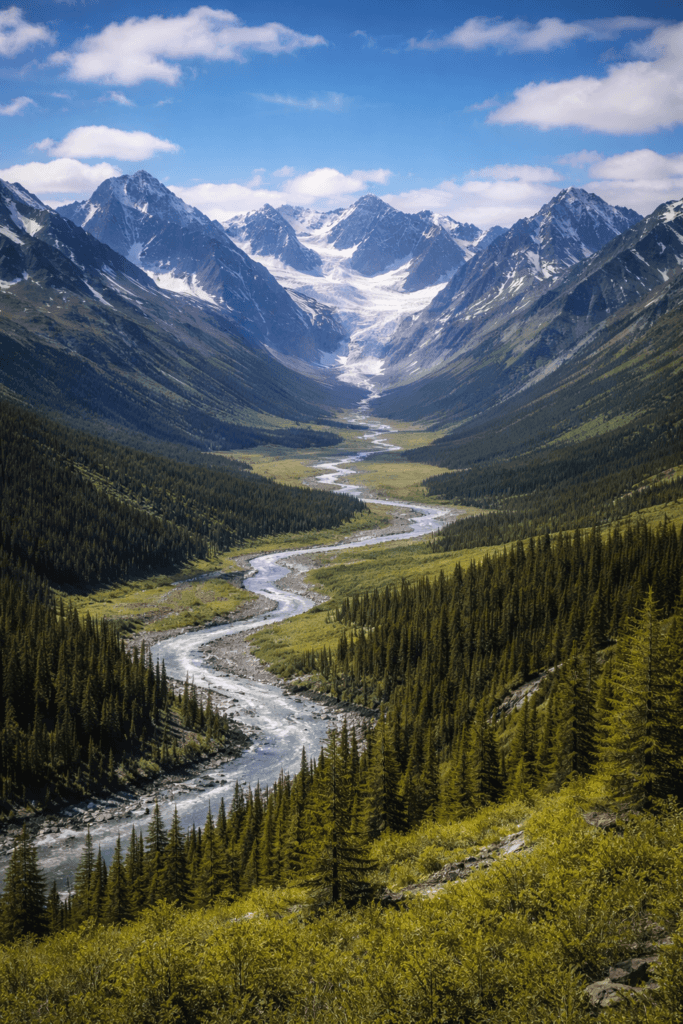
Interior Mountain Ranges
Interior mountain ranges stretch across large portions of central Alaska. These ranges tend to be less jagged than coastal mountains but cover enormous distances and play a major role in directing river systems and wildlife movement.
Interior ranges often experience colder, drier conditions and support boreal forest, tundra, and alpine environments.
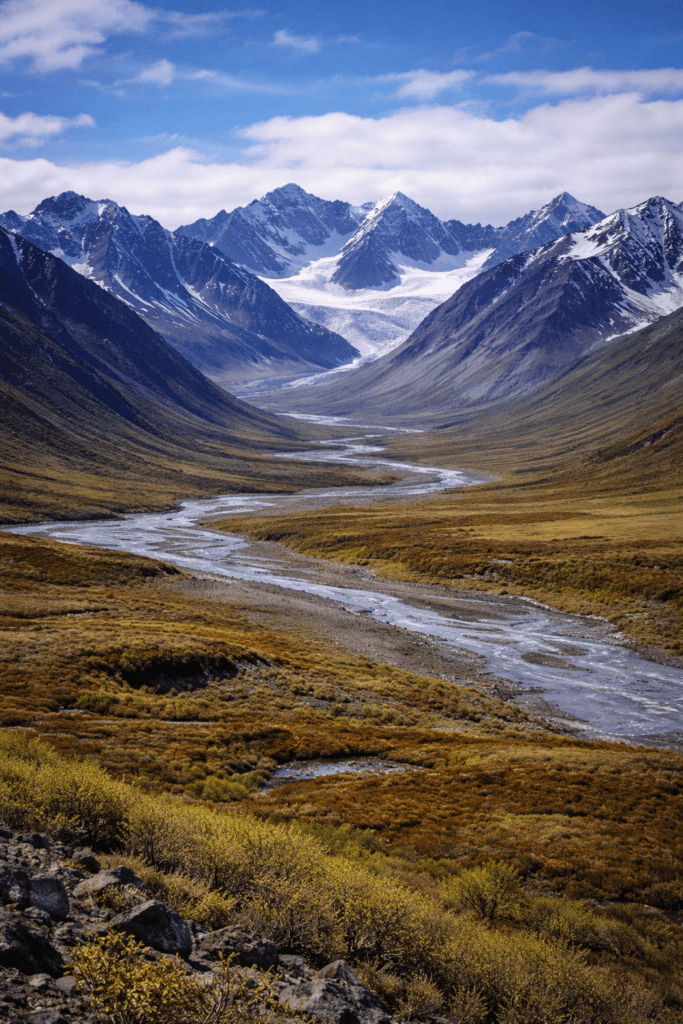
Arctic Mountain Ranges
Arctic mountain ranges extend into northern Alaska, where long winters and permafrost shape the landscape. These mountains are generally lower in elevation but are remote, rugged, and difficult to access.
Arctic ranges remain among the least developed and least traveled areas of the state.
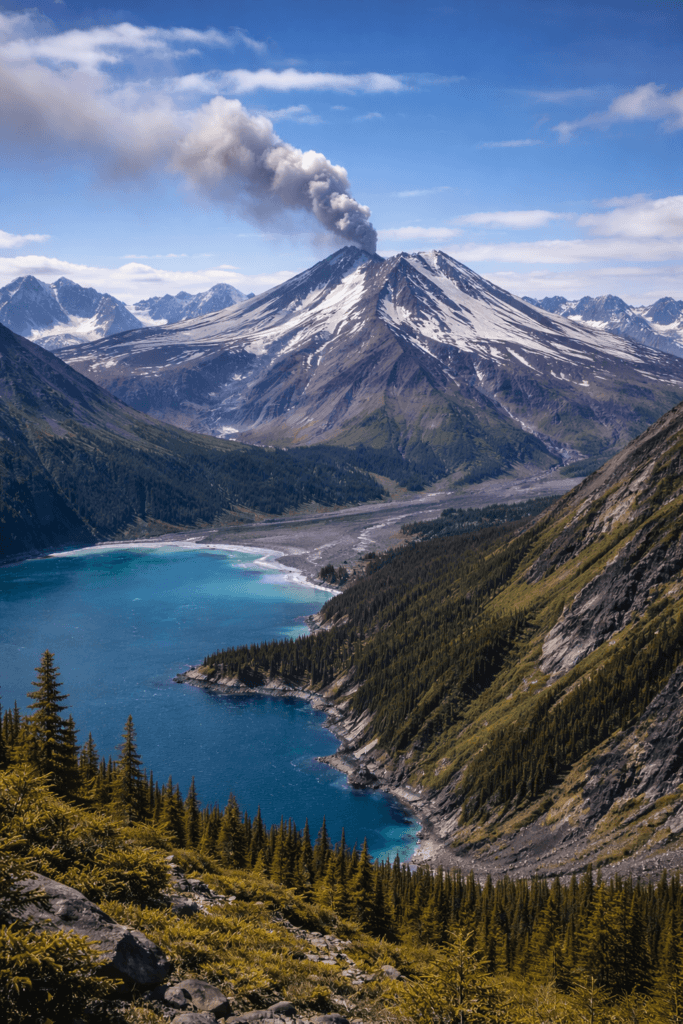
Volcanic Mountain Ranges
Some of Alaska’s mountains were formed by volcanic activity and remain geologically active today. These ranges are primarily found along southern Alaska and island chains where tectonic plates meet.
Volcanic mountains influence nearby soils, ecosystems, and landforms and continue to reshape parts of the state through ongoing geological processes.
Where Alaska’s Mountains Are Found and Why They Matter
Mountains are found throughout Alaska, but their influence varies by region. Coastal mountain ranges dominate southern Alaska, where heavy snowfall feeds glaciers and shapes steep terrain. Interior and Arctic ranges extend across wide areas of the state, guiding river systems and defining large ecological zones.
Alaska’s mountains influence weather by forcing air upward, creating heavy snowfall in some areas and drier conditions in others. Many of Alaska’s largest rivers begin in mountain ranges, carrying meltwater and sediment across the state.
Mountains also shape ecosystems. Changes in elevation create different environments for plants and animals, from coastal rainforests to alpine tundra. In many places, mountains determine travel routes, access corridors, and where communities can develop.
Beyond geography, mountains have long influenced Alaska’s history and way of life. They guided exploration, supported subsistence activities, and continue to play a role in recreation, tourism, research, and daily life. For many people in Alaska, mountains are not just scenery but a constant presence that affects work, travel, and connection to the land.
Even as Alaska continues to change, mountains remain a permanent and defining part of the state.
Alaska contains dozens of major mountain ranges and countless individual peaks. Some are well known, while others remain remote and rarely visited.
The following ranges and peaks serve as starting points for learning more about Alaska’s mountainous landscape. Each will be explored in greater detail on its own dedicated page.
Check out some of Alaska’s most iconic mountains and range:
Mountain Ranges:
Alaska Range
Brooks Range
Chugach Mountains
Wrangell Mountains
Saint Elias Mountains
Aleutian Range
Talkeetna Mountains
Kigluaik Mountains
Major Peaks/ Individual Mountains:
Denali
Mount Saint Elias
Mount Foraker
Mount Blackburn
Mount Hunter
Mount Hayes
Mount Bona
Mount Churchill
Mount Fairweather