
Aleutian Range
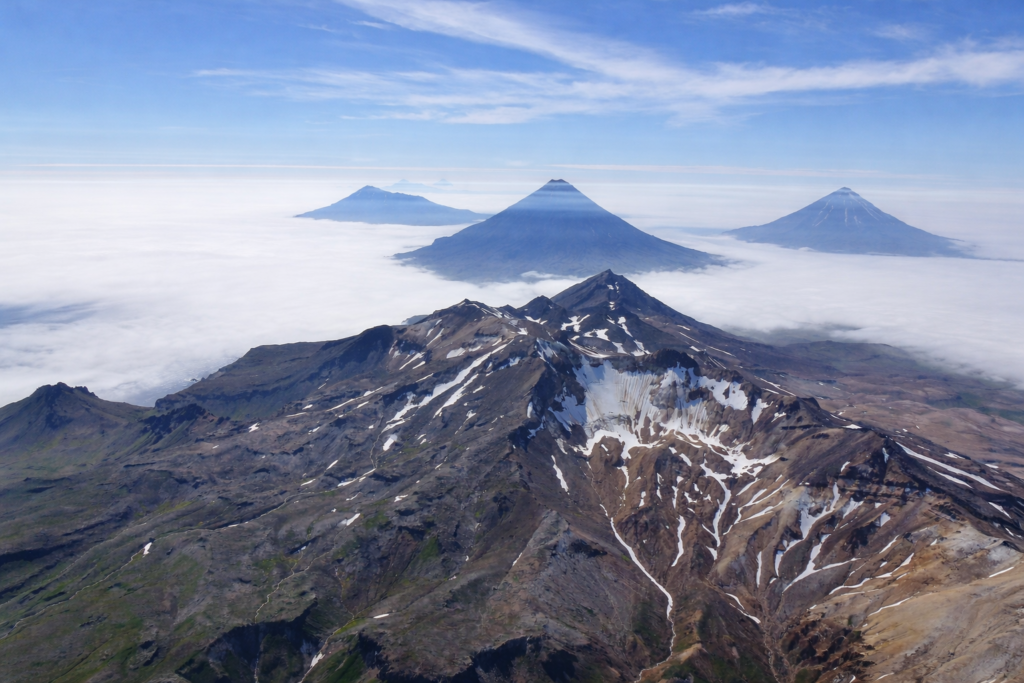
The Aleutian Range stretches along the Alaska Peninsula and extends toward the Aleutian Islands, forming a long chain of volcanic mountains between the Pacific Ocean and Bristol Bay. This range is part of the larger volcanic arc that runs across southern Alaska, making it one of the most geologically active regions in the state.
This range is defined by its volcanoes. Unlike other mountain systems in Alaska, many of the peaks in the Aleutian Range were formed by repeated eruptions over time. Mountains here tend to rise steeply and often stand alone rather than forming tightly packed ridgelines. Their shape is more conical and symmetrical, especially in areas where volcanic activity is more recent.
Several well-known volcanoes are part of the Aleutian Range, including Mount Redoubt, Mount Iliamna, and Augustine Volcano. Some of these are still active, and occasional eruptions remind how dynamic this landscape continues to be. Ash plumes, steam vents, and geothermal activity are all part of how this range evolves.
Glaciers are also present, especially on the larger peaks, but they tend to be smaller and more isolated compared to the massive ice systems found in coastal or interior ranges. Snow and ice still play an important role, but volcanic rock and ash-covered slopes are just as common.
Most people experience the Aleutian Range from a distance. The mountains are often visible across Cook Inlet from areas like Anchorage on clear days, rising sharply on the western horizon. Closer access comes from the Alaska Peninsula, though much of the region remains remote and lightly traveled.
Weather in the Aleutian Range is heavily influenced by the surrounding ocean. Conditions can change quickly, with frequent clouds, wind, and storms moving in from the Pacific. This often limits visibility and adds to the isolated feel of the landscape.
Wildlife is present throughout the region, particularly in coastal and lowland areas. Bears, moose, and caribou can be found in parts of the peninsula, along with large populations of birds and marine life along the coast.
While most of the Aleutian Range is not trail-based, there are limited opportunities to explore the area on foot in more accessible sections of the Alaska Peninsula. In most cases, travel deeper into the range requires planning, experience, and often air or boat access.
The Aleutian Range stands out for its volcanic origins and its connection to the Pacific. It’s a range shaped by ongoing geological activity, where mountains continue to form and change, creating a landscape that feels active, remote, and constantly evolving.