
Mount Foraker
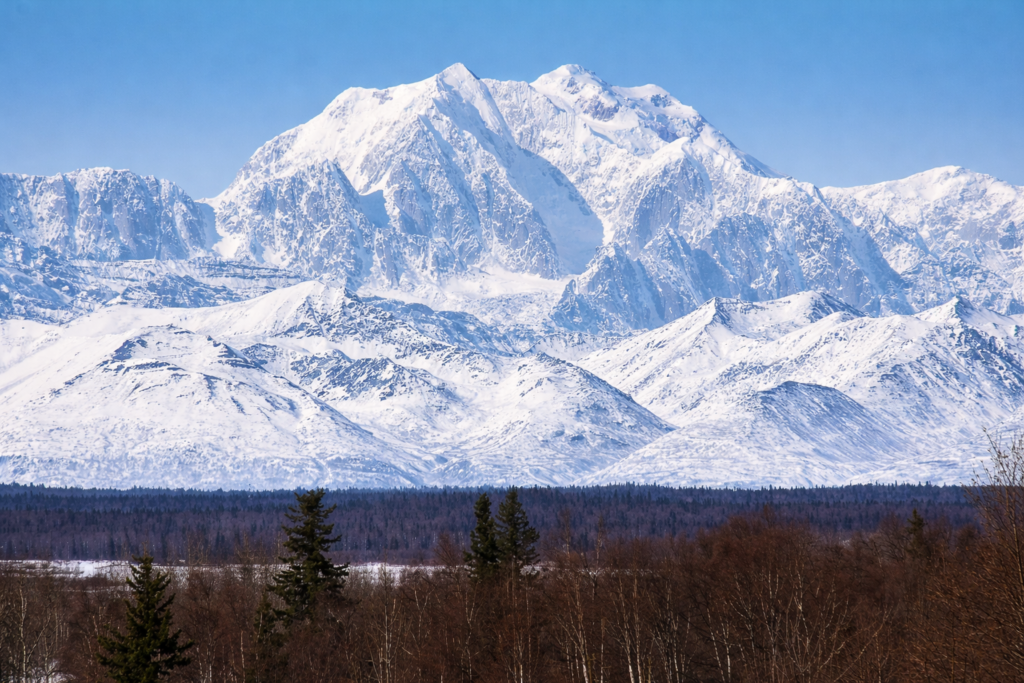
Mount Foraker rises to 17,400 feet in the Alaska Range and sits just southwest of Denali, often standing just as tall in presence when the light hits it right. It’s the second-highest peak in the range, but it doesn’t get nearly the same attention, even though it’s clearly visible from many of the same viewpoints inside Denali National Park.
From a distance, Foraker has a more defined, symmetrical look compared to Denali, with two main summits — the North Peak and the South Peak. When skies are clear, it often stands out sharply against the horizon, sometimes even more visible than Denali depending on cloud cover.
Like the rest of the Alaska Range, it’s heavily glaciated. Ice flows down from its slopes into surrounding valleys, connecting into larger glacier systems that shape the entire region. The scale is hard to grasp until you see it in person — everything around it feels smaller.
Climbing Mount Foraker is extremely difficult and considered more technical than Denali. It’s less traveled, more exposed, and requires a higher level of experience. Weather conditions are just as unpredictable, and the routes demand serious planning.
Most people experience Foraker from the ground while traveling through Denali National Park or from the air on flightseeing tours. It doesn’t dominate the conversation like Denali, but it’s always there, massive and steady in the background.
Mount Foraker feels quieter, less talked about, but just as powerful in its own way.