
Mount Blackburn
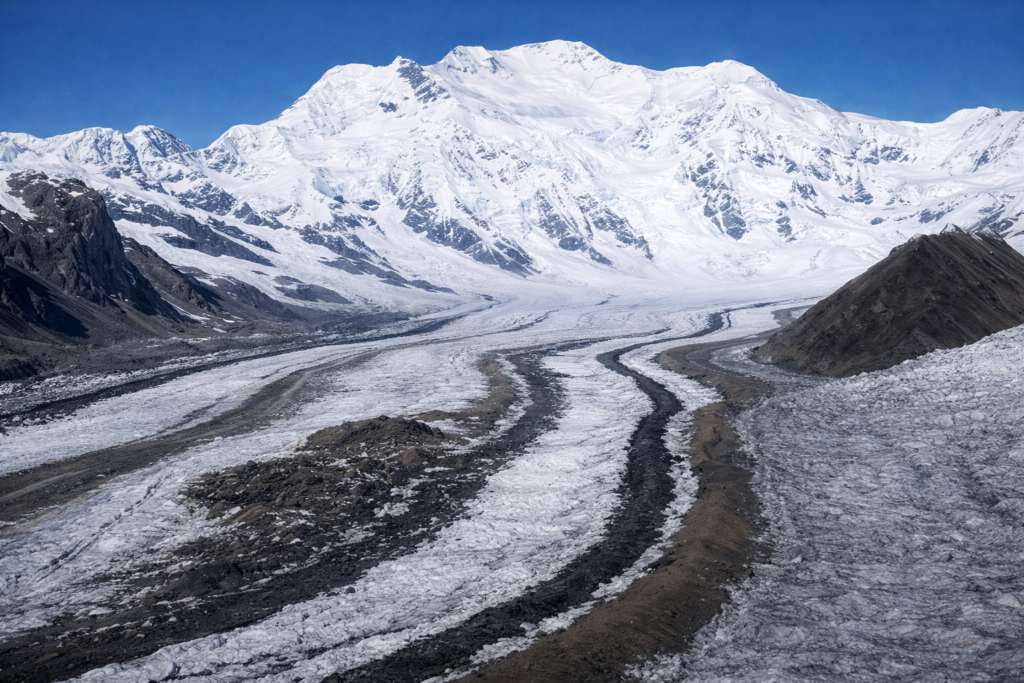
Mount Blackburn rises to 16,390 feet and is the highest peak in the Wrangell Mountains. It’s located deep within Wrangell–St. Elias National Park and Preserve and is one of the largest volcanoes in Alaska by volume, even though it doesn’t have the classic sharp volcanic shape people expect.
The mountain is massive and broad, covered in ice and snow, with long ridgelines and wide glacial systems extending in multiple directions. It doesn’t rise as sharply as peaks in the Alaska Range, but its size is spread out across a much larger area, which makes it feel huge in a different way.
Mount Blackburn is part of the Wrangell volcanic field and is considered dormant. Its volcanic origins are still visible in the structure of the mountain, even though it’s now heavily shaped by ice and time rather than recent eruptions.
This is a remote part of Alaska, and most people never see Blackburn up close. It’s best viewed from the air or from distant viewpoints along the Wrangell Mountains, where it rises above the surrounding peaks as a broad, dominant mass.
Glaciers cover much of the mountain, feeding into river systems that run through the region. The terrain around it is rugged and not easily accessible, which keeps it feeling wild and untouched.
Climbing Mount Blackburn is rare and extremely demanding. The routes are long, conditions are harsh, and the remoteness adds another layer of difficulty.
Mount Blackburn isn’t dramatic in the same way as Denali or Mount Saint Elias, but it’s one of the largest and most powerful landscapes in Alaska — wide, glaciated, and quietly massive.