
Brooks Range
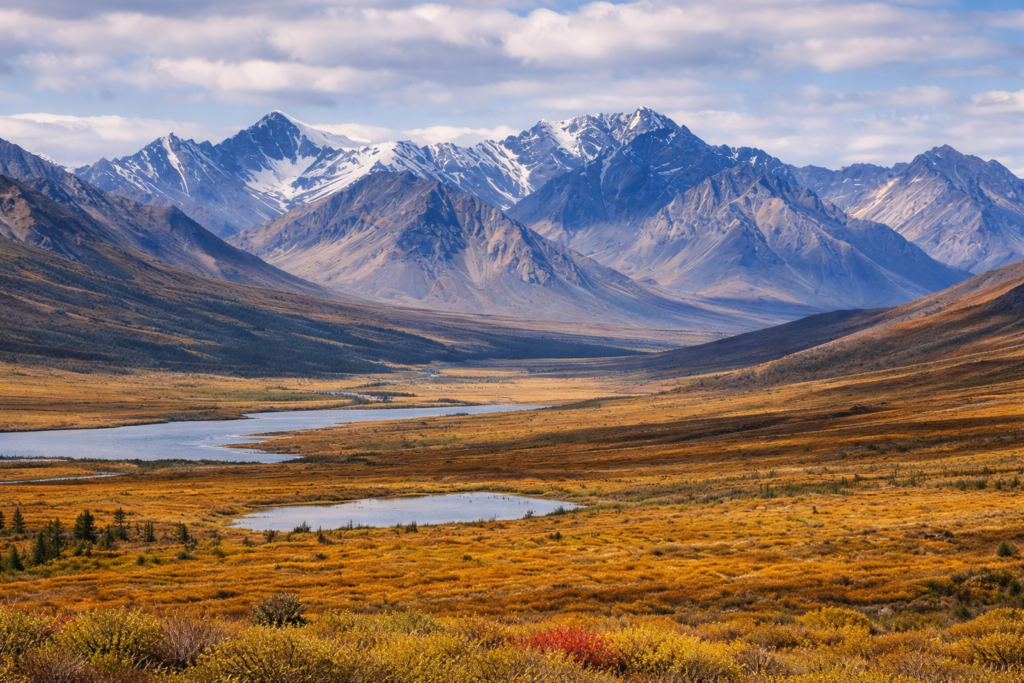
The Brooks Range stretches across northern Alaska, forming a long, rugged barrier between the Interior and the Arctic. It runs from the western edge of the state near the Chukchi Sea all the way east toward the Canadian border, cutting across some of the most remote and untouched land in North America.
This range is lower in elevation than the Alaska Range, but it feels just as wild. Peaks are more rounded and spread out, shaped by time, wind, and freezing temperatures rather than sharp vertical rise. The landscape here is defined less by height and more by isolation, with wide valleys, exposed ridgelines, and vast stretches of tundra.
Unlike the heavily glaciated Alaska Range, glaciers in the Brooks Range are smaller and far less common. Instead, permafrost plays a major role in shaping the land. The ground remains frozen for much of the year, influencing how water moves, how plants grow, and how the terrain shifts through the seasons.
Most people never see the Brooks Range in person. There are no major roads crossing it except for the Dalton Highway, which provides one of the only land routes through this region. Even then, access is limited, and conditions can change quickly.
The Brooks Range marks a major environmental divide. South of the range, the landscape transitions into boreal forest. North of it, the land opens into Arctic tundra, with fewer trees and more exposure to wind and extreme cold. This shift is one of the clearest natural boundaries in Alaska.
Wildlife is one of the defining features of the Brooks Range. Large caribou herds migrate through the area, along with grizzly bears, wolves, and Dall sheep. In the colder months, the region becomes even quieter, with long periods of darkness and extreme temperatures shaping everything that lives there.
While most of the Brooks Range is remote and not trail-based, there are a few areas where visitors can experience it. Along the Dalton Highway, pull-offs and informal routes allow for short hikes and views into the mountains. Near Coldfoot and Wiseman, visitors can explore the surrounding landscape, though there are no maintained trail systems like in more developed parts of the state. In Gates of the Arctic National Park, access is possible by air taxi, offering one of the most remote wilderness experiences in the country.
The Brooks Range isn’t built for easy travel — and that’s exactly what makes it stand out. It represents one of the last truly wild mountain systems in the United States, where distance, weather, and isolation still define the experience.