
Kigluaik Mountains
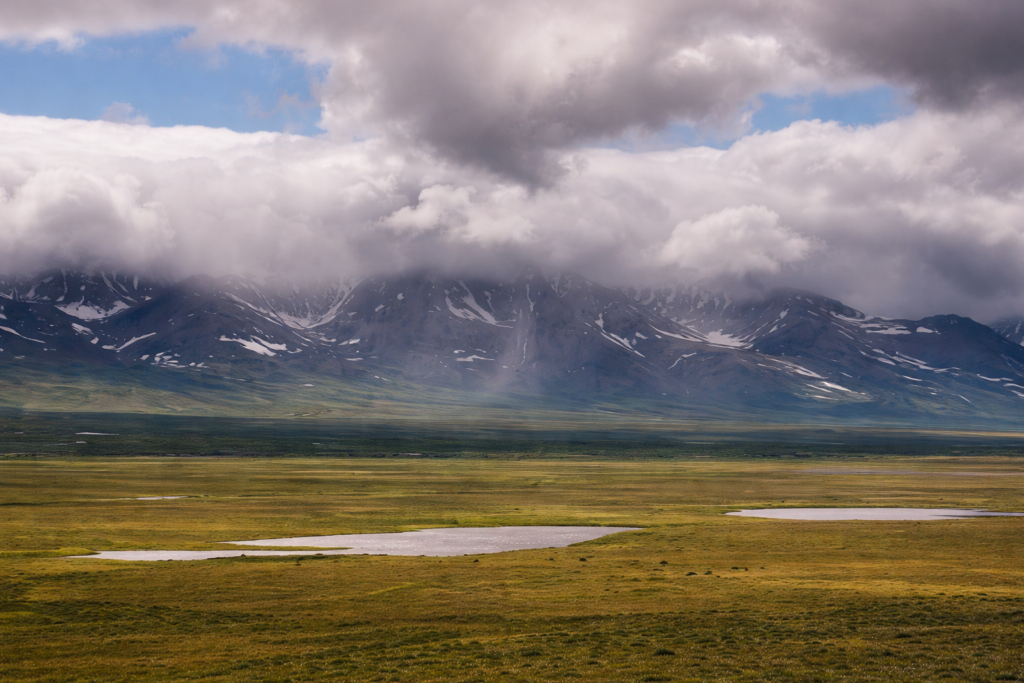
The Kigluaik Mountains rise just north of the Seward Peninsula in western Alaska, forming a striking range near the community of Nome. Unlike many other mountain systems in the state, the Kigluaik Mountains stand out sharply from the surrounding tundra, creating a clear and immediate contrast in the landscape.
This range is relatively small compared to Alaska’s larger mountain systems, but it feels much more dramatic because of how abruptly it rises. Rounded tundra transitions quickly into steep ridgelines, rocky peaks, and exposed alpine terrain. The mountains feel compact but rugged, with sharp elevation changes over short distances.
Glaciers once played a major role in shaping the Kigluaik Mountains, carving out valleys and defining the overall structure of the range. Today, active glaciers are minimal or gone, but the effects of past glaciation are still visible in the terrain, especially in the valleys and slopes.
Most people experience the Kigluaik Mountains from Nome, where the range is visible on clear days just outside of town. The Nome–Council Road provides one of the main access routes, offering views into the mountains and leading closer to the base of the range.
The Kigluaik Mountains sit in a subarctic to tundra climate zone. Conditions are often windy, with rapid weather changes and cooler temperatures compared to interior regions. Snow can remain on higher peaks for much of the year, even as lower elevations shift through seasonal changes.
Wildlife is present throughout the area, particularly in the surrounding tundra. Caribou, musk ox, foxes, and birds are common in the region, with animals moving between the lowlands and the mountain terrain.
While the Kigluaik Mountains are not heavily developed, they do offer opportunities to explore on foot. Hiking here is mostly unmarked and informal, with routes following ridgelines, valleys, and open terrain rather than maintained trails. The proximity to Nome makes this one of the more accessible remote-feeling mountain experiences in western Alaska.
The Kigluaik Mountains stand out because of their contrast with the surrounding land. Rising sharply from flat tundra into rugged alpine terrain, they create a landscape that feels both isolated and immediate, offering a different kind of mountain experience compared to the larger ranges found elsewhere in Alaska.