
St. Elias Mountains
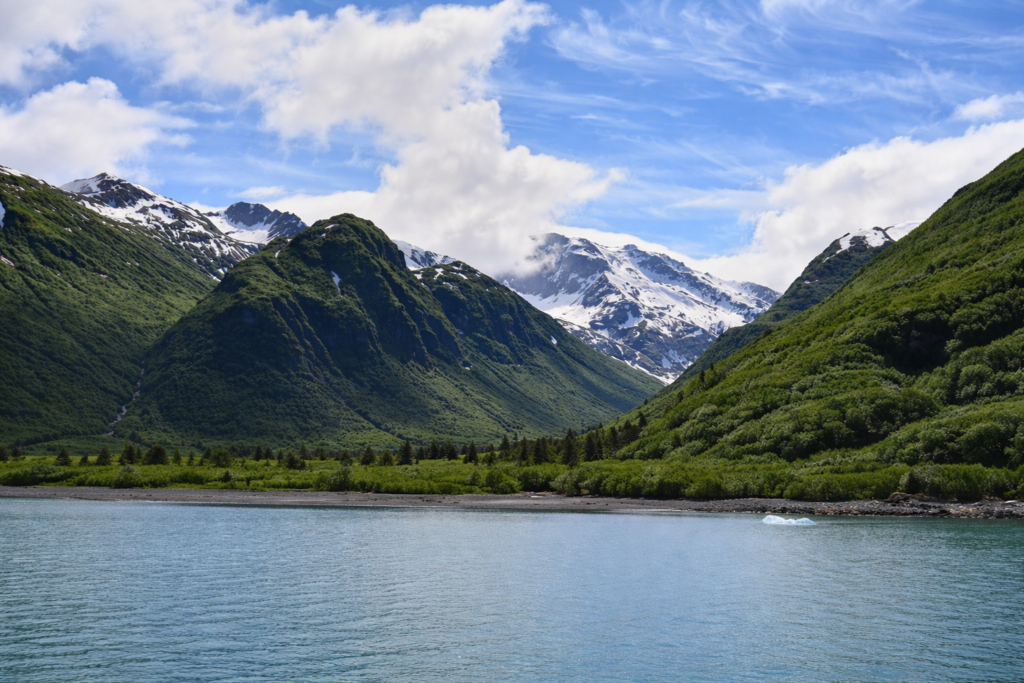
The Saint Elias Mountains stretch across southeastern Alaska and into Canada, forming one of the most dramatic coastal mountain systems in the world. This range sits right along the Gulf of Alaska, where massive peaks rise directly from near sea level to some of the highest elevations on the continent.
This range is defined by both height and proximity to the ocean. Mount Saint Elias is one of the tallest peaks in North America, and what makes it stand out is how quickly it rises from the coastline. Unlike interior ranges, where elevation builds gradually, the Saint Elias Mountains climb sharply from the ocean into steep, glaciated terrain.
Glaciers dominate the landscape here. Some of the largest icefields in North America are found in this range, spreading across mountains and flowing down toward the coast. These glaciers shape the terrain in a way that feels dense and powerful, with ice, rock, and water all tightly connected.
Most of the Saint Elias Mountains are extremely remote and difficult to access. Much of the range is protected within Wrangell–St. Elias National Park and Preserve, where large sections of land have no roads or developed infrastructure. The size of the park alone gives a sense of how vast and untouched this region is.
The range is heavily influenced by coastal weather. Moisture from the Gulf of Alaska moves inland and hits the mountains, creating heavy snowfall, frequent cloud cover, and rapidly changing conditions. This is one of the reasons the peaks are often hidden, even when nearby areas appear clear.
Wildlife lives throughout the lower elevations and valleys, including bears, moose, mountain goats, and Dall sheep. The mix of coastal conditions and alpine terrain creates a wide range of habitats across the region.
While most of the Saint Elias Mountains are not trail-based, there are a few areas where visitors can experience parts of the range. Near Yakutat, the mountains can be seen rising from the coast, often with glaciers reaching toward the ocean. Access deeper into the range is typically by small aircraft, and most travel beyond the edges requires backcountry experience.
The Saint Elias Mountains are defined by scale and contrast. Massive peaks, heavy glaciation, and direct connection to the ocean make this one of the most powerful and visually striking mountain systems in Alaska.