
Mount Hunter
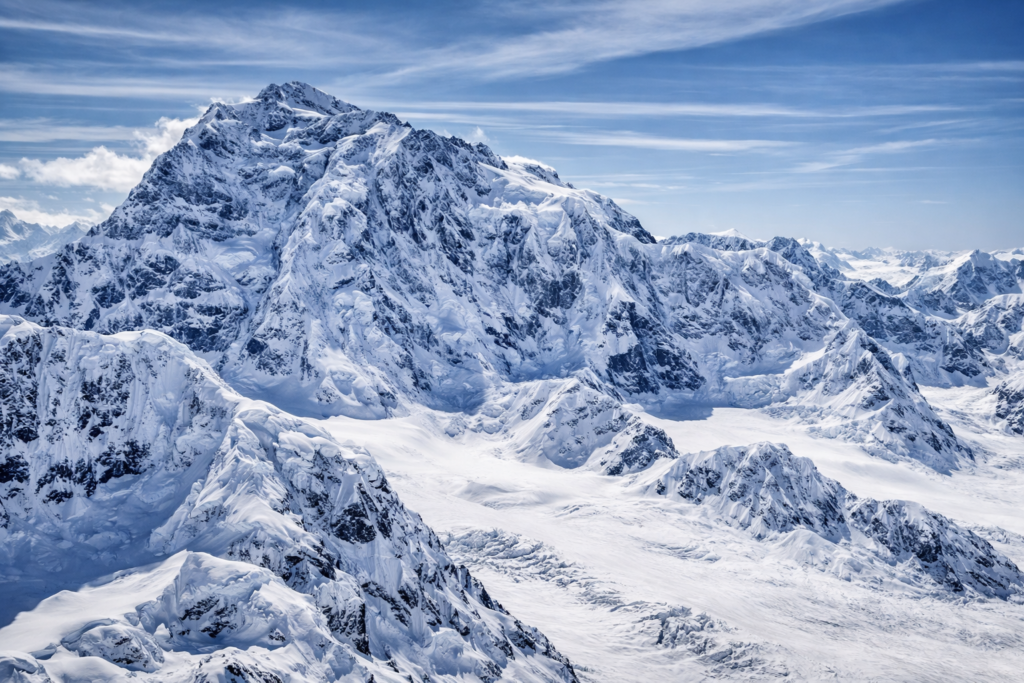
Mount Hunter rises to 14,573 feet in the Alaska Range and sits just south of Denali, often overshadowed by its taller neighbor but easily one of the most striking mountains in the region. When you see it in person, it stands out immediately — steep, sharp, and much more aggressive in shape compared to the broader mass of Denali.
From many viewpoints inside Denali National Park, Hunter appears closer and more defined, with jagged ridgelines and steep faces that catch the light differently throughout the day. It has a more technical, rugged look, and in clear conditions, it’s often one of the most visually dramatic peaks in the range.
The mountain is heavily glaciated, with ice clinging to steep slopes and dropping into deep valleys below. Glaciers flowing off Hunter connect into the larger systems that surround Denali, and the terrain feels steep and vertical from nearly every angle.
Climbing Mount Hunter is extremely difficult and considered more technical than Denali. The routes involve steep ice and rock, exposed ridges, and highly variable weather. It’s not a common climb, and even experienced mountaineers treat it as a serious challenge.
Most people experience Mount Hunter from the park road or from flightseeing tours out of Talkeetna. From the air, its steep faces and sharp ridges become even more obvious, giving a better sense of how different it is from the surrounding peaks.
Mount Hunter doesn’t have the name recognition of Denali, but in terms of shape and difficulty, it stands out as one of the most intense mountains in Alaska.