
Chugach Mountains
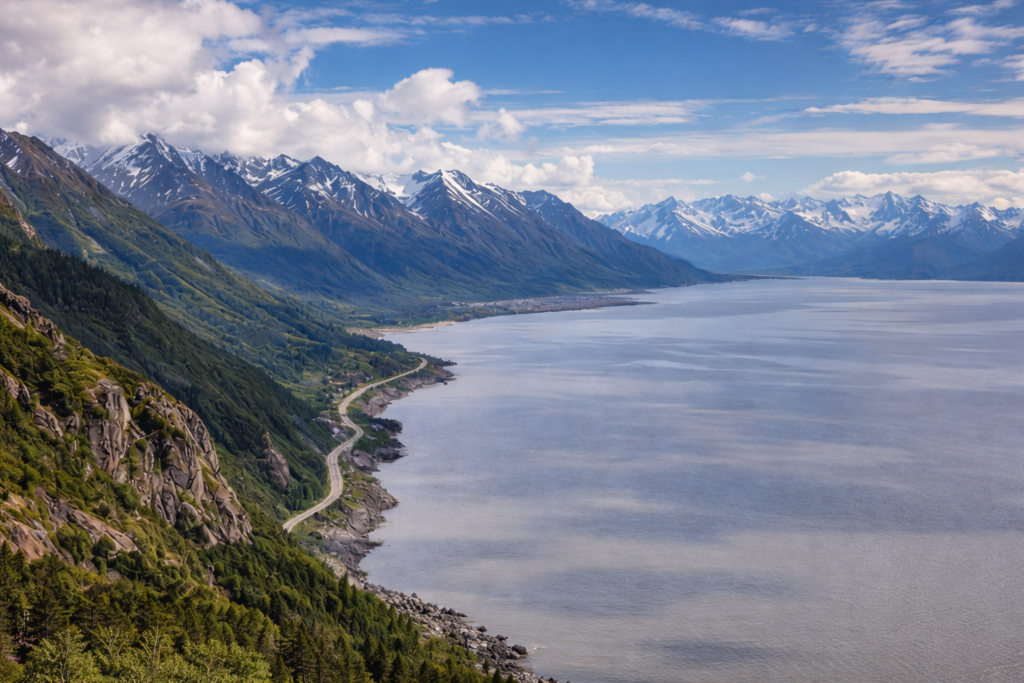
The Chugach Mountains stretch along the southcentral coast of Alaska, running from the Kenai Peninsula through Prince William Sound and up toward the Copper River Delta. Unlike interior ranges, the Chugach sit right along the Gulf of Alaska, which gives them a very different feel — steeper, wetter, and heavily influenced by coastal weather.
This range is known for its rugged terrain and sharp peaks, but what really defines it is the amount of snow and ice it holds. Moisture from the Gulf moves inland and hits the mountains, creating heavy snowfall and feeding massive glacier systems. In many areas, glaciers spill down toward the coastline, making the landscape feel dense and layered rather than wide and open.
The Chugach Mountains don’t reach the extreme heights of the Alaska Range, but they rise quickly from sea level into steep alpine terrain. This creates dramatic elevation changes in a short distance, where forested valleys transition into rocky slopes and snowfields within just a few miles.
Glaciers are a major feature here. Icefields and valley glaciers shape much of the range, especially around Prince William Sound and the eastern portions near Cordova. These glaciers feed rivers and streams that run through coastal forests and into the ocean, creating a constant connection between the mountains and the surrounding water.
Most people experience the Chugach Mountains from areas close to Anchorage and along the road system. Anchorage sits directly against the western edge of the range, making it one of the most accessible mountain systems in the state. The Seward Highway, Turnagain Arm, and surrounding areas offer consistent views of the mountains, often rising straight up from the water.
The Chugach also create a strong weather divide. Coastal areas tend to be wetter and milder, while conditions can change quickly with elevation. Clouds, rain, and snow are common, and visibility can shift throughout the day as weather moves through the mountains.
Wildlife is common throughout the lower elevations, including black bears, moose, mountain goats, and Dall sheep. The mix of coastal forest, alpine terrain, and glacial valleys creates a wide range of habitats in a relatively compact area.
Unlike more remote ranges, the Chugach Mountains are one of the most accessible places to hike in Alaska. Near Anchorage, trails like Flattop Mountain, Glen Alps, and Eagle River connect directly to the range and are included in Anchorage’s “Where to Hike” page. South of the city near Girdwood, steeper trails and alpine routes provide more advanced terrain. Near Whittier and Seward, coastal trails offer views of glaciers, mountains, and the ocean in the same landscape.
The Chugach Mountains are one of the most visible and accessible mountain systems in Alaska. They combine coastal scenery, glaciers, and steep terrain in a way that feels immediate and close, making them a major part of how people experience southcentral Alaska.