
Mount Saint Elias
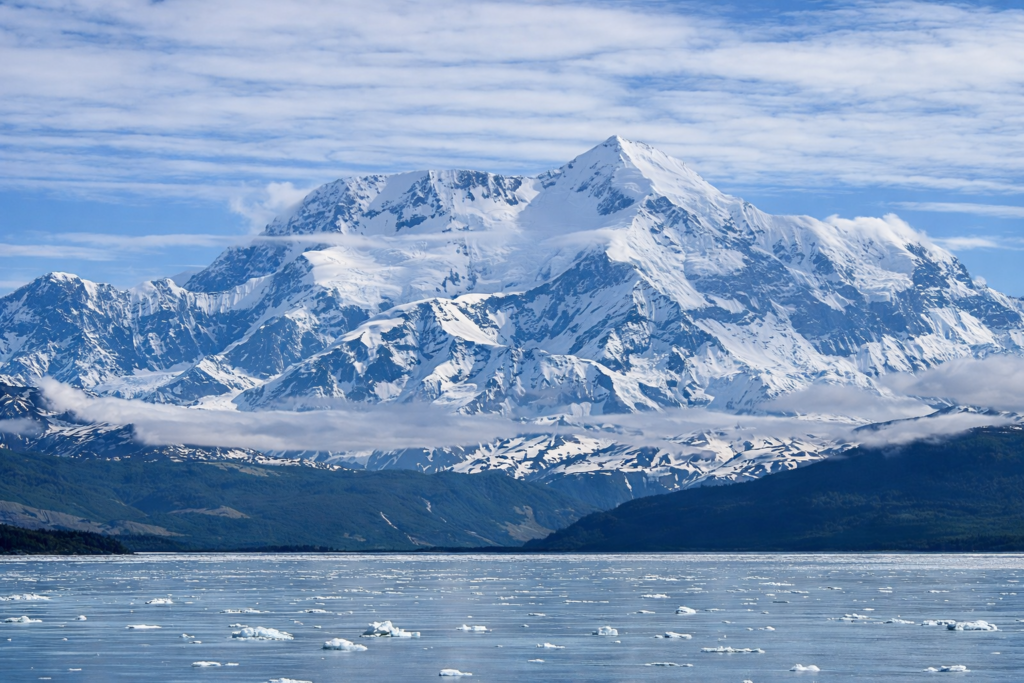
Mount Saint Elias is one of the most massive mountains in the world, rising to 18,008 feet along the Alaska–Canada border. It sits right on the edge of Wrangell–St. Elias National Park and Preserve and is part of the Saint Elias Mountains, where some of the tallest coastal mountains on Earth meet the Gulf of Alaska.
What makes Mount Saint Elias stand out isn’t just its height — it’s how quickly it rises from sea level. Within just a few miles, the land goes from ocean shoreline to one of the highest peaks in North America. That kind of vertical gain is rare, and it gives the mountain an almost overwhelming presence when conditions are clear.
Most people never see Mount Saint Elias up close because it’s so remote. There are no easy road access points, and much of the surrounding area is rugged, glaciated terrain. The best views usually come from flightseeing trips or from the coast on exceptionally clear days, where the mountain can appear towering above everything else.
The entire region is heavily shaped by ice. Massive glaciers flow down from the mountain toward the coast, carving valleys and feeding into some of the largest icefields in North America. The landscape feels raw and constantly in motion, with weather, ice, and elevation all working together.
Climbing Mount Saint Elias is extremely difficult and far less common than Denali. The combination of steep terrain, heavy snowfall, and fast-changing coastal weather makes it one of the more dangerous mountains in Alaska. Routes are complex, and conditions can shift quickly.
Wildlife exists in the lower elevations, but this is not a place defined by easy viewing or accessibility. It’s a place defined by scale, isolation, and extremes.
Mount Saint Elias doesn’t get the same attention as Denali, but in many ways it feels even more intense. It rises faster, sits closer to the ocean, and exists in a part of Alaska that still feels completely untouched