
Mount Fairweather
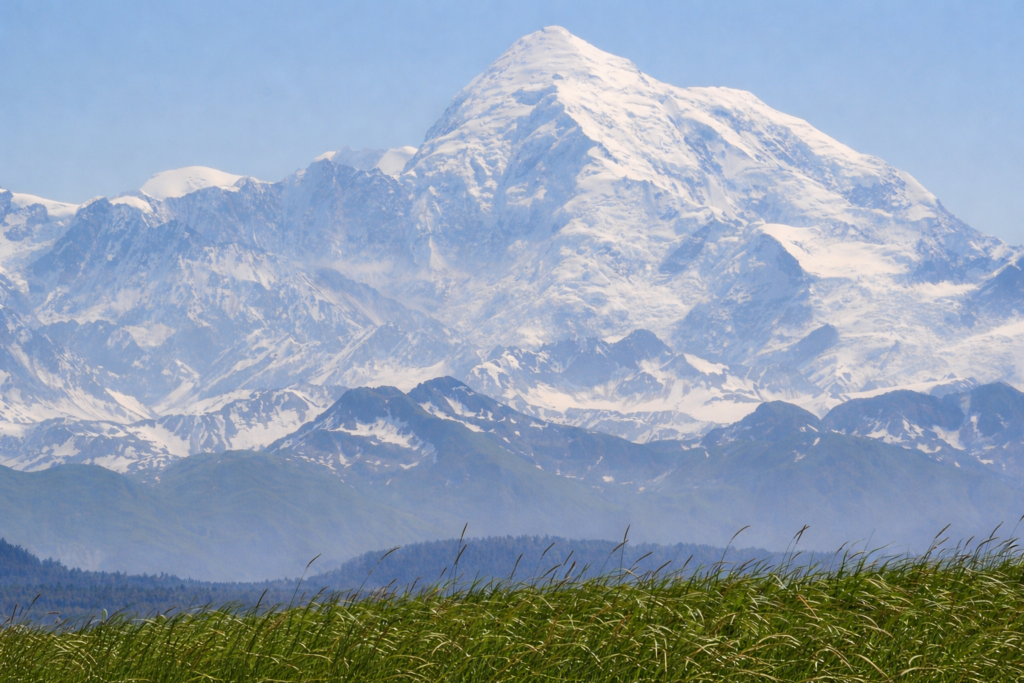
Mount Fairweather rises to 15,325 feet along the Alaska–Canada border and sits right on the edge of the Gulf of Alaska within Glacier Bay National Park and Preserve. It’s one of the most dramatic coastal mountains in the state, rising almost directly from sea level to a massive glaciated summit in a very short distance.
What makes Mount Fairweather stand out is how quickly it climbs. From the ocean to the peak, the elevation gain is extreme, and when conditions are clear, it towers above the surrounding coastline in a way that feels almost unreal. It’s often visible from the water in Glacier Bay and from offshore, where it dominates the entire horizon.
The mountain is heavily covered in snow and ice, with glaciers flowing down toward the coast and shaping the rugged terrain below. The combination of ocean, ice, and steep elevation gives the area a raw, constantly changing feel, especially with coastal weather moving through quickly.
Despite its name, Mount Fairweather rarely lives up to it. The region is known for storms, cloud cover, and rapidly shifting conditions, which often hide the mountain completely. Clear views are possible, but they’re not guaranteed, and when it does come out, it tends to be a brief and memorable moment.
Access is extremely limited. There are no roads leading anywhere near the mountain, and most people only see it from boats in Glacier Bay or from the air. That isolation keeps it feeling untouched and far removed from more visited parts of Alaska.
Climbing Mount Fairweather is rare and very challenging. The steep terrain, heavy snowfall, and unpredictable coastal weather make it a serious undertaking even for experienced climbers. Mount Fairweather stands out because of its setting as much as its size. It rises straight from the edge of the ocean into a wall of ice and rock, and that combination is something you don’t see in many places.