
Trees of Alaska
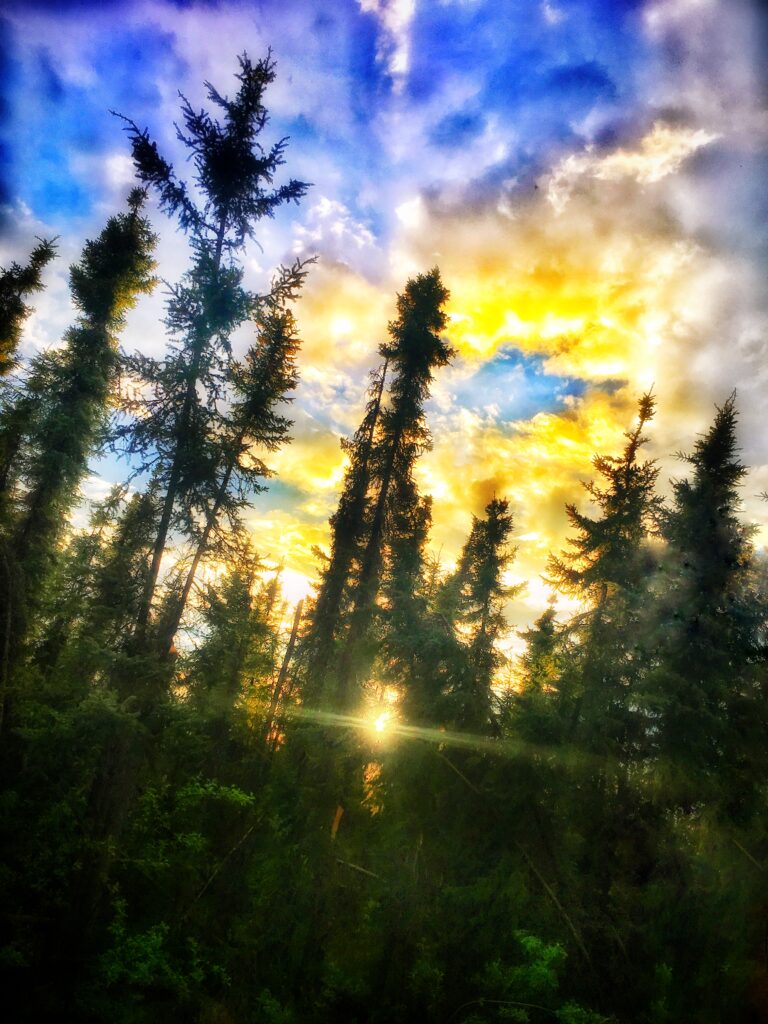
Alaska’s forests are shaped by cold temperatures, long winters, short growing seasons, and large differences in climate across the state. While much of Alaska lies in northern latitudes, trees still play a major role in defining landscapes, ecosystems, and how people live and move through the state.
From dense boreal forests in the Interior to temperate rainforests along the southern coast, Alaska’s trees vary widely in size, growth patterns, and distribution. In some regions, forests stretch for hundreds of miles. In others, tree growth thins quickly as conditions become too harsh.
Trees influence wildlife habitat, river systems, soil stability, and wildfire behavior. They have also long supported subsistence lifestyles, construction, fuel needs, and cultural traditions across Alaska.
This page provides an overview of the types of trees found in Alaska, where they grow, and why they matter to the landscape.
Types of Trees Found in Alaska
Alaska does not have a wide variety of tree species compared to more southern regions, but the trees that do grow here are highly adapted to survive cold temperatures, frozen ground, and limited growing seasons.
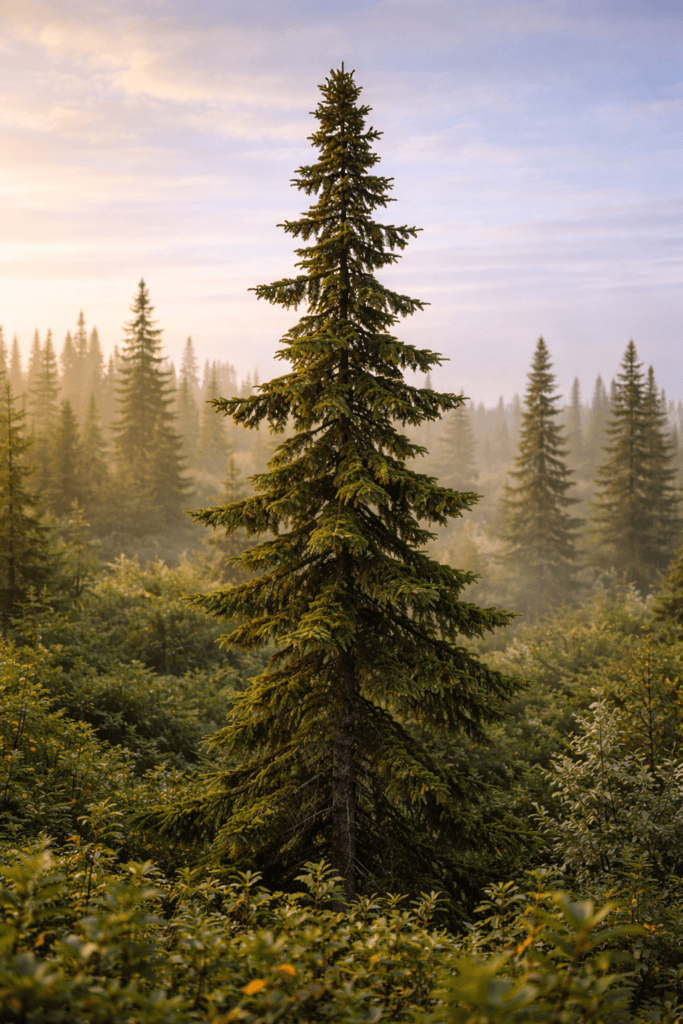
Boreal Forest Trees
Boreal forests, also known as taiga, cover much of Interior Alaska and represent the largest forested region in the state. These forests are dominated by cold-hardy trees that can tolerate permafrost, low nutrient soils, and long winters.
Examples include White Spruce, the tallest and most widespread tree in Interior Alaska, and Black Spruce, which grows slowly in colder, wetter areas and is closely associated with permafrost landscapes.
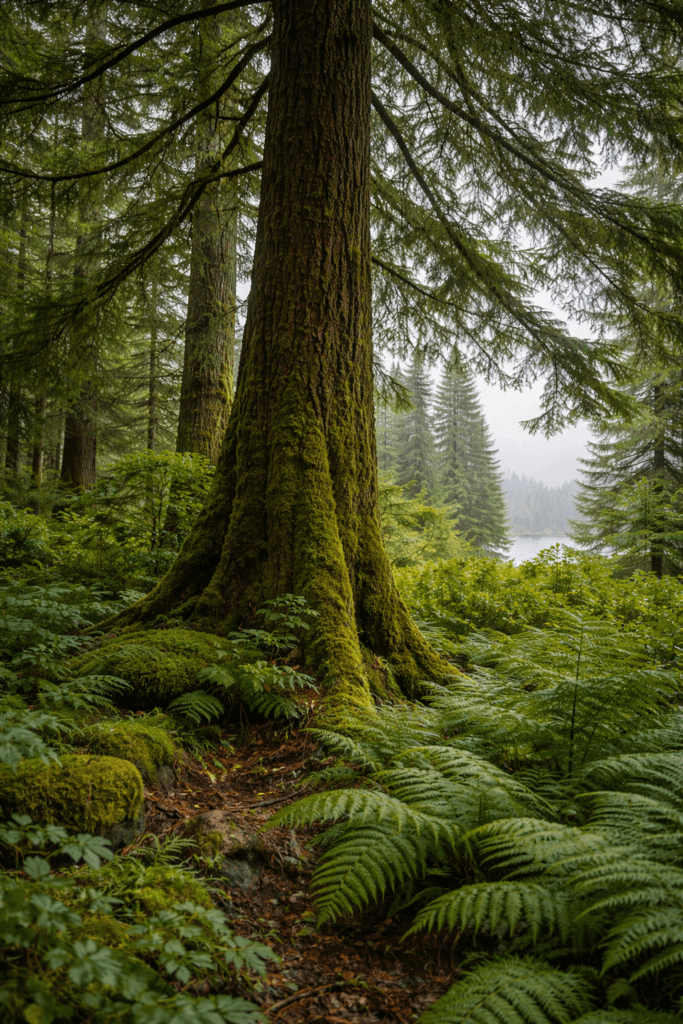
Coastal Forest Trees
Coastal forests are found primarily in Southeast Alaska and parts of Southcentral Alaska, where milder temperatures and high rainfall allow trees to grow taller and denser. These temperate rainforests are among the most productive forest systems in the world.
Examples include Sitka Spruce, known for its size and strength, and Western Hemlock, a common coastal tree that forms dense forest stands.
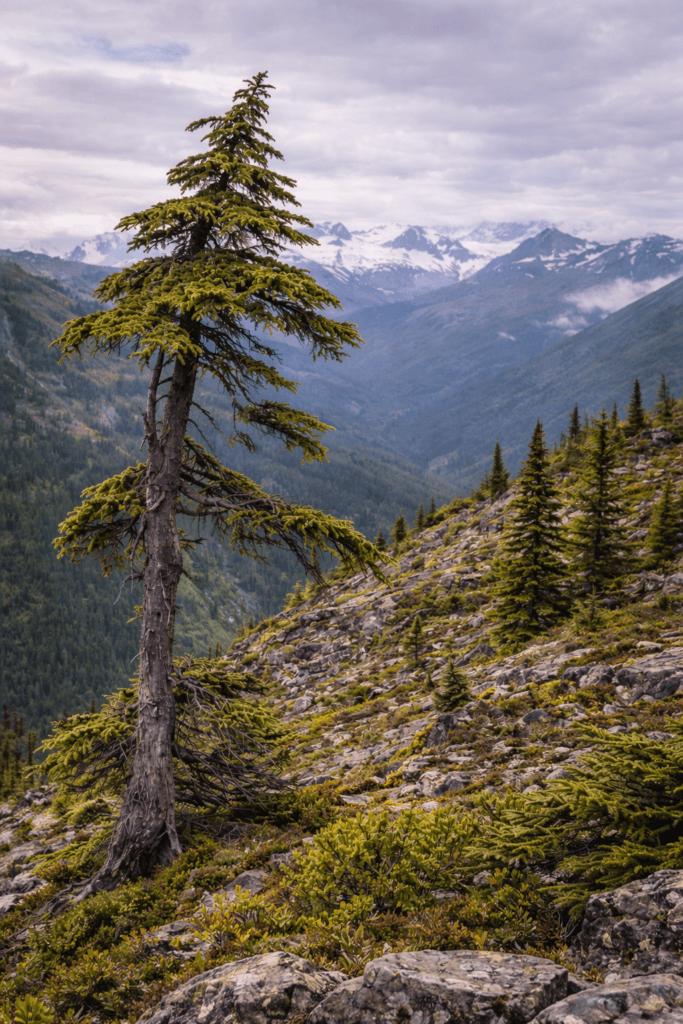
Mountain and Subalpine Trees
As elevation increases, tree growth becomes more limited. Subalpine forests form near treeline, where trees grow shorter, more widely spaced, and shaped by wind, snow, and cold.
Examples include Mountain Hemlock, which grows at higher elevations in southern Alaska, and White Spruce in its stunted, high-elevation form near treeline.
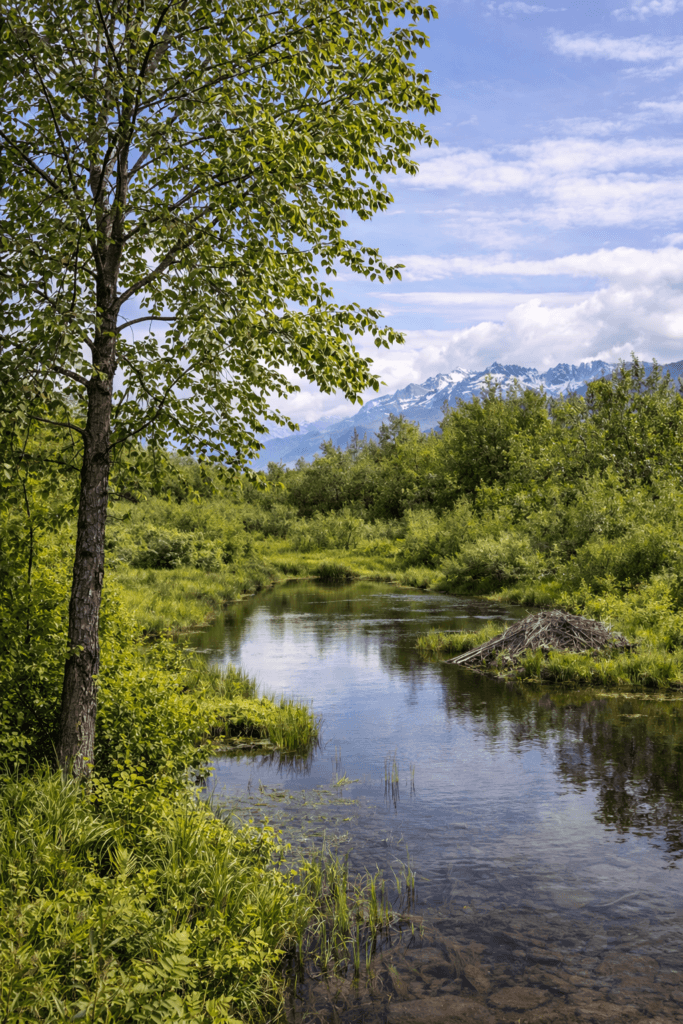
Wetland and Riparian Trees
Wetland and riparian trees grow along rivers, lakes, and low-lying areas with saturated soils or seasonal flooding. These trees are adapted to wet conditions and play an important role in stabilizing banks and supporting wildlife.
Examples include Balsam Poplar, commonly found along riverbanks and floodplains, and Willow, which grows quickly in wet areas and disturbed ground.
Trees are not evenly distributed across Alaska. Forests are most extensive in Interior Alaska and along the southern and southeastern coasts, where temperatures and moisture levels support sustained growth.
Northern Alaska and high alpine regions lack trees entirely, giving way to tundra landscapes shaped by permafrost and extreme cold. In these areas, the absence of trees affects wind exposure, wildlife movement, and seasonal travel.
Alaska’s trees play an important role in regulating climate, storing carbon, supporting wildlife, and shaping watersheds. They also influence wildfire behavior, which is a natural and increasingly significant part of Alaska’s landscape.
Beyond ecology, trees have long supported human life in Alaska by providing materials for shelter, fuel, tools, and transportation.
Alaska’s forests may appear sparse compared to those farther south, but each tree species plays a meaningful role in the environments where it grows.
The following trees serve as starting points for learning more about Alaska’s forests. Each can be explored in greater detail on its own dedicated page.
Take a look at some trees found in Alaska below:
White Spruce (Picea glauca) – Boreal Forest Tree
— The most widespread tree in Interior Alaska; tall, cold-hardy, and adapted to permafrost soils.
Black Spruce (Picea mariana) – Boreal Forest Tree
— Slow-growing tree found in wet, cold areas; commonly associated with bogs and permafrost.
Sitka Spruce (Picea sitchensis) – Coastal Forest Tree
— One of the largest trees in Alaska, growing in coastal rainforests with high moisture.
Paper Birch (Betula papyrifera) – Boreal Forest Tree
— Recognizable by its white bark; common in Interior forests and disturbed areas.
Alaska Yellow Cedar (Callitropsis nootkatensis) – Coastal Forest Tree
— Durable, slow-growing tree found in Southeast Alaska; valued for its wood.
Western Hemlock (Tsuga heterophylla) – Coastal Forest Tree
— Shade-tolerant tree forming dense coastal forests in Southeast Alaska.
Mountain Hemlock (Tsuga mertensiana) – Subalpine Tree
— Found at higher elevations; grows slower and more spaced near treeline.
Quaking Aspen (Populus tremuloides) – Boreal Forest Tree
— Fast-growing tree known for its trembling leaves; common after disturbance or fire.
Balsam Poplar (Populus balsamifera) – Riparian Tree
— Grows along rivers and floodplains; important for stabilizing banks and wildlife habitat.
Cottonwood (Populus spp.) – Riparian Tree
— Large, fast-growing tree found along waterways; closely related to poplar species.
Willow (Salix spp.) – Riparian / Shrub Tree
— Common in wet areas; ranges from low shrubs to small trees depending on conditions.
Some trees in Alaska are classified as shrubs—explore those here.