
Yellow Cedar in Alaska
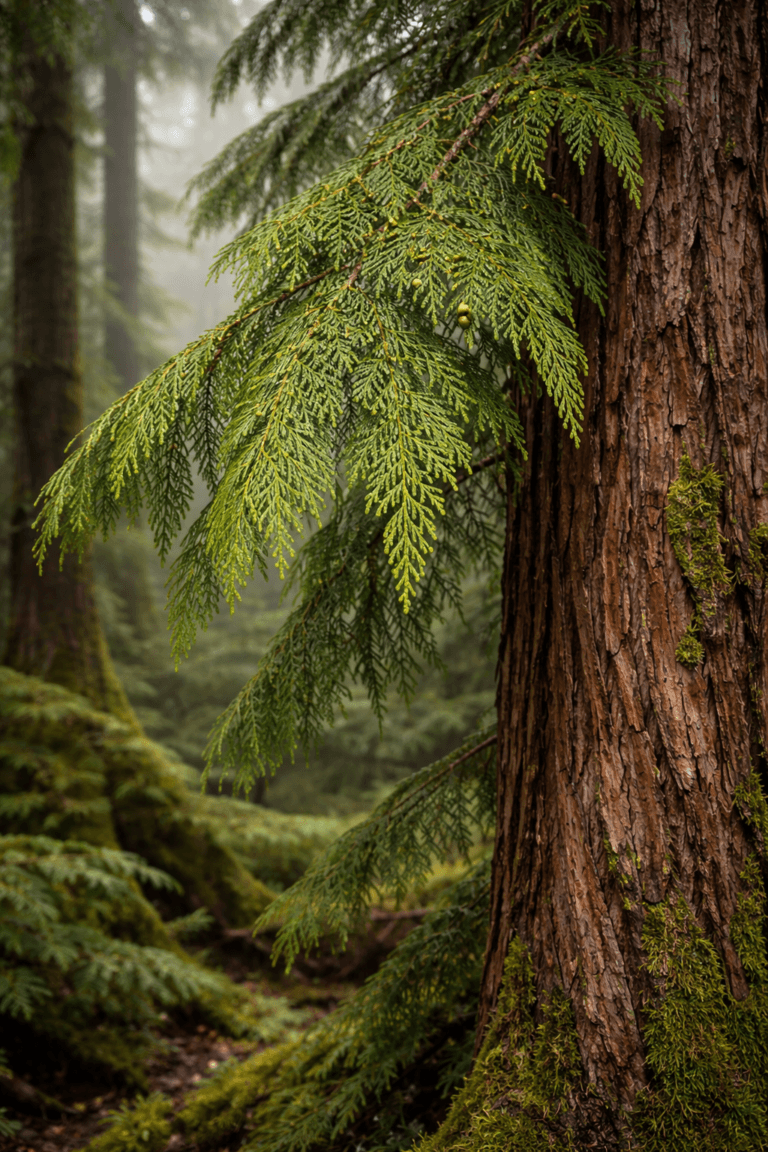
Yellow Cedar in Alaska
If you’ve walked through old-growth forest in Southeast Alaska and caught a faint, spicy wood scent in the air, you may have been near yellow cedar.
This is not a bright yellow tree. The name comes from the color of its inner wood — rich, golden, and incredibly durable.
Yellow cedar doesn’t grow everywhere. It prefers specific coastal conditions, often tucked into misty slopes and high rainfall zones. When you find it, you’re usually in mature forest.
It’s one of the most respected trees in Alaska.
Where It Grows
Yellow cedar prefers:
• Southeast Alaska
• Coastal mountain slopes
• Cool, wet climates
• Well-drained but moist soils
• Higher elevations within the coastal rainforest
It often grows alongside western hemlock and Sitka spruce but tends to stand out once you know what to look for.
It grows slowly. Some trees are hundreds of years old.
When to Notice It
Year-round.
Like other coastal evergreens, it holds its foliage through winter.
You’ll notice it most when:
• Bark peels in long, stringy strips
• The trunk shows pale, silvery-gray outer bark
• Fallen wood reveals yellow interior
In fog or rain, the bark texture becomes even more visible.
How to Identify It
Key traits:
• Scale-like leaves (not needles)
• Flat, drooping sprays of foliage
• Stringy, shredding bark
• Strong, distinctive wood scent when cut
• Small, round woody cones
It does not have sharp needles like spruce.
The foliage feels soft and flattened, more similar to cedar than spruce or hemlock.
If you see shredding bark and flattened sprays instead of individual needles, you’re likely looking at yellow cedar.
Is It Useful?
Very.
Yellow cedar is one of the most valuable wood species in Alaska because it is:
• Extremely rot-resistant
• Durable in wet environments
• Strong for its weight
• Long-lasting outdoors
It has been used for:
• Boat building
• Outdoor structures
• Decking and siding
• Carving
• Traditional Indigenous tools and crafts
Unlike spruce tips or birch sap, yellow cedar isn’t something you cook with. It’s not a food tree and has no practical culinary use in Alaska. Its value is in the wood, not the kitchen.
If you’re spending time around old-growth coastal forest, waterproof outer layers matter. Coastal rain is persistent, and staying dry makes the difference between exploring and retreating early.
Why It Matters in Alaska
Yellow cedar represents old coastal forest.
It grows slowly. It lasts a long time. It holds up to moisture better than most trees around it.
When you see it, you’re usually standing in mature forest that has taken decades — sometimes centuries — to develop.
Recognizing yellow cedar helps you understand Southeast Alaska’s structure and history.
Learn more coastal and Interior species in Trees of Alaska.