
White Spruce in Alaska
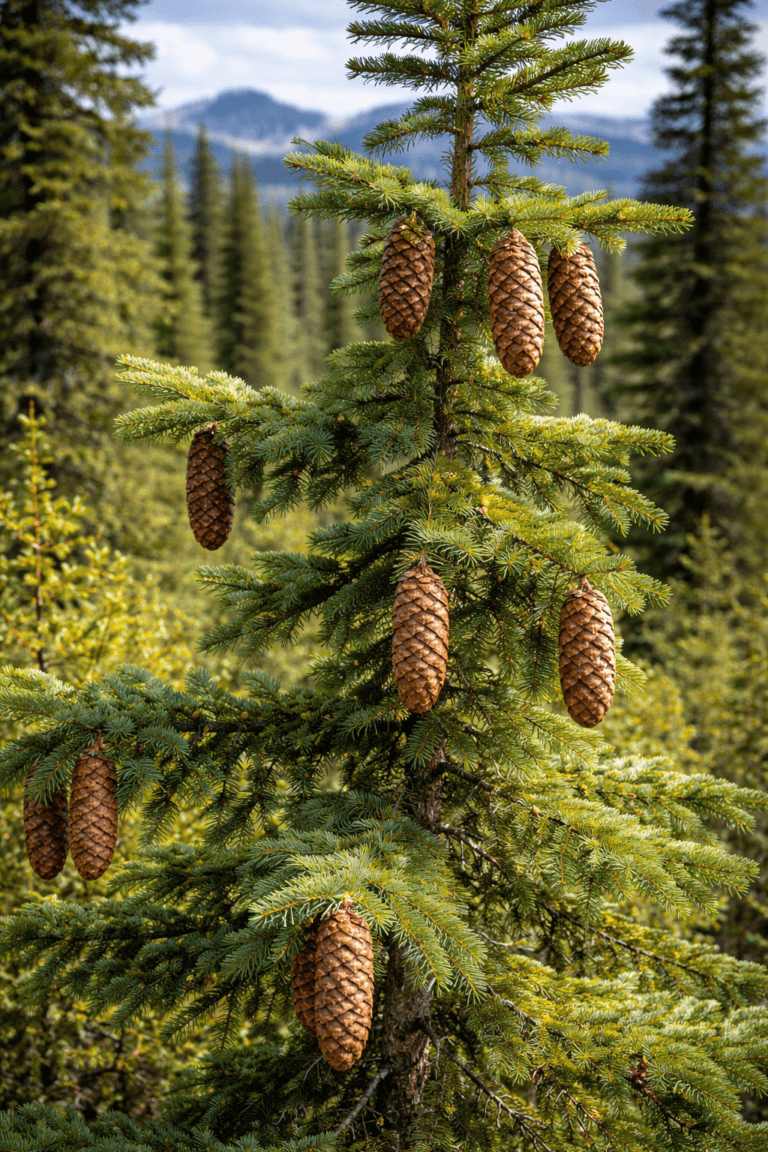
White Spruce in Alaska
If you’ve driven the Parks Highway north of Anchorage or walked almost anywhere outside Fairbanks, you’ve seen it.
Tall. Straight trunk. Gray-brown bark. Narrow spire shape when young, broader with age.
White spruce is one of the backbone trees of Interior Alaska. It’s the tree that builds the forest.
You’ll find it lining rivers, filling low hills, and standing thick across well-drained ground where the soil isn’t permanently frozen.
Where It Grows
White spruce prefers:
• Interior Alaska
• River valleys and floodplains
• Well-drained soils
• South-facing slopes
• Mixed forest with birch and aspen
It does not love soggy ground. If the soil is wet and spongy year-round, that’s usually black spruce territory.
White spruce grows larger and taller than black spruce, especially where roots can go deep.
When to Notice It
Year-round.
This is an evergreen. Needles stay on through winter.
In summer, new growth shows as lighter green tips at the ends of branches. In late summer, cones mature and hang downward from upper branches.
Winter is actually one of the easiest times to recognize it — especially when the structure stands clean against snow.
How to Identify It
Key traits:
• Needles are four-sided and sharp
• Blue-green to dark green color
• Roll a needle between your fingers — it feels square
• Cones hang downward
• Cones are 1–2 inches long, thin, flexible scales
• Bark is gray-brown and flaky
If you crush the needles, they have a strong spruce scent — clean, resinous, unmistakable.
The biggest confusion point in Alaska is black spruce.
Quick difference:
White spruce = larger tree, longer cones, better-drained soil
Black spruce = smaller, scraggier, swampy ground, tiny cones clustered near the top
If you’re unsure, look at the ground. The ground usually tells you which spruce you’re standing under.
Is It Useful?
Yes.
White spruce has been used across Alaska for:
• Firewood
• Building cabins
• Log construction
• Poles and framing
• Traditional uses by Indigenous communities
Dry white spruce burns hot and fast. If you heat with wood in the Interior, you know this tree.
It’s also a common Christmas tree in Alaska homes — straight trunk, balanced branches.
If you spend time outdoors in cold weather, a reliable folding saw makes processing small spruce limbs for emergency fire-starting far easier. Keep it simple and pack light.
Why It Matters in Alaska
Interior Alaska would not look the same without white spruce.
It shapes the skyline. It fills the valleys. It defines what most people picture when they think “Alaska forest.”
When wildfire moves through, white spruce burns hot. When regrowth begins, it eventually returns.
If you’re learning Alaska trees, start here. Once you can confidently identify white spruce, the rest of the boreal forest starts to make sense.
Learn about other northern trees in Trees of Alaska.