
1–2 Day Camping Packing List for Alaska
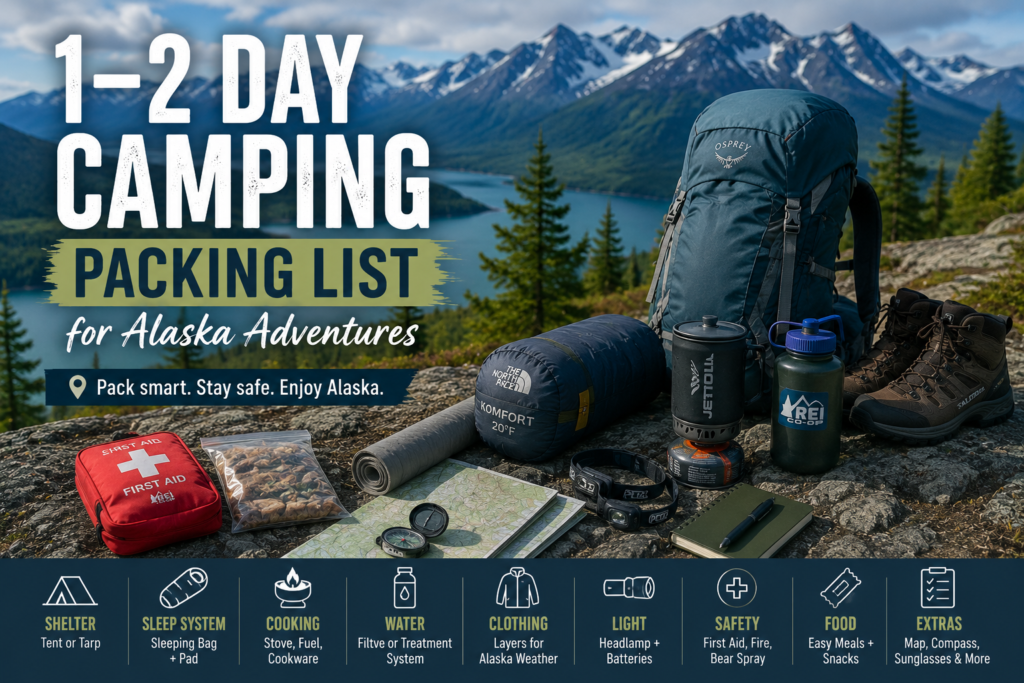
1–2 Day Alaska Camping Packing List
A 1–2 day camping trip in Alaska does not require packing everything you own, but it does require planning for changing weather, wet conditions, bugs, and a few unexpected surprises. Even on short trips, I like to pack as though I might spend one extra night out if something goes sideways. The goal is not to overpack. The goal is to be comfortable and prepared.
Shelter & Camp Setup
A dependable shelter is the foundation of any Alaska camping trip. Even if the forecast looks good, rain and wind can move in quickly.
- Tent — Best Tents for Alaska Camping
- Tent footprint or ground tarp
- Tent stakes
- Mallet or small hatchet for stakes
- Extra guy lines
- Camp chair
- Small camp table (optional)
- Tarp for rain shelter (optional but helpful)
Sleep System
Good sleep makes every camping trip better. Cold ground and damp air can make even a short trip uncomfortable if your sleep setup is weak.
- Sleeping bag — Best Sleeping Bags for Alaska
- Sleeping pad and insulation — Sleeping Gear for Cold & Wet Conditions
- Pillow or camp pillow
- Extra blanket (optional)
- Sleeping clothes
Clothing
Always prepare for more than one weather scenario. Alaska can give you sunshine, rain, wind, and chilly evenings all in the same trip. I would rather carry one extra layer than spend the evening cold and uncomfortable.
- Base layers — Essential Layering System for Alaska Adventures
- Extra shirt
- Hiking pants or outdoor pants
- Rain jacket — Best Rain Jackets for Alaska
- Fleece or insulating layer
- Extra socks
- Underwear
- Hat
- Gloves for spring, fall, mountain, or cold-weather trips
- Camp shoes or sandals
Camp Kitchen
For a short trip, keep meals simple. I like gear that makes coffee, hot water, and basic meals easy without turning camp into a full kitchen project.
- Camp stove and cooking gear — Camp Cooking Gear
- Campfire cooking tips — Cooking Outdoors in Alaska
- Fuel
- Lighter
- Backup lighter
- Coffee setup
- Water bottle
- Camp mug
- Plate or bowl
- Utensils
- Small cooler
- Food for trip duration plus one extra meal
Water
Never assume water is safe just because it looks clean. Alaska has plenty of rivers, lakes, and creeks, but natural water still needs to be treated.
- Water bottles
- Water jugs
- Water filter — Best Water Filtration Systems for Alaska
- Electrolyte packets (optional)
Fire & Camp Comfort
Even if you plan to cook on a stove, campfires are still part of the camping experience when they are allowed. Always follow local fire restrictions and campground rules.
- Fire starter
- Waterproof matches
- Lighter
- Small hatchet or camp saw (where permitted)
- Firewood (if allowed)
Bugs & Personal Comfort
Some Alaska trips barely have mosquitoes. Others can feel like a battle. I personally never leave bug protection at home during summer camping season.
- Bug spray
- ThermaCELL — Camping Gear That Actually Works in Alaska
- ThermaCELL refills or charger
- Head net
- Sunglasses
- Sunscreen
- Lip balm
Safety & Essentials
These are the items you may not use every trip, but they matter when you need them. Alaska camping is much more enjoyable when your basic safety systems are covered.
- Headlamp
- Extra batteries or charging cable
- Small first aid kit
- Pocket knife or multitool
- Phone charger
- Portable battery pack
- Paper map or downloaded offline maps
- Bear spray — Bear Safety in Alaska
- Toilet paper
- Hand sanitizer
- Trash bag
Fishing Gear (Optional)
If you are camping near water, it can be worth throwing a rod in the truck. Just make sure you have the proper fishing license and know the local regulations.
- Fishing rod
- Tackle box
- Fishing license
- Fillet knife
- Stringer or fish bag
Other Helpful Alaska Camping Guides
If you're planning additional Alaska camping adventures, these guides may also help:
Final Thoughts
For most 1–2 day Alaska camping trips, focus on shelter, sleep, water, weather protection, food, bugs, and basic safety. You do not need a massive amount of gear to have a great trip, but you do want gear that can handle rain, cold mornings, wet ground, and changing conditions.
A simple, reliable setup will almost always outperform a complicated one. The less time you spend managing gear, the more time you get to enjoy Alaska.
```