
Cooking Outdoors in Alaska (Campfire & Camp Kitchen Guide)
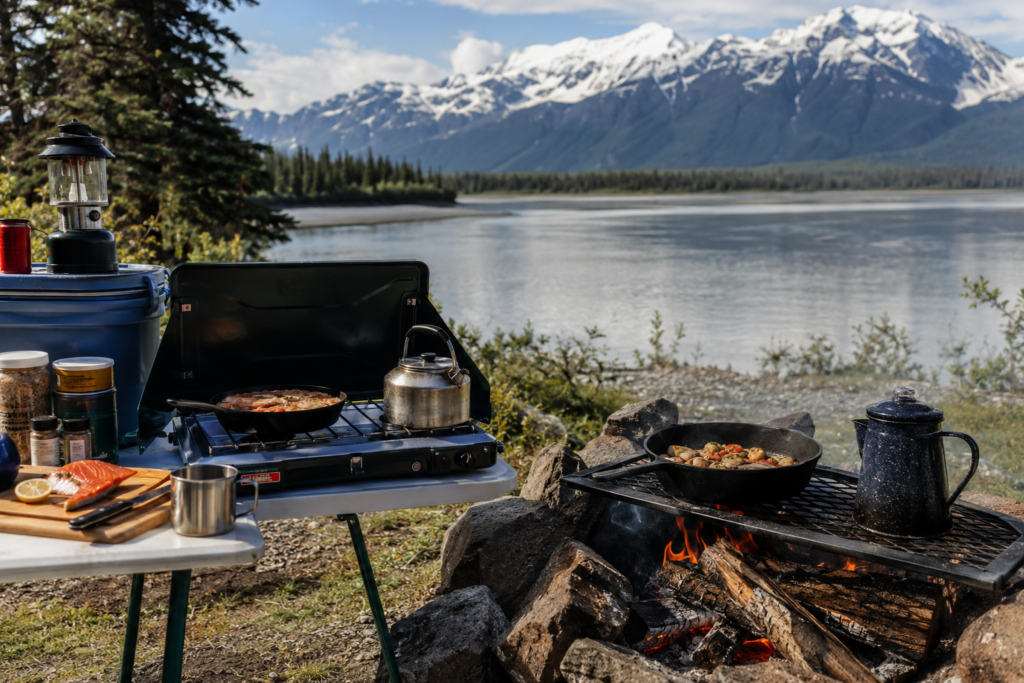
Cooking outside in Alaska is part of the experience. Whether you are camping beside a river, parked at a pullout on the Parks Highway, fishing on the Kenai Peninsula, or tucked into a rainy Southeast Alaska campsite, meals outdoors become part of the memory.
But Alaska also adds challenges that many people are not used to:
cold temperatures, constant rain, wind, wet firewood, wildlife concerns, and remote conditions where forgetting one piece of gear can turn into a real problem.
The good news is that outdoor cooking in Alaska does not need to be complicated. A simple setup, reliable gear, and a little preparation goes a long way.
This guide covers practical camp cooking systems, fire cooking tips, food storage, weather considerations, and the gear that actually helps in Alaska conditions.
What Makes Cooking in Alaska Different?
Outdoor cooking in Alaska is often less about convenience and more about reliability.
You may be cooking:
- In rain for multiple days
- In heavy wind near the coast
- In freezing temperatures during shoulder seasons
- In remote areas without nearby stores
- Around bears and wildlife
- With wet wood and difficult fire conditions
A setup that works perfectly in the Lower 48 during summer can become frustrating fast in Alaska weather.
That is why most experienced Alaska campers focus on:
- Fast setup
- Wind resistance
- Waterproof gear storage
- Fuel redundancy
- Simple meals
- Easy cleanup
- Reliable heat sources
Campfire Cooking in Alaska
Cooking over a fire is still one of the best parts of camping in Alaska.
There is something hard to beat about sitting beside a river with a fire going while salmon cooks in a cast iron pan or coffee heats in the morning cold.
But fires are not always easy here.
Challenges With Alaska Campfires
Depending on where you camp, you may deal with:
- Wet firewood
- Fire restrictions
- Strong winds
- Constant rain
- Limited dry tinder
- Soft tundra ground
- Coastal moisture
Even during summer, it is smart to assume your fire may struggle at some point.
That is why many Alaska campers treat campfires as a bonus — not their only cooking source.
Propane Camp Stoves
A propane stove is usually the backbone of an Alaska camp kitchen.
They are dependable, fast, and much easier to manage in wet weather than relying entirely on fire.
Most people use:
- Two-burner propane camp stoves
- Single-burner backpacking stoves
- Compact propane systems for quick meals
Two-burner stoves are especially useful for:
- Families
- Multi-day camping
- Coffee + breakfast at the same time
- Cooking fish or larger meals
They also help when weather gets rough and you need fast hot food.
Jet Boils & Fast-Boil Systems
Fast-boil systems are extremely popular in Alaska for good reason.
When temperatures drop or rain moves in, quickly making:
- Coffee
- Oatmeal
- Freeze-dried meals
- Soup
- Hot chocolate
can completely change morale during a trip.
They are also excellent backups if your main stove fails.
A lot of Alaska hikers and campers carry both:
- A primary camp stove
- A compact fast-boil backup system
especially during longer trips or shoulder seasons.
Cooking Over Open Fire
If conditions allow it, cooking over fire adds a completely different feel to camp meals.
Popular Alaska fire-cooked foods include:
- Salmon
- Sausage
- Foil packet potatoes
- Steak
- Pancakes on cast iron
- Dutch oven chili
- Campfire coffee
Useful Fire Cooking Tools
Helpful fire-cooking gear includes:
- Cast iron pans
- Long tongs
- Grill grates
- Fire gloves
- Dutch ovens
- Folding cooking grates
- Aluminum foil
- Heat-resistant utensils
Cast iron works especially well because it handles uneven heat better than thinner cookware.
Coffee While Camping in Alaska
Coffee becomes a survival tool for many Alaska campers.
Cold mornings, rain on the tent, and early fishing trips make hot coffee feel mandatory.
Popular options include:
- Propane coffee makers
- Percolators
- French presses
- Pour-over systems
- Instant coffee for lightweight trips
Propane coffee makers are especially nice for RV setups and longer camps where convenience matters.
Percolators remain popular around campfires because they are simple, durable, and hard to break.
Rain & Wind Cooking Tips
Rain changes everything in Alaska.
A good cooking setup usually includes some kind of shelter:
- Pop-up canopy
- Tarp system
- RV awning
- Hatchback cooking setup
- Wind screen for stoves
Helpful Alaska Cooking Tips
Keep these habits in mind:
- Store fire starters in waterproof containers
- Bring extra fuel
- Keep one backup lighter dry
- Use bins instead of loose bags
- Prep meals ahead of time when possible
- Bring easy hot meals for bad-weather days
- Avoid overly complicated cooking systems
Wind also burns fuel much faster than people expect.
Even a simple windscreen around a stove can make a major difference.
Bear Safety Around Food
Food management matters in Alaska.
Bears can be attracted by:
- Food scraps
- Grease
- Fish remains
- Coolers
- Dirty cookware
- Garbage
Camp Kitchen Safety Basics
Good habits include:
- Never cooking beside your sleeping area
- Cleaning dishes quickly
- Storing food securely
- Keeping fish waste away from camp
- Avoiding food inside tents
- Using bear-resistant storage when possible
In remote areas, clean camps matter.
Easy Alaska Camp Meals
Simple meals usually work best.
After hiking, fishing, driving, or dealing with weather all day, most people do not want complicated cleanup.
Popular Alaska camp meals include:
- Chili
- Sausage and potatoes
- Foil packet meals
- Pasta
- Ramen upgrades
- Salmon and rice
- Breakfast burritos
- Pancakes
- Instant soups
- Freeze-dried backpacking meals
Pre-made ingredients help a lot.
Many experienced campers prep:
- Chopped vegetables
- Meat portions
- Spice mixes
- Marinades
- Coffee kits
before leaving home.
Camp Kitchen Organization
A messy camp kitchen becomes frustrating quickly.
Bins and organized systems make outdoor cooking much easier.
Helpful camp kitchen items include:
- Waterproof storage bins
- Folding tables
- Paper towel holders
- Dish tubs
- Dry bags
- Spice containers
- Refillable water jugs
- Trash systems
Many Alaska campers eventually develop dedicated camp kitchen totes that stay mostly packed year-round.
Cooking During Cold Weather Camping
Cold weather changes cooking times and fuel usage.
Things to expect:
- Propane performance drops in extreme cold
- Water takes longer to boil
- Fuel consumption increases
- Cleanup becomes harder
- Frozen ingredients become difficult to manage
Warm meals become more important during cold-weather camping.
Soup, pasta, oatmeal, coffee, and hot drinks help maintain energy and comfort.
Cooking Fish in Alaska
Fresh fish is one of the best parts of camping here.
Popular options include:
- Salmon
- Halibut
- Grayling
- Trout
- Rockfish
Simple preparation usually works best.
Many campers use:
- Butter
- Lemon
- Garlic
- Cajun seasoning
- Salt and pepper
and cook fish:
- On cast iron
- In foil packets
- Over grills
- On cedar planks
- Directly over campfire grates
Fresh Alaska fish rarely needs much.
Final Thoughts
Cooking outdoors in Alaska is less about perfection and more about creating a system that works reliably in changing conditions.
Rain, wind, cold, and remote travel can make even simple meals feel difficult if you are unprepared.
But with a dependable stove, a basic fire setup, organized gear, and realistic meal planning, camp cooking becomes one of the best parts of exploring Alaska.
Some of the best memories happen around the fire:
coffee in the morning cold,
salmon cooking beside the river,
and late-night meals after long days outside.