
Camping Gear That Actually Works in Alaska
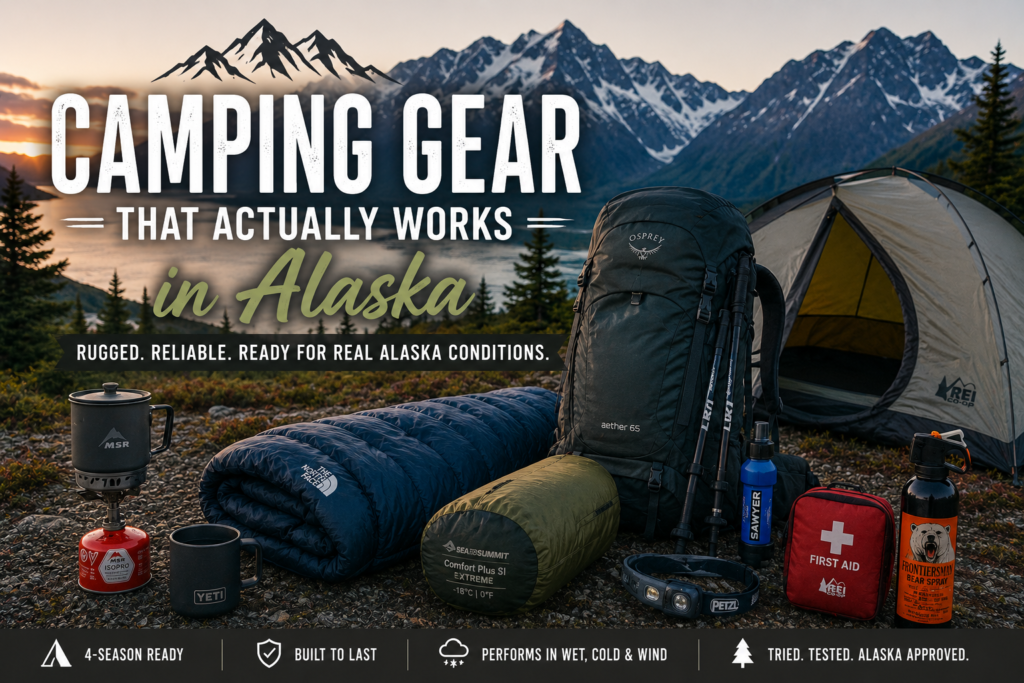
Camping Gear That Actually Works in Alaska
Camping in Alaska is different than camping in many other parts of the country. The weather changes quickly, mosquitoes can be relentless, distances are longer, and even summer nights can be surprisingly cold.
The good news is that you do not need hundreds of pieces of gear to enjoy Alaska. You simply need gear that solves real Alaska problems.
This guide highlights the types of camping gear that consistently prove useful across Alaska. Whether you are camping near Fairbanks, fishing on the Kenai Peninsula, exploring Southcentral Alaska, or road-tripping through Interior campgrounds, these are the categories worth paying attention to.
Shelter Comes First
A good tent is the foundation of almost every Alaska camping trip. Rain, wind, wet ground, and changing weather make shelter far more important than most campers realize.
Look for a tent that is easy to set up, handles rain well, and has enough room for both people and gear.
If you’re still building your camping setup, check out our guide to Best Tents for Alaska Camping.
Your Sleep System Matters More Than Your Tent
Many campers focus heavily on tents and overlook their sleep setup.
A quality sleeping bag, insulated sleeping pad, and dry sleeping environment usually have a larger impact on comfort than the tent itself. Cold ground, damp air, and overnight temperature drops can quickly turn a trip uncomfortable.
For more help, see:
Reliable Cooking Gear Makes Camp Life Better
Food is a big part of camping, and good cooking gear can make a huge difference in overall comfort.
A dependable camp stove, a fast water-boiling system like a Jetboil, and quality cookware make it easier to prepare meals regardless of weather conditions. Even if you enjoy cooking over a fire, having a backup cooking system is something I strongly recommend for Alaska.
Rain, wet firewood, campground restrictions, or changing conditions can quickly make a camp stove your most important piece of gear.
For more ideas, see:
Water Is Everywhere, Clean Water Is Not
Alaska has no shortage of rivers, lakes, streams, and creeks, but clear water does not automatically mean safe drinking water.
A dependable filter gives you flexibility when camping away from developed campgrounds and helps reduce the amount of water you need to haul into camp.
See our guide to Best Water Filtration Systems for Alaska.
Weather Changes Faster Than Most People Expect
One thing I’ve learned over the years is that Alaska camping rewards preparation. A sunny afternoon can turn into a cold, rainy evening, and a comfortable campsite can suddenly become windy, muddy, or buggy.
The best camping gear isn’t necessarily the most expensive gear. It’s the gear that helps you stay comfortable when conditions change. I always recommend preparing for more than one scenario. Pack for the weather you expect, but also for the weather you hope doesn’t show up.
Extra layers, rain gear, and dry clothing often become more valuable than luxury camping items.
If you’re unfamiliar with how weather varies across the state, check out:
- Climate & Weather in Alaska
- Essential Layering System for Alaska Adventures
- Best Rain Jackets for Alaska
Lighting Is One of the Most Overlooked Pieces of Camping Gear
Most campers don’t think much about lighting until they need it.
A good headlamp gets used constantly around camp. Setting up tents, organizing gear, cooking dinner, fishing, walking to the restroom, or dealing with unexpected situations all become easier when you have dependable hands-free light.
Even during Alaska summers, I always carry a headlamp. It’s one of those small pieces of gear that consistently proves its value. You may not use it every hour of every trip, but when you need it, you’ll be glad it’s in your pack.
Bug Defense Is Part of Camping in Alaska
In many parts of Alaska, mosquitoes are simply part of the experience.
Personally, I absolutely love the ThermaCELL EX90. Camping with one versus camping without one is a night-and-day difference. On most trips, I actually bring two or three units and place them around camp to create a larger zone of protection around our cooking area and camp chairs. If you purchase them, don’t forget to grab some of those refills too. Click this link to see which ones I get. I have found it is better to have extra – the change from protection under the dome to no mosquito protection when you run out of the repellant is… memorable.
That said, I never rely on a ThermaCELL alone. I still bring bug spray, wear long sleeves when needed, and keep a head net available for especially buggy locations. The best approach is using multiple layers of protection.
The Best Gear Solves Real Problems
The most useful camping gear usually helps with a few basic tasks:
- Staying dry when the weather changes
- Staying warm during cold mornings and evenings
- Preparing food efficiently
- Finding safe drinking water
- Managing campfires safely
- Keeping bugs under control
- Seeing after dark
Focus on those fundamentals first. Most Alaska campers will get more value from practical, reliable gear than from expensive gadgets that rarely get used.
Final Thoughts
Camping in Alaska does not require a garage full of equipment. It requires practical gear that matches the conditions you are likely to encounter.
If you build a solid shelter system, a warm sleep setup, reliable cooking gear, dependable water treatment, good lighting, and a few bug-control tools, you will be prepared for the vast majority of Alaska camping adventures.
Use this page as a starting point, then explore the detailed guides linked above to build a camping setup that works for your style of adventure.