
Essential Layering System for Alaska Adventures
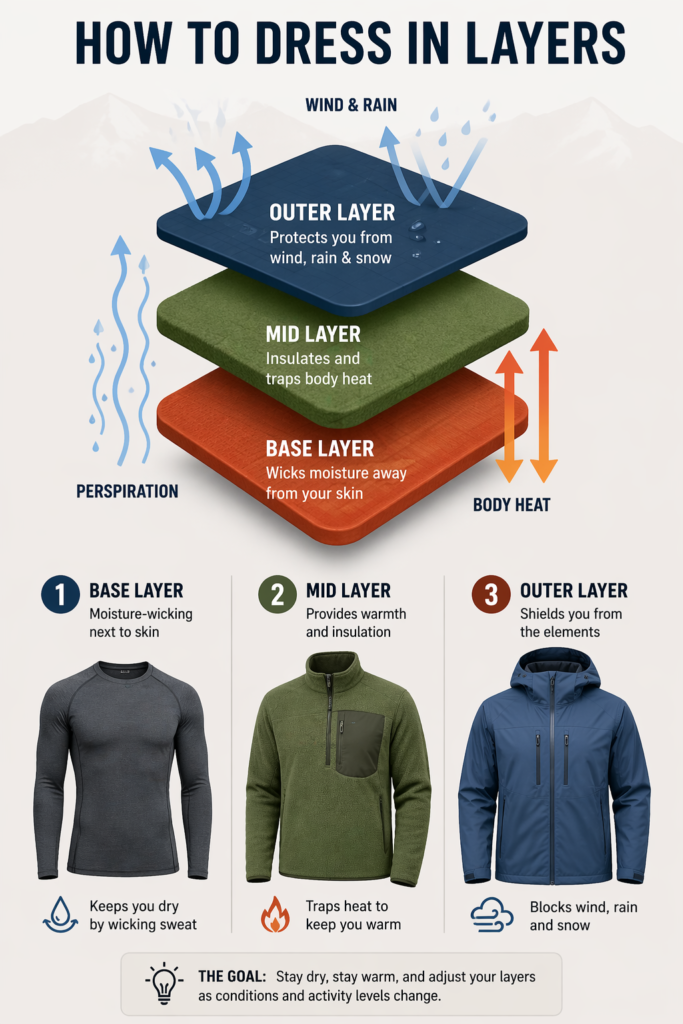
When you spend any real time outdoors in Alaska, you learn quick — it’s not the cold that gets you, it’s being wet and unprepared. The weather here can flip from sunshine to sideways rain in under an hour, and once you’re damp, it’s game over for comfort. That’s why the layering system isn’t just a recommendation up here — it’s survival.
Why Alaska Is Different
Alaska doesn’t care how nice your gear looks. You need layers that actually perform: gear that wicks, insulates, and protects without weighing you down. A simple fleece and rain jacket won’t cut it when the wind off the Gulf hits, or when a cloudburst soaks your tent halfway up the trail. Think tough, quick-drying fabrics, and outerwear that can take abuse — brush, rain, snow, and pack straps that grind for days.
1. Base Layer – Stay Dry First
Your base layer is your foundation and it’s the one people mess up most often. The goal isn’t just warmth; it’s keeping sweat off your skin. When you stop moving, the moisture in your clothes is what’ll chill you. Manage that, and you’ve already won half the battle. A nice Base layer is my go to – if I bring an underlayer that is cheap or too big, I might as well not even be wearing it. Make sure you pick a good one!
- Go with merino wool or a solid synthetic blend that wicks and dries fast.
- Never cotton. Once it’s wet, you’re cold for the rest of the day.
- Pack one mid-weight long-sleeve base and rotate it out — no need to overpack.
2. Mid Layer – Hold the Heat
This is your comfort zone. Your mid layer keeps body heat in while still breathing enough that you don’t cook during a climb. In Alaska, this is the layer you’ll swap out the most. When the clouds roll in, you’ll be glad it’s within reach.
- Fleece or grid fleece works great for most trips.
- Add a synthetic or down puffy when you stop or the temps drop — it’s worth every ounce. I like to get puffy vests and actually tend to use these more while hiking and camping but the jacket will save you in the event of a catastrophy.
- If you’re out for days, a synthetic insulated jacket is the safer bet. It’ll still work when damp.
3. Outer Layer – Keep the Weather Out
This is your armor. You want something you can trust when the wind and rain show up — and they will.
- A waterproof, breathable shell with good venting is non-negotiable.
- Make sure it’s durable enough to handle brush, rocks, and pack straps.
- A lightweight wind shell is worth carrying even on dry days — it traps just enough heat and keeps you moving when temps drop.
- Don’t forget something for your neck and head. This is a game changer for me. If you are camping or hiking when it is cold, I recommend the turtlefur brand. I have two.
- And always, always pack rain gear. Even in July. Especially in July. I prefer to pack rubber wear as it keeps me the dryest – it folds up pretty small too. Jacket AND pants!
Layering Tips from my Alaska Trips
- Don’t wait until you’re cold to add layers — by then it’s too late.
- Keep a warm puffy handy in your pack for quick stops or camp.
- Make sure your shell fits over everything without crushing insulation.
- Expect wet gear. Pack dry bags or liners as well as extra socks and gloves.
- Think in threes: base, mid, shell — same for gloves, socks, and headwear.
Basically,
This isn’t about fashion or fancy branding, it’s about function. In Alaska, a smart layering system keeps you safe, dry, and moving no matter what the weather throws at you. When you get it right, you don’t think about the cold, the rain, or the wind — you just keep hiking and enjoying Alaska, which is the goal, right?
We use some affiliate links on this site. If you end up buying through one, we may earn a small commission at no extra cost to you. It helps us keep building and improving the site.