
Travel Planning for Alaska
Planning a trip to Alaska can feel overwhelming at first. The state is massive, the seasons shift quickly, and travel distances are much greater than most visitors expect. Understanding how Alaska works—weather patterns, transportation, daylight, and seasonal activities—makes a huge difference in how your trip actually plays out.
Whether it’s your first visit or you’re coming back to see more, a little upfront planning goes a long way. The guides below walk you through the key decisions so you can build a trip that fits your time, budget, and goals without second-guessing everything along the way.
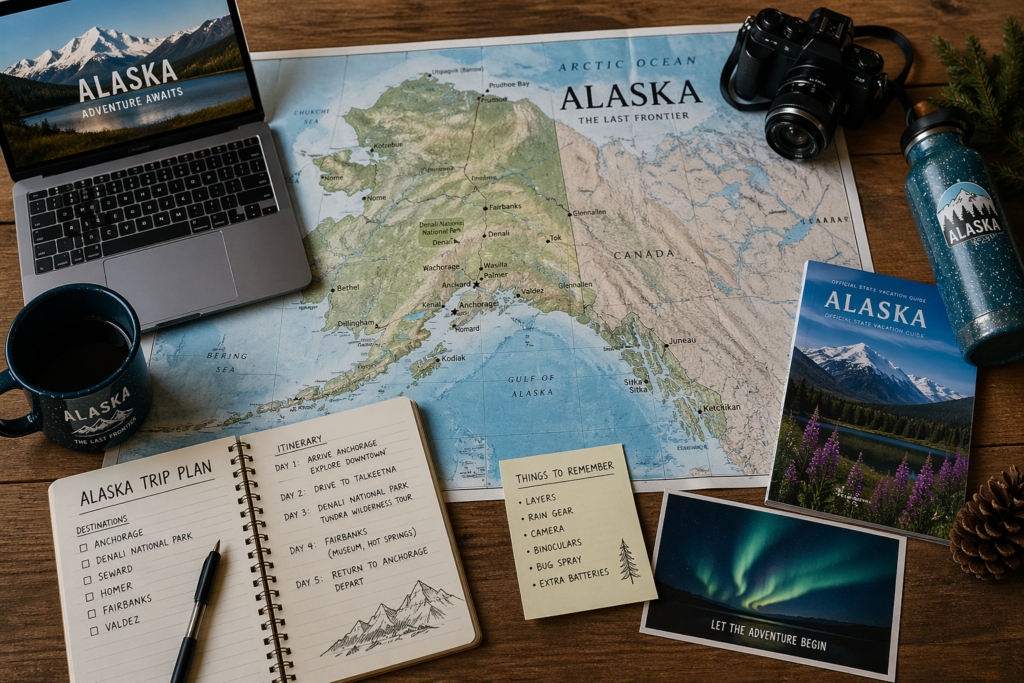
Plan Your Trip
Best time to Visit Alaska
A full seasonal breakdown to help you choose the right time based on weather, wildlife, and activities.
Getting Around Alaska
Understand how travel really works here, including driving, flights, trains, and ferries.
Alaska Travel Budget Guide
What a trip actually costs, including lodging, transportation, food, and where expenses add up fast..
What to Pack for Alaska
Simple, practical packing guidance for changing weather conditions and different seasons
How many days do you need in Alaska?
Realistic trip lengths based on what you want to see and how far you can actually travel.
Understanding Alaska’s size
Why distances matter here and how to plan a trip that doesn’t feel rushed or unrealistic.
Alaska Travel Safety Guide
Key safety considerations, including wildlife awareness, weather, and remote travel conditions.
Trip Planning Quick Start Guide
A step-by-step approach to building your Alaska trip from start to finish
Explore by Region
Interior Alaska
Home to Fairbanks, Denali, and wide-open landscapes, this region is known for extreme seasonal contrasts, with warm summers, brutally cold winters, and some of the best Northern Lights viewing in Alaska.
Southcentral Alaska
Anchorage, Seward, and the Kenai Peninsula—one of the most accessible and popular regions.
Coastal communities, dense rainforest landscapes, and glacier-filled waterways create a region shaped by the ocean, where towns are connected by boat or plane and life moves with the tides and weather.
Southwest Alaska
Remote, rugged, and culturally rich, these regions are made up of isolated communities with limited road access, where travel happens by plane or boat and daily life is closely tied to the land and water.
The Arctic region is the northernmost part of the Earth, defined by cold temperatures, long periods of darkness and daylight, and landscapes shaped by ice, tundra, and permafrost.
Western Alaska stretches along the Bering Sea and is one of the most remote parts of the state, defined by tundra landscapes, coastal weather, and small, isolated communities. Life here is shaped by the ocean, rivers, and subsistence living, with strong Alaska Native cultures and limited road access connecting the region to the rest of Alaska.
Gear & Preparation
Alaska Gear Guide
An overview of the essential gear needed for Alaska’s conditions and environments.
Essential Layering System
How to dress properly for changing weather using a simple, effective layering approach.
Best Boots for Alaska
Footwear options for hiking, wet conditions, and cold environments
Rain Gear for Alaska
Why waterproof gear matters and what actually works in Alaska’s climate.
Start Exploring Alaska
Alaska City Guides
Detailed guides covering what to do, where to stay, and how to experience destinations across the state.
Popular Destinations
Start with well-known areas like Anchorage, Fairbanks, Denali, Seward, and Homer to build your trip.