
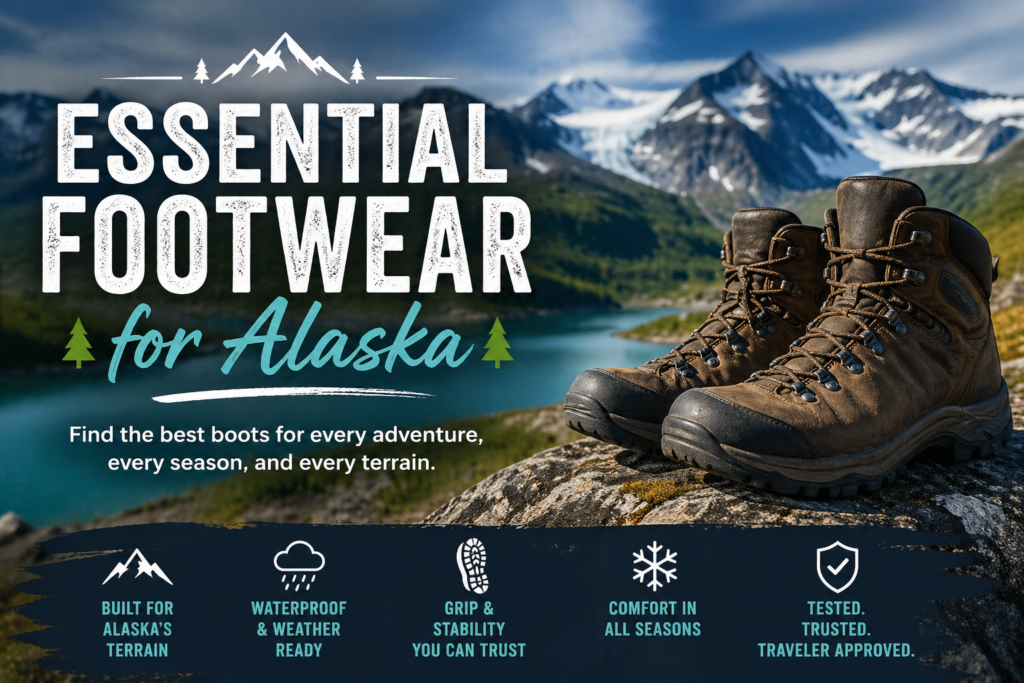
Essential Footwear for Alaska
When it comes to exploring Alaska, your footwear matters more than almost any other piece of gear. Trails can shift from dry gravel to slick mud, icy parking lots, or glacial streams within the same day. Choosing the right boots and shoes for Alaska means balancing warmth, traction, and waterproof protection — year-round.
Summer Footwear
Hiking Boots
Summer in Alaska runs from May through early September, but “summer” is relative. Trails often stay damp, and river crossings or melting snow can make dry footing impossible. Opt for a waterproof hiking boot with good ankle support and deep tread. Gore-Tex or similar membranes keep moisture out while allowing your feet to breathe. Popular choices include the Salomon X Ultra 4 Mid GTX, Merrell Moab 3 Waterproof, and Keen Targhee III WP.
Trail Shoes
If you’re sticking to well-drained paths or city trails, a lighter trail shoe works well. Look for models with aggressive grip and quick-dry mesh uppers. Recommended options: Altra Lone Peak 8, Hoka Speedgoat, or Saucony Peregrine Trail.
Waterproof Shoes
Even on sunny days, expect puddles, dew, and creek crossings. A pair of low-cut waterproof shoes or slip-ons can save your main boots from unnecessary wear. Try the Keen Newport H2 or Merrell Hydro Mocs.
Winter Footwear
Insulated Winter Boots
From October through April, temperatures can swing from 30°F to –40°F depending on region. Choose boots rated for at least –25°F with full insulation and a waterproof shell. Proven options include the Sorel Caribou, Baffin Impact, or Columbia Bugaboot III. For daily wear, insulated pac boots — leather uppers with rubber lowers — balance warmth and flexibility for snow and slush.
Ice Cleats and Traction Devices
Ice is part of life here. Parking lots, sidewalks, and even driveways freeze over quickly. Carry a set of ice cleats or microspikes to slip over your boots or shoes whenever conditions demand. Top choices include the Kahtoola Microspikes, Hillsound Trail Crampons, or Yaktrax Pro. Keep a pair in your vehicle all winter — you’ll use them more than you expect.
Rain Boots and Wet Conditions
XTRATUF Legacy Boots
Alaska’s unofficial footwear. Originally designed for commercial fishermen, the XTRATUF Legacy boots handle rain, mud, and slick docks. They’re fully waterproof, flexible, and insulated enough for shoulder-season use. Best for coastal travel, boat decks, heavy rain, or muddy camps.
BOGS Classic and Neo Series
Another favorite for all-weather comfort. BOGS combine waterproof rubber lowers with insulated uppers and cushioned footbeds — perfect for gardening, spring melt, or around-town wear.
Other Rain Boot Tips
- Always size up slightly if you’ll wear thick socks.
- Add removable insoles for multi-day comfort.
- Avoid cheap rain boots — they crack in cold weather.
Year-Round Considerations
Fit and Break-In
Footwear that fits right out of the box prevents blisters on long hikes. Break in all new boots at least two weeks before your trip.
Socks and Liners
Invest in merino wool socks from trusted brands like Darn Tough, Smartwool, or Farm to Feet. In winter, pair with thin liners to wick moisture and reduce friction.
Drying and Maintenance
Keep boots dry between uses. Use removable insoles, loosen laces fully, and store near a vent or portable boot dryer — never directly on heat.
Traction and Grip
Deep-lug soles help on muddy tundra, while winter compounds stay flexible in sub-zero temps. Avoid smooth soles unless you enjoy unplanned ice skating.
Quick Recommendations by Season
| Season | Footwear Type | Notes |
|---|---|---|
| May – September | Waterproof hiking boots / trail shoes | Prioritize breathable waterproofing |
| October – April | Insulated winter boots + ice cleats | Keep traction devices handy |
| Year-round | XTRATUF Legacy / BOGS Classic | Dependable rain boots |
| Transitional months | Waterproof shoes or low hikers | Quick-dry and adaptable |
Basically,
In Alaska, your shoes take more punishment than your vehicle. Invest once in quality boots, keep them clean, and rotate pairs by season. Whether you’re trekking through Denali’s backcountry, walking Anchorage trails, or standing on icy riverbanks, solid footwear keeps your footing sure — and your adventures uninterrupted.