
Western Alaska
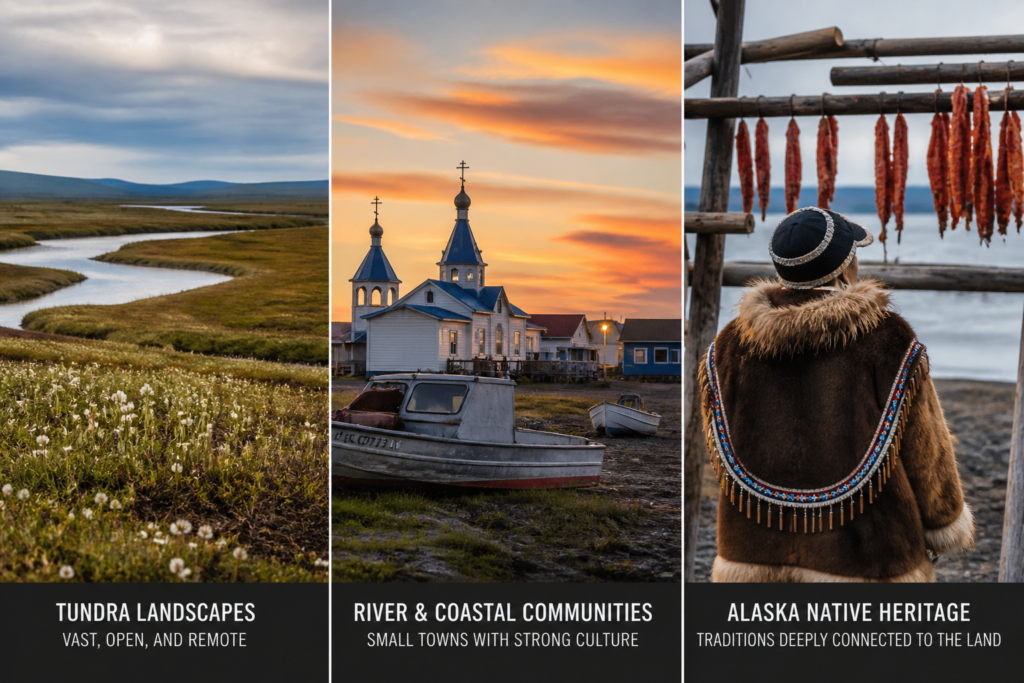
Western Alaska sits along the Bering Sea and feels about as far from the road system as you can get.
This is a region of small, scattered communities, long distances, and a strong connection to the land and water. Travel here isn’t casual—it takes planning, time, and a willingness to experience Alaska on a different level.
If your goal is to see a quieter, more cultural side of Alaska, this is where it happens. You can start planning logistics in the Alaska Travel Planning Guide, then build your trip from there.
Quick Facts
Main Hub: Nome
Other Key Areas: Yukon-Kuskokwim Delta, Bering Sea coast
Access: Flight only, no road connections
Best For: Remote travel, cultural experience, coastal Alaska
Best Time to Visit: June to August
Vibe: Isolated, quiet, deeply connected to the land
Geography & Landscape
Western Alaska is shaped by tundra, rivers, and coastline.
The land is mostly flat and open, stretching across wide tundra landscapes that meet the Bering Sea. Rivers like the Yukon cut through the region, creating important travel routes and ecosystems.
This isn’t mountainous Alaska—it’s expansive, exposed, and shaped by weather and water.
If you want to understand more about Alaska’s ecosystems and landscapes, explore Natural Features of Alaska.
Climate & Seasons
Western Alaska has a tundra and maritime climate.
Summers are cool, usually in the 40s to 60s, with frequent wind and fog coming off the Bering Sea.
Winters are cold, often ranging from below zero to the teens, with strong winds that can make conditions feel more extreme.
Weather here is less predictable and more influenced by coastal systems.
If you’re trying to plan your trip, use Best Time to Visit Alaska to match your timing to conditions.
Alaska Native Culture
Western Alaska is home to many Yup’ik communities, with Iñupiat communities farther north.
Life here is closely tied to the land, rivers, and ocean. Subsistence living—fishing, hunting, and seasonal harvests—is still a central part of daily life.
This is one of the regions where Alaska Native culture is not just visible—it’s actively lived and practiced.
Top Places to Visit in Western Alaska
This is where your trip starts to take shape.
Nome is the main hub and one of the most accessible towns in the region
Yukon River runs through the region and is central to travel and life here
The Yukon-Kuskokwim Delta offers a look into remote community life and tundra landscapes
Explore these areas through the city guides as you plan your trip.
Things to Do in Western Alaska
This region is less about activities and more about experience.
Exploring remote communities offers insight into daily life in Alaska
Wildlife viewing includes birds, marine life, and tundra species
Fishing and subsistence activities shape much of the region
Travel itself—by plane or boat—is part of the experience
If you want to learn more about wildlife and ecosystems, explore Natural Features of Alaska.
How to Get Around
Western Alaska is not connected to the road system.
Travel is almost entirely by small aircraft, with some seasonal boat and snowmachine access depending on conditions.
Distances are large, and routes are limited, so planning ahead is essential.
If you’re figuring out logistics, use Getting Around Alaska to understand how travel works here.
When to Visit
The best time to visit Western Alaska is between June and August.
This is when travel is most accessible, weather is milder, and daylight is long.
Outside of summer, conditions become more difficult and access more limited.
Use Best Time to Visit Alaska to plan around your goals.
Who This Region Is Best For
Western Alaska is ideal for travelers looking for remote, off-the-grid experiences and a deeper cultural understanding of Alaska.
It’s best suited for people comfortable with limited infrastructure and more complex travel logistics.
This is not a typical tourist destination—it’s a place you go to experience a different way of life.
Gear Considerations
Conditions here can be windy, wet, and unpredictable.
Windproof and waterproof gear is important
Layering helps with changing temperatures
Preparation matters more due to limited resources
If you want gear that actually works in Alaska conditions, check out the Alaska Gear Guide before your trip.
Plan Your Trip
Start with the Alaska Travel Planning Guide to map out logistics and timing
Explore destinations through the city guides
Learn more about landscapes and wildlife in Natural Features of Alaska
Get prepared with the Alaska Gear Guide