
Interior Alaska
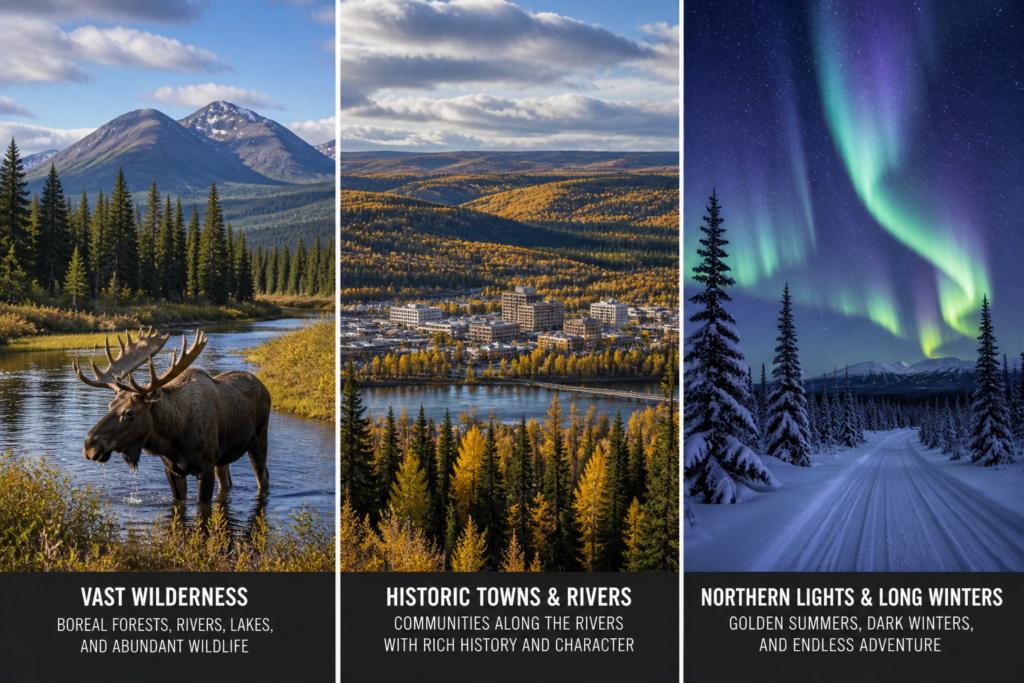
Interior Alaska is big, dry, and extreme.
This is where you really feel Alaska’s scale. Long distances, wide-open landscapes, and some of the most dramatic seasonal changes in the state define this region.
If your goal is Northern Lights, deep winter, or hot summer days with endless daylight, this is where you’ll find it. You can start planning timing and logistics in the Alaska Travel Planning Guide, then build your trip from there.
Quick Facts
Main Hub: Fairbanks
Other Key Areas: Denali, Healy, North Pole
Access: Road system, rail, some flight access
Best For: Northern Lights, summer heat, wildlife, Denali access
Best Time to Visit: June to August (summer) / September to March (aurora)
Vibe: Remote, extreme, wide open
Geography & Landscape
Interior Alaska is defined by vast land and distance.
The region is made up of boreal forest, river systems, and tundra as you move farther north. Mountains rise in the distance, but much of the Interior feels open and expansive rather than coastal or steep.
Rivers like the Tanana and Yukon shape the landscape, and Denali dominates the southern edge of the region.
If you want to understand more about Alaska’s terrain, wildlife, and ecosystems, explore Natural Features of Alaska.
Climate & Seasons
Interior Alaska has a continental climate, which means big extremes.
Summers can reach into the 70s and even 80s, with long daylight hours and relatively dry conditions. It’s one of the warmest parts of the state during peak summer.
Winters are intense, with temperatures often dropping to -20°F or colder, sometimes reaching -40°F. The cold is dry, which makes it feel different from coastal regions.
If you’re trying to time your trip, especially for aurora viewing, start with Best Time to Visit Alaska to plan it right.
Alaska Native Culture
Interior Alaska is home to Athabascan peoples who have lived in this region for generations.
Life here has always been shaped by the land, rivers, and seasons. Travel, hunting, fishing, and survival all depend on understanding the environment and adapting to extreme conditions.
That connection to the land is still present today in communities throughout the Interior.
Top Places to Visit in Interior Alaska
This is where your trip starts to come together.
Fairbanks is the main hub and one of the best places in the world to see the Northern Lights
Denali National Park offers access to Alaska’s most famous mountain and vast wilderness
Healy is a smaller gateway community just outside Denali
North Pole is a quirky stop near Fairbanks known for its Christmas theme
Explore each of these more through the city guides as you plan your trip.
Things to Do in Interior Alaska
Interior Alaska offers a completely different experience from coastal regions.
Northern Lights viewing is one of the biggest draws in fall and winter
Summer brings long daylight hours perfect for hiking and exploring
Wildlife viewing includes moose, bears, and caribou
River travel and scenic drives offer access to remote landscapes
Denali viewing and tours are a major highlight
If you want to learn more about wildlife, landscapes, and natural systems, explore Natural Features of Alaska.
How to Get Around
Interior Alaska is partially accessible by road, but distances are large.
The Parks Highway connects Anchorage to Fairbanks, with Denali along the way. Other roads extend into remote areas, but travel times can be long and conditions can change.
Rail service is also available between Anchorage, Denali, and Fairbanks.
If you’re planning routes and travel logistics, use Getting Around Alaska to understand what’s realistic.
When to Visit
The best time to visit depends on what you want to experience.
June through August offers warm temperatures and long daylight hours
September through March is best for Northern Lights viewing
Spring and fall are quieter but come with more unpredictable conditions
If your main goal is the aurora, timing matters more than anything. Use Best Time to Visit Alaska to plan it right.
Who This Region Is Best For
Interior Alaska is ideal for travelers focused on Northern Lights, people who want to experience extreme seasonal contrast, visitors interested in Denali and Interior landscapes, and those comfortable with long distances and fewer services.
This region is less about convenience and more about experience.
Gear Considerations
Conditions here can be extreme depending on the season.
In summer, you’ll want layers and bug protection
In winter, proper cold-weather gear is critical
Temperature swings can be significant even in shoulder seasons
If you’re unsure what to bring, check out the Alaska Gear Guide to prepare properly.
Plan Your Trip
Start with the Alaska Travel Planning Guide to map out your route and timing
Explore destinations through the city guides
Learn more about landscapes and wildlife in Natural Features of Alaska
Get prepared with the Alaska Gear Guide