
Southwest Alaska
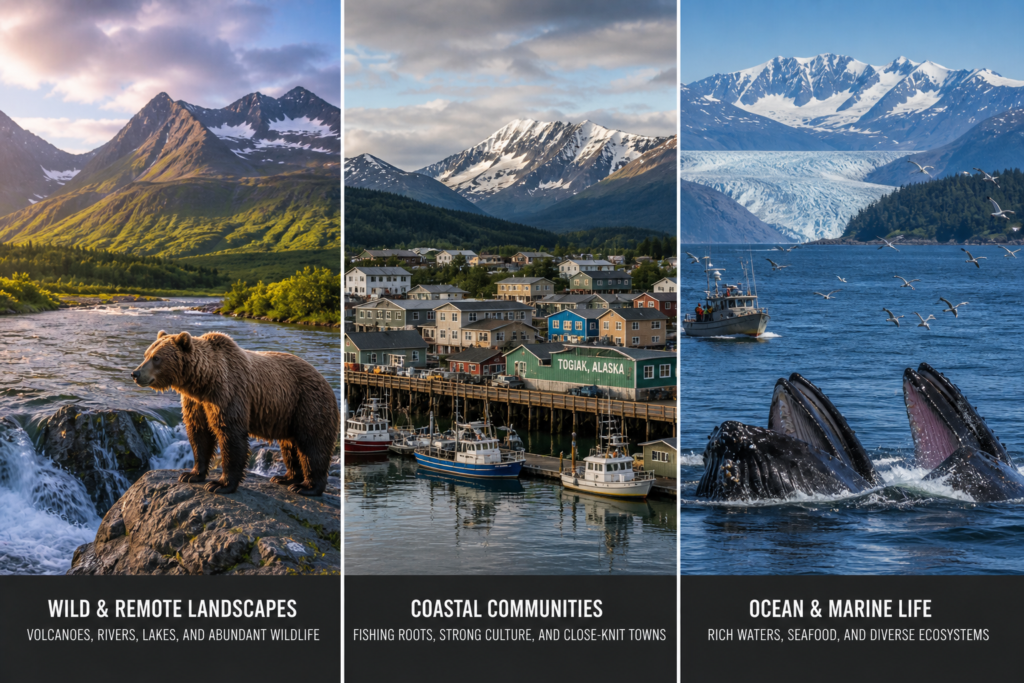
Southwest Alaska is where things start to get remote.
This region is defined by water, wildlife, and distance. Roads are limited or nonexistent in many areas, and travel often depends on small planes or boats. It’s a different pace of Alaska—less about convenience and more about experience.
If your trip is focused on fishing, bear viewing, or getting off the road system, this is where you’ll likely end up. You can start planning logistics in the Alaska Travel Planning Guide, then build your trip from there.
Quick Facts
Main Hub: Bethel
Other Key Areas: Bristol Bay, Dillingham, Katmai
Access: Mostly flight access, very limited roads
Best For: Fishing, bear viewing, remote travel, wildlife
Best Time to Visit: June to August
Vibe: Remote, wild, water-based
Geography & Landscape
Southwest Alaska is shaped by rivers, tundra, and coastline.
The region includes the Yukon-Kuskokwim Delta and stretches toward the Alaska Peninsula. It’s largely flat, open land mixed with wetlands, rivers, and coastal areas. Farther south, volcanic landscapes and rugged terrain begin to appear.
This is one of the most important ecological regions in Alaska, especially for salmon runs and wildlife.
If you want to understand more about Alaska’s ecosystems, rivers, and wildlife, explore Natural Features of Alaska.
Climate & Seasons
Southwest Alaska has a tundra and maritime climate.
Summers are cool, usually in the 40s to 60s, and often cloudy or windy. Weather can feel damp and unpredictable.
Winters are cold but generally less extreme than the Interior, often ranging from 0°F to 25°F, with wind playing a major factor.
If you’re trying to plan your timing, use Best Time to Visit Alaska to match your trip to conditions.
Alaska Native Culture
Southwest Alaska is home to Yup’ik and Alutiiq (Sugpiaq) peoples.
Life in this region is still closely tied to subsistence living, including fishing, hunting, and seasonal harvesting. Rivers and coastal waters are central to daily life, and communities are deeply connected to the land.
This is one of the strongest regions in Alaska where traditional ways of life are still actively practiced.
Top Places to Visit in Southwest Alaska
This is where your trip starts to take shape.
Bethel is the main hub for the Yukon-Kuskokwim Delta
Dillingham serves as a gateway to Bristol Bay
Bristol Bay is world-famous for salmon fishing
Katmai National Park is one of the best places in the world to see brown bears
Explore each of these more through the city guides as you plan your trip.
Things to Do in Southwest Alaska
This region is centered around wildlife and water.
Bear viewing is one of the biggest draws, especially in Katmai
Fishing is world-class, particularly for salmon
Wildlife viewing includes birds, moose, and marine life
Bush flying and remote access trips are part of the experience
Exploring rivers and coastal environments defines travel here
If you want to learn more about wildlife, rivers, and ecosystems, explore Natural Features of Alaska.
How to Get Around
Southwest Alaska is not connected by a traditional road system.
Most travel is done by small aircraft, with some boat access depending on location. Getting from one place to another often requires planning multiple legs of travel.
If you’re figuring out logistics, routes, and access, use Getting Around Alaska to understand how this region works.
When to Visit
The best time to visit Southwest Alaska is between June and August.
This is when wildlife is most active, fishing is at its peak, and travel conditions are most manageable.
Outside of summer, access becomes more limited and conditions can be more challenging.
Use Best Time to Visit Alaska to plan around your goals.
Who This Region Is Best For
Southwest Alaska is ideal for travelers looking for remote experiences, world-class fishing, and wildlife viewing.
It’s best suited for people comfortable with limited infrastructure and more complex travel logistics.
This is not a casual stop—it’s a destination you plan for.
Gear Considerations
Conditions here can be wet, windy, and unpredictable.
Waterproof gear is important
Layering helps with temperature swings
Bug protection can be necessary in summer
If you want gear that actually works in Alaska conditions, check out the Alaska Gear Guide before your trip.
Plan Your Trip
Start with the Alaska Travel Planning Guide to map out logistics and timing
Explore destinations through the city guides
Learn more about landscapes and wildlife in Natural Features of Alaska
Get prepared with the Alaska Gear Guide