
Ice Fog in Alaska
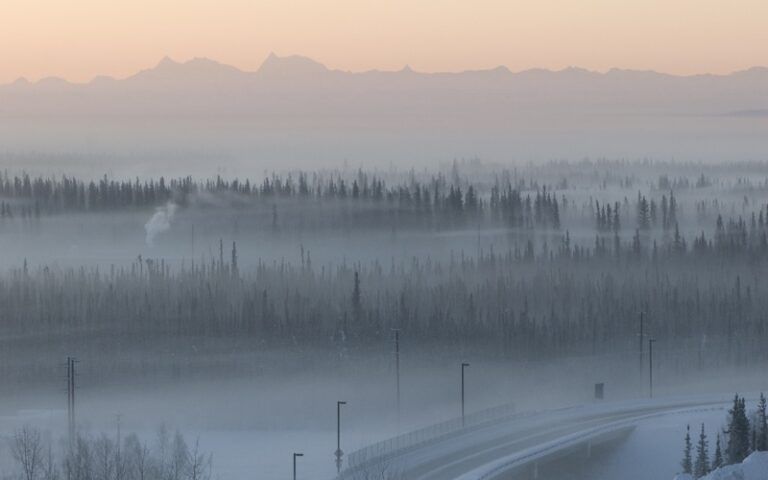
Ice Fog in Alaska: What It Is, When It Happens, and Why You Learn to Take It Seriously
Ice fog is one of those Alaska things you don’t really understand until you’ve lived through it. It doesn’t come with drama or noise. No howling wind. No heavy snowfall. Just a quiet, frozen haze that settles in and changes how you move through the day.
If you’ve spent a winter in Interior Alaska, you’ve dealt with ice fog—whether you knew the name for it or not. It turns streetlights into glowing orbs, makes short drives take longer than expected, and reminds you pretty quickly that winter here plays by its own rules.
This guide explains what ice fog actually is, why it forms, when and where you’re most likely to see it, and what you need to know to stay safe—especially when you’re on the road.
What Ice Fog Is:
Ice fog is fog made up of tiny ice crystals instead of liquid water droplets. It forms when the air is cold enough that moisture freezes almost instantly and stays suspended near the ground.
Most of the time, ice fog shows up when temperatures drop to around -20°F or colder. At that point, moisture from everyday sources—cars, heating systems, people breathing—freezes on contact with the air.
Unlike regular fog, ice fog:
Does not burn off easily
Can linger for days
Often forms during clear, calm weather
If you see a thick white haze on a brutally cold but otherwise clear day, that’s ice fog.
How Ice Fog Forms:
Ice fog needs a very specific set of conditions, which Alaska happens to provide extremely well in winter.
Extreme cold
Once temperatures get low enough, moisture does not stay liquid.
Moisture in the air
This comes from:
Vehicle exhaust
Home heating systems
Power plants
Open water that has not fully frozen
Even people breathing outdoors
Still air and temperature inversions
During winter, Alaska frequently experiences temperature inversions, where cold air gets trapped close to the ground under warmer air above it. This prevents moisture from dispersing and allows ice fog to build and linger.
Add human activity to extreme cold and calm air, and ice fog forms quickly—especially in populated areas.
When can I see Ice Fog in Alaska?
Ice fog is strictly a winter phenomenon, but it does not happen all winter long.
It is most common:
From December through February
During prolonged cold snaps
On calm days with little or no wind
It is less common during storms, since wind and snowfall disrupt the conditions ice fog needs to form.
Where Ice Fog Is Most Common
Ice fog does not affect all parts of Alaska equally.
Interior Alaska
This is where ice fog is most common and most noticeable. Communities like Fairbanks, North Pole, and Delta Junction experience ice fog regularly during deep winter. Cold air settles into valleys, temperatures drop fast, and everyday activity adds moisture to the air.
Arctic and Western Alaska
Ice fog can also occur in northern and western communities during periods of extreme cold, especially in settled areas.
Coastal Alaska
Ice fog is much less common along the coast. Warmer winter temperatures, stronger winds, and different moisture patterns usually prevent it from forming the way it does inland.
What Does Ice Fog look like?
Ice fog has a very distinct look and feel. Visibility drops without much warning. Streetlights glow instead of shine. Headlights reflect back at you. Ice crystals slowly settle on everything—trees, vehicles, eyelashes.
It can be quiet and almost beautiful, but it also makes it harder to judge distance and speed, especially when driving.
Driving in Ice Fog: Safety Considerations
This is where ice fog stops being interesting and starts being serious.
Ice fog can be more dangerous than heavy snowfall because the road may look clear while visibility drops quickly. Other vehicles can appear suddenly, and glare from headlights makes it harder to see than expected.
Why ice fog is risky
Visibility can change quickly
Headlights reflect off ice crystals
Roads are often icy even if they look clear
Depth perception is reduced
How people drive in ice fog
Slow down more than feels necessary
Use low-beam headlights
Increase following distance
Watch taillights ahead of you
Avoid sudden braking or lane changes
If visibility drops too low:
Pull over somewhere safe
Turn off headlights
Leave hazard lights on
Wait it out
Living With Ice Fog
Ice fog does not shut Alaska down, but it does change how people operate during winter. Cars stay plugged in. Trips get delayed or skipped. Flights may be postponed. People pay closer attention to weather and air quality reports.
It is simply part of winter life in the Interior.
Air Quality and Health Considerations
Because ice fog traps pollutants close to the ground, air quality can worsen during prolonged cold snaps.
People with asthma or other respiratory conditions may notice:
Irritated lungs
Burning or dry eyes
Increased breathing discomfort
Covering your face outdoors, limiting time outside during extreme cold, staying hydrated, and following local advisories all help reduce exposure.
Ice Fog vs Other Winter Conditions
These winter terms often get mixed up:
Ice fog – ice crystals suspended in the air
Freezing fog – liquid fog that freezes on contact
Frost – ice forming directly on surfaces
Ice fog is its own thing, and once you experience it, it is unmistakable.
A Normal Part of an Alaska Winter
Ice fog does not make postcards or travel brochures, but it is one of those details that tells you someone has lived through a real Alaska winter. It is inconvenient. Sometimes frustrating. Occasionally dangerous.
@alaskastandard1 Took this a couple of weeks ago. Fairbanks has been getting some VERY cold temps lately. These temps make everything harder: keeping cars warm enough to start, things break easier, its harder to change a tire etc. I am thankful we are on this side of solstice and gaining light! #alaskastandard #akwinters #freezing #icefog ♬ Lost in the Mist – Pulsar