
Chinook Winds in Alaska
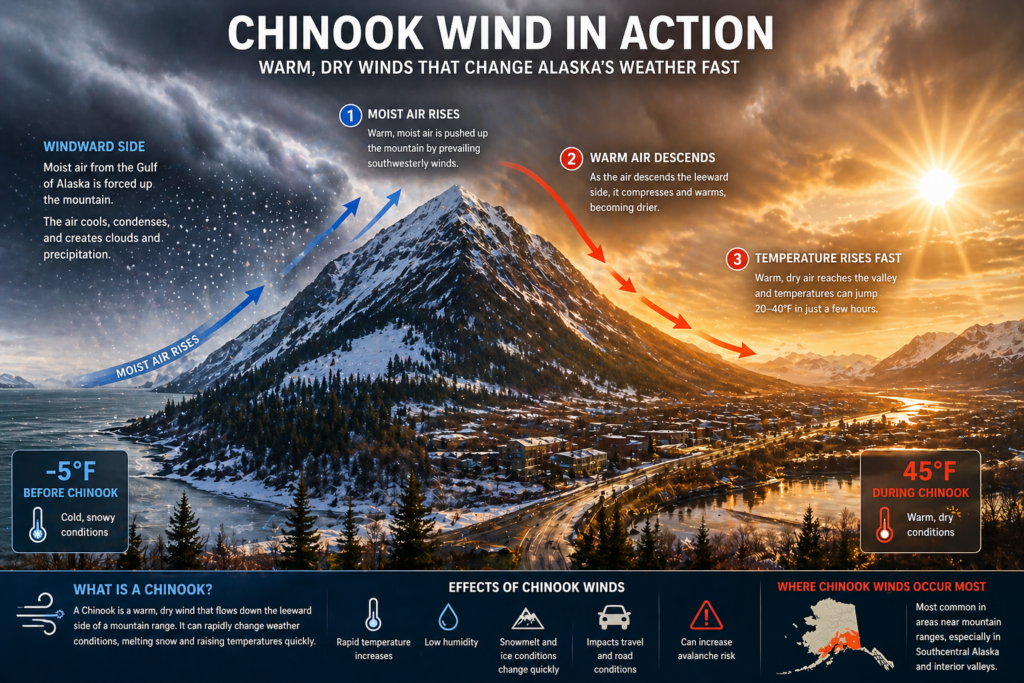
Chinook Winds in Alaska: What They Are and How They Affect Weather
Chinook winds in Alaska are warm, dry winds that can rapidly change weather conditions, especially near mountain ranges. These winds move down the leeward side of mountains, warming quickly as they descend and compress. In a short period of time, temperatures can rise dramatically, even in the middle of winter.
This sudden shift can feel surprising, especially when cold, stable conditions give way to warmer air. Snow that has been sitting for weeks can begin to melt, and the landscape can temporarily shift away from typical winter conditions.
Chinook winds can occur at different times of year, but they are most noticeable during winter and early spring when temperature changes are more dramatic.
What Chinook Winds Look Like
When Chinook winds move through an area, temperatures can climb quickly, sometimes rising dozens of degrees in just a few hours. Snow softens or begins to melt, and surfaces that were icy can turn wet or slushy.
The air often feels noticeably drier, and clouds may form or shift around mountain ranges as the wind moves through. These changes can happen quickly and without much warning.
When Chinook Winds Occur
Chinook winds are most common during winter and early spring, when strong pressure differences develop across mountain ranges.
They tend to occur sporadically rather than on a set schedule, often appearing for short periods before conditions return to normal.
Why Chinook Winds Matter
Chinook winds can quickly change snow and ice conditions, which impacts travel and outdoor activity. Melting snow can refreeze later, creating icy surfaces, and rapid temperature shifts can affect both road conditions and avalanche risk in mountainous areas.
For travelers, these winds can make conditions feel less predictable compared to more stable winter weather.
Where You Experience Them Most
Chinook winds are most common in areas near mountain ranges, especially in Southcentral Alaska and regions influenced by the Alaska Range and surrounding terrain.
Communities near these areas are more likely to experience sudden warming events associated with Chinook winds.
Travel Tips for Chinook Winds
If you’re traveling during winter, be aware that conditions can change quickly. Roads that were icy may become wet, and then refreeze later as temperatures drop again.
Layering becomes especially important, as temperatures can shift rapidly throughout the day. Staying flexible with plans helps when conditions change unexpectedly.
Basically,
Chinook winds are one of Alaska’s more subtle but powerful weather patterns. They don’t last forever, but when they arrive, they can quickly reshape the landscape.
Understanding how they work helps you stay prepared and avoid being caught off guard by sudden changes in temperature and conditions.