
Northern Lights in Alaska
Northern Lights in Alaska: Best Time and Places to See Them
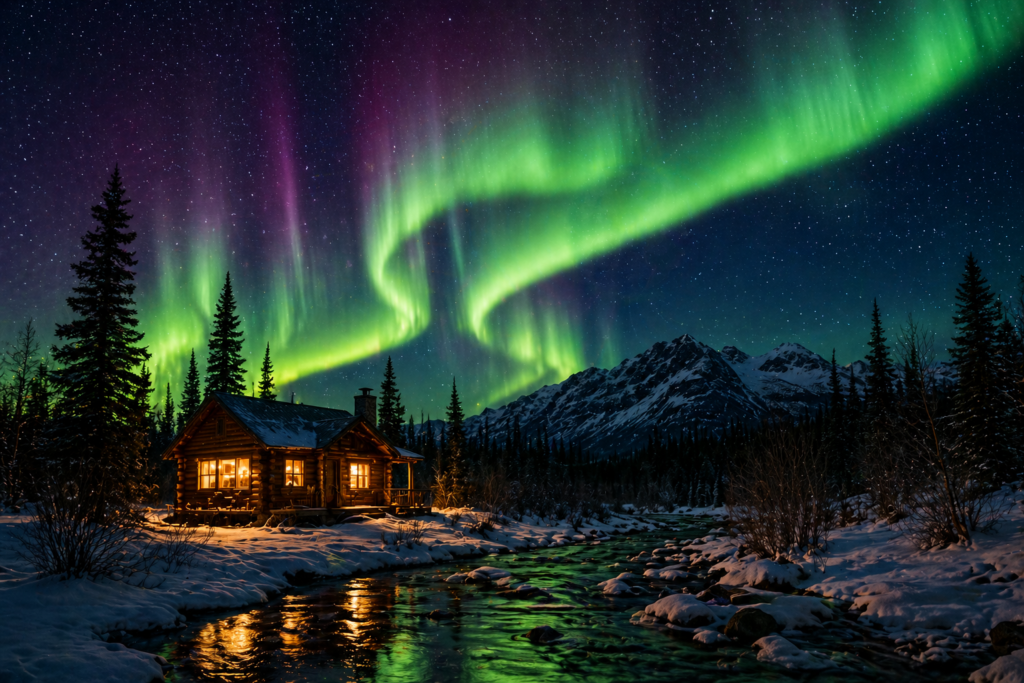
The Northern Lights, or aurora borealis, are one of Alaska’s most sought-after natural experiences. During long winter nights, the sky can come alive with moving bands of green, purple, and sometimes red light. It’s one of those things that feels unreal until you see it in person.
Alaska is one of the best places in the world to see the Northern Lights because of its location under the auroral oval, a zone where aurora activity is strongest. Combined with long, dark winters and wide open landscapes, it creates ideal viewing conditions.
The best time to see the Northern Lights is from late August through April, when nights are long and dark enough for the lights to be visible.
What the Northern Lights Look Like
The aurora can appear as faint glows, moving arcs, or full waves of light stretching across the sky. Sometimes they move slowly, and other times they pulse and shift quickly, almost like curtains blowing in the wind.
Green is the most common color, but strong displays can include purple, pink, and even red tones.
How the Northern Lights Happen
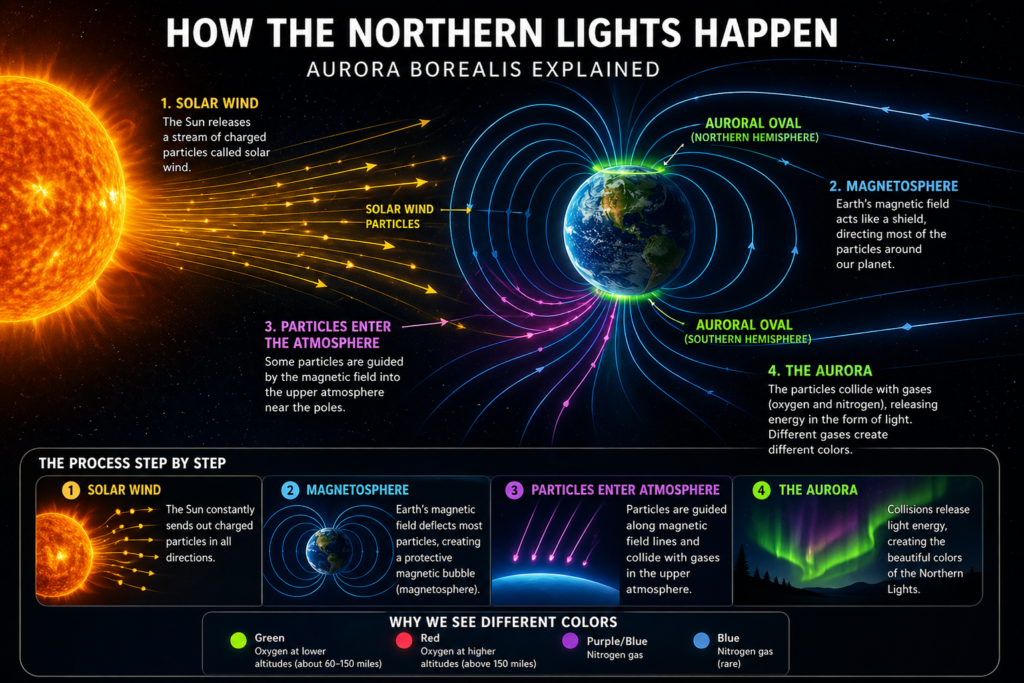
The Northern Lights are caused by particles from the sun interacting with Earth’s atmosphere.
The sun releases energy in the form of charged particles, known as solar wind. When these particles reach Earth, they are pulled toward the magnetic poles by Earth’s magnetic field.
As the particles enter the atmosphere, they collide with gases like oxygen and nitrogen. These collisions release energy in the form of light, which is what we see as the aurora.
Different gases create different colors. Oxygen produces green and red tones, while nitrogen creates purples and blues.
When to See the Northern Lights
The best viewing season is from late August through April, with peak conditions during the coldest winter months.
Clear skies and darkness are key. Even a strong aurora won’t be visible if clouds block the sky.
Where to See the Northern Lights
Interior Alaska offers the most consistent viewing conditions, especially around Fairbanks. Cold temperatures often mean clearer skies, which increases your chances.
Northern regions, including places like Utqiaġvik, also experience strong aurora activity .
You can still see the Northern Lights in Southcentral Alaska, including Anchorage, but conditions are less consistent due to cloud cover.
Travel Tips for Seeing the Northern Lights
Get away from city lights whenever possible. Darkness makes a huge difference in visibility.
Check aurora forecasts and weather conditions before heading out. Patience is important—sometimes it takes hours for a strong display to appear.
Dress for extreme cold. Standing outside at night in Alaska winter conditions requires proper layering and preparation.
Basically,
The Northern Lights are one of Alaska’s most unforgettable experiences. When the sky lights up, it’s something you don’t forget.
It’s not guaranteed every night, but when it happens, it’s worth the wait and one of the strongest reasons people travel to Alaska in the winter. Check out some resources below:
Aurora Forecasts and Viewing Resources
NOAA Aurora Forecast
Real-time aurora activity with 30-minute and 3-day forecasts.
UAF Aurora Forecast
Alaska-specific aurora predictions with an easy-to-read map.
Aurora Alerts App
Get notifications when aurora activity increases in your area.
Alaska Weather (NWS)
Check cloud cover and visibility before heading out.
Windy Weather Maps
Track cloud movement to find clear skies for viewing.
Live Aurora Cameras
See real-time aurora activity across Alaska.
Northern Lights Live Cams
Watch aurora activity from different locations.
KP Index
Measure aurora strength on a scale from 0–9.