
Disclosure: This page contains affiliate links. As an Amazon Associate, I earn from qualifying purchases at no additional cost to you.
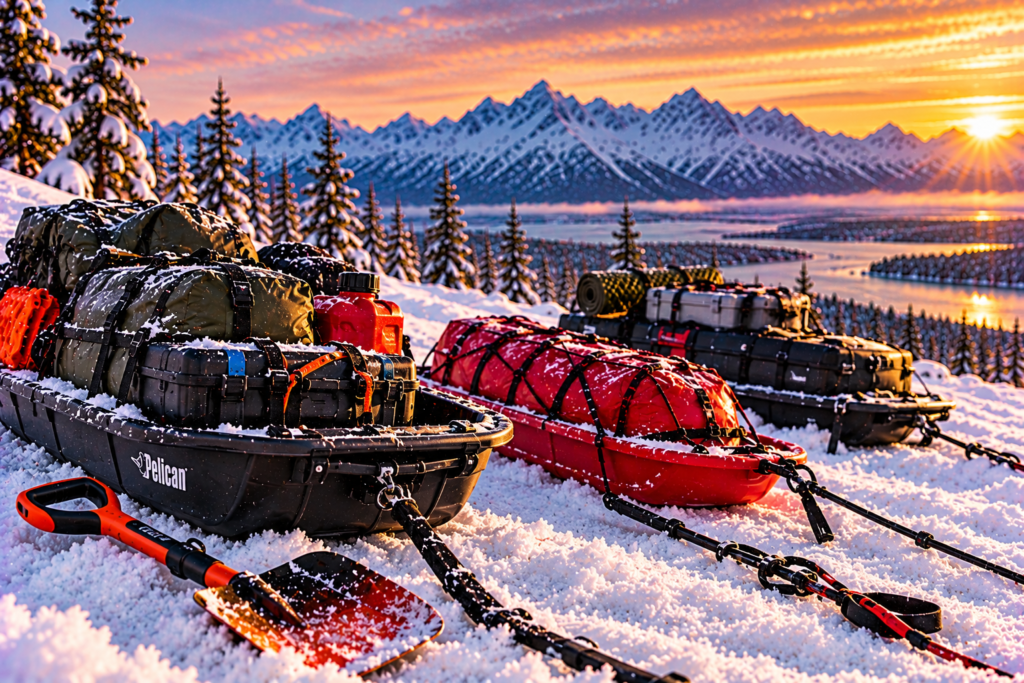
When you're hauling equipment through Alaska's winter landscape, carrying everything on your back isn't always the most practical option.
Between insulated clothing, camping supplies, ice fishing equipment, emergency gear, and food, the amount of equipment needed for a winter adventure can add up quickly.
And when there's snow on the ground, a sled can make transporting that equipment considerably easier.
Utility sleds and expedition pulks are used for a variety of winter activities, from hauling gear to an ice fishing location to transporting supplies across snow-covered terrain.
But not every sled is designed for the same purpose.
A basic utility sled may be perfectly suitable for moving equipment across a frozen, relatively level surface. A dedicated expedition pulk, on the other hand, is designed for longer-distance travel and often incorporates a more controlled hauling system.
In Alaska, choosing between these options matters because winter conditions can vary tremendously.
Interior Alaska often experiences dry, powdery snow and prolonged freezing temperatures. Southcentral Alaska may have heavier snowfall, changing temperatures, and a mixture of packed trails and deep snow. Coastal areas can experience wet snow and icy conditions that create different challenges for hauling equipment.
The terrain matters just as much as the snow.
A sled that pulls easily across a flat, packed trail may be difficult to control on a steep slope or in deep, uneven snow.
In this guide, we'll look at two practical Pelican utility sled options, explain the difference between recreational hauling sleds and expedition pulks, and cover what you should consider before using a sled for winter travel in Alaska.
Quick Navigation
- Quick Picks
- Best Sleds for Alaska Winter Travel
- Sled Comparison Chart
- Utility Sleds vs. Expedition Pulks
- Choosing a Sled for Alaska Conditions
- How to Pack and Haul a Winter Sled
- Alaska Winter Sled Hauling Safety
- Winter Sled Hauling Checklist
- Buying Guide & Frequently Asked Questions
- Related Alaska Winter Gear Guides
- Final Thoughts
Quick Picks
- Best Large Utility Sled: Pelican Trek Sport 94 Utility Sled
- Best General-Purpose Hauling Sled: Pelican Multi-Purpose Utility Sled
Both options are utility sleds rather than complete expedition pulk systems. For extended backcountry travel, steep terrain, or demanding hauling conditions, a purpose-built pulk with an appropriate harness and controlled towing system may be more suitable.
Best Sleds for Alaska Winter Travel
When selecting a sled for Alaska, consider the size and weight of your equipment, how far you intend to travel, and whether you'll be hauling it by hand or using a compatible towing system.
These two Pelican options are worth considering for recreational winter hauling, ice fishing, and transporting equipment across suitable snow-covered terrain.
Best Large Utility Sled: Pelican Trek Sport 94 Utility Sled
When you're hauling bulky winter equipment, having enough space to organize your gear can make a significant difference.
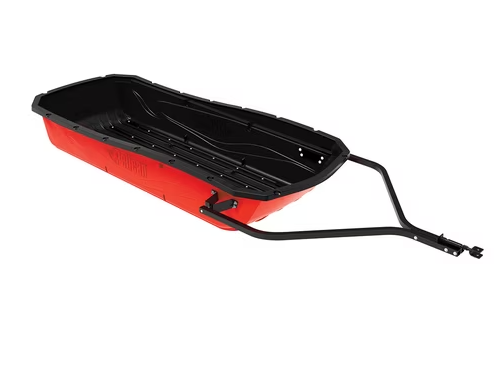
The Pelican Trek Sport 94 Utility Sled is a larger utility sled option designed for transporting equipment across suitable surfaces.
For Alaska winter activities, a sled in this category may be useful for hauling ice fishing shelters, augers, camping equipment, firewood, and other supplies.
One of the advantages of a utility sled is that it keeps equipment together rather than requiring multiple trips carrying individual items.
That can be particularly useful when you're moving equipment from a vehicle to a nearby winter recreation location.
However, larger sleds can become difficult to maneuver when they're heavily loaded.
Deep powder, uneven terrain, narrow trails, and steep slopes can all affect how easily a sled moves.
It's also important to think about how you'll secure the load. Loose equipment can shift, fall out, or change the sled's balance while you're traveling.
For longer trips, consider whether the sled's towing configuration provides enough control for the terrain.
A basic pull rope may be suitable for short distances on relatively level ground, but it doesn't provide the same control as a dedicated rigid-shaft pulk system.
Before purchasing, verify the exact sled's dimensions, rated load capacity, included accessories, and intended towing methods.
Best for: Hauling bulky winter equipment, ice fishing supplies, camping gear, and recreational loads across suitable snow-covered terrain.
Check Price on Amazon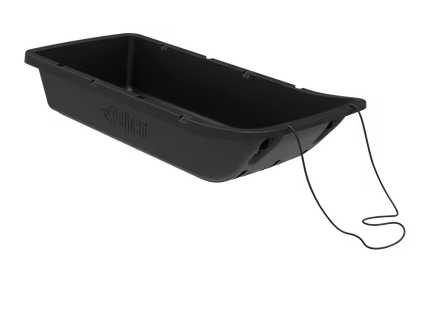
Best General-Purpose Hauling Sled: Pelican Multi-Purpose Utility Sled
Not every winter adventure requires a large sled or specialized expedition equipment.
Sometimes you simply need a practical way to move supplies across snow without carrying everything by hand.
The Pelican Multi-Purpose Utility Sled is designed for general outdoor hauling and offers an alternative for people who need a versatile utility sled.
For Alaska, this type of sled may be useful for transporting equipment around a cabin, moving ice fishing supplies, or hauling gear over relatively short distances.
A general-purpose sled can also be useful for organizing equipment that would otherwise be difficult to carry together.
However, the exact sled size matters.
Depending on the model and dimensions, a utility sled may be better suited to smaller loads than a larger hauling sled.
Before purchasing, review the specific product's measurements, load recommendations, and intended use.
Also consider how the sled will perform on the surfaces you expect to encounter.
Packed snow, loose powder, rough ice, and uneven trails can all affect towing resistance and control.
If you're planning to haul heavy equipment or travel significant distances, a purpose-built pulk or larger hauling system may be a better choice.
Best for: General winter hauling, cabin supplies, ice fishing accessories, and shorter recreational trips.
Check Price on AmazonSled Comparison Chart
These two sleds are intended for general hauling, but the best option depends on the size of your equipment and how you plan to use it.
| Sled | Category | Best Use | Important Consideration |
|---|---|---|---|
| Pelican Trek Sport 94 | Large utility sled | Bulky equipment and winter hauling | Check load capacity and towing setup |
| Pelican Multi-Purpose Utility Sled | General-purpose utility sled | Recreational and everyday hauling | Confirm dimensions and intended use |
Utility Sleds vs. Expedition Pulks: What's the Difference?
Although the terms sled and pulk are sometimes used interchangeably, there are important differences between basic hauling sleds and purpose-built expedition pulks.
Utility Sleds
Utility sleds are generally designed to transport equipment across snow, ice, or other suitable surfaces.
They're commonly used for ice fishing, hauling supplies, and recreational winter activities.
Many utility sleds use a simple pull rope or another basic towing arrangement.
That can work well on flat or gently rolling terrain, but control may become more difficult on slopes or uneven surfaces.
Expedition Pulks
Expedition pulks are designed for hauling equipment over longer distances, often while skiing or snowshoeing.
Many incorporate rigid towing shafts, a compatible harness, and systems intended to improve control.
Rigid shafts can help prevent the sled from sliding into the person towing it during descents.
Depending on the design, expedition pulks may also include covers, specialized runners, and other features suited to extended winter travel.
Which Is Better for Alaska?
For hauling equipment to an ice fishing location or moving supplies around a cabin, a utility sled may be sufficient.
For multi-day winter travel, long-distance snowshoeing, or routes involving substantial changes in elevation, a purpose-built pulk may be more appropriate.
Neither option should be used beyond its manufacturer's intended load and terrain recommendations.
Choosing a Sled for Alaska Snow and Terrain Conditions
Different Alaska winter conditions create different challenges for hauling equipment.
| Condition | Sled Priority | Important Consideration |
|---|---|---|
| Packed snow trails | Stable towing and appropriate load size | Watch for narrow turns and trail traffic |
| Deep powder | Adequate flotation and manageable weight | Heavy loads may sink or become difficult to pull |
| Wet, heavy snow | Durable construction and easy cleaning | Snow buildup can increase resistance |
| Rough or uneven ice | Durable sled bottom and secure load | Abrasion and tipping may be concerns |
| Steep or rolling terrain | Controlled towing system | A rope-towed sled may slide downhill unpredictably |
How to Pack and Haul a Winter Sled
Keep Heavy Equipment Low
Place heavier items near the bottom of the sled to help maintain a lower center of gravity.
A top-heavy sled may be more likely to tip when traveling over uneven terrain.
Distribute Weight Evenly
Try to balance the load so that one side isn't significantly heavier than the other.
Uneven loading can make the sled harder to pull and control.
Secure Loose Equipment
Use suitable straps, tie-downs, or other approved methods to prevent equipment from shifting or falling out.
Protect sharp objects and keep emergency supplies accessible.
Protect Gear from Snow and Moisture
Water-resistant bags, dry bags, or suitable covers can help protect clothing, electronics, and other sensitive supplies.
Remember that snow can enter an open sled during travel.
Choose an Appropriate Towing Method
For short distances on flat terrain, a compatible pull rope may be sufficient.
For longer trips or terrain involving descents, consider whether a rigid towing system is appropriate and approved for your equipment.
Test Your Load Before Traveling
Practice pulling the loaded sled in a safe area before heading into remote terrain.
Make sure you can start, stop, turn, and control the sled without losing your balance.
Alaska Winter Sled Hauling Safety
Check Weather and Trail Conditions
Cold temperatures, snowfall, and strong winds can make hauling equipment significantly more demanding.
Review the forecast and choose a route appropriate for your experience and equipment.
Be Careful on Frozen Rivers and Lakes
Ice thickness and strength can vary significantly.
Moving water, overflow, pressure ridges, and snow cover can create dangerous conditions.
A sled does not make thin ice safe, and a loaded sled adds weight to the surface.
Understand Avalanche Hazards
If your route enters avalanche terrain, obtain appropriate training and review current avalanche conditions.
Carry appropriate rescue equipment and understand how to use it.
A loaded sled can complicate movement and decision-making in steep terrain.
Avoid Overloading
Overloading can damage equipment, increase towing difficulty, and make a sled harder to control.
Stay within the manufacturer's rated limits and account for the actual terrain.
Stay Visible Around Other Trail Users
Some Alaska winter trails are shared with snowmachines, skiers, snowshoers, and other users.
Make yourself and your equipment visible where appropriate, and follow local trail rules.
Carry Emergency Supplies
Winter travel can become dangerous if equipment breaks, weather changes, or you become delayed.
Carry appropriate clothing, navigation tools, emergency shelter, food, water, and communication equipment.
Tell Someone Your Plans
Share your intended route and expected return time with a responsible contact.
For remote areas without dependable cellular coverage, consider suitable satellite communication equipment.
Alaska Winter Sled Hauling Checklist
- Utility sled or expedition pulk appropriate for your route
- Compatible towing rope, shafts, or harness
- Suitable straps or tie-downs
- Water-resistant bags or equipment covers
- Appropriate winter boots, snowshoes, or skis
- Moisture-managing base layers
- Insulating mid layers and weather-appropriate outerwear
- Warm gloves or mittens
- Hat and face protection
- Headlamp and backup lighting
- Navigation tools and offline maps
- Food and water protected from freezing
- First aid kit
- Emergency shelter and additional insulation
- Suitable emergency communication equipment
- Avalanche safety equipment and training when applicable
- Trip plan shared with someone at home
Buying Guide & Frequently Asked Questions
What is the best sled for hauling gear in Alaska?
The best sled depends on the amount of equipment you're hauling, the terrain, and the distance.
The Pelican Trek Sport 94 is worth considering for bulkier loads, while the Pelican Multi-Purpose Utility Sled may be suitable for general recreational hauling.
What is a pulk?
A pulk is a sled designed to transport equipment across snow, often while skiing or snowshoeing.
Expedition pulks frequently use a harness and rigid towing shafts for improved control.
What's the difference between a utility sled and a pulk?
Utility sleds are generally intended for hauling equipment, while expedition pulks are designed specifically for controlled travel over snow, often across longer distances.
Can I use a utility sled as a pulk?
Some people adapt utility sleds for winter hauling, but modifications need to be appropriate for the equipment and terrain.
A basic rope-towed utility sled may not provide the control needed for steep slopes or extended backcountry travel.
Are sleds easier than carrying a backpack?
On suitable snow-covered terrain, a sled can reduce the amount of weight carried on your back.
However, deep powder, slopes, obstacles, and uneven terrain can make pulling a sled more difficult than carrying a backpack.
What size sled do I need?
Choose a sled large enough for your equipment without exceeding the manufacturer's rated load capacity.
Also consider storage, transportation, and how easily you'll be able to maneuver it.
Can I use a sled for ice fishing in Alaska?
Yes. Utility sleds are commonly used to transport ice fishing shelters, augers, tackle, and other equipment.
Always verify ice conditions before traveling onto frozen water.
Can I pull a sled while snowshoeing?
Yes, provided the sled and towing system are appropriate for the route.
Practice with the loaded sled before attempting longer or more demanding trips.
Can I pull a sled while cross-country skiing?
Dedicated expedition pulks are commonly used for ski travel.
A controlled towing system is particularly important when descending slopes.
Do I need rigid towing shafts?
Rigid shafts can improve control, especially on descents, by helping prevent the sled from sliding into the person towing it.
Whether they're necessary depends on the terrain, sled design, and intended use.
Can I tow a utility sled behind a snowmachine?
Only if the exact sled and towing equipment are approved by their manufacturers for motorized towing.
Do not assume that a hand-pulled utility sled is suitable for snowmachine speeds or loads.
Do sleds work in deep Alaska powder?
They can, but performance depends on the sled's design, load, and snow conditions.
Deep powder can increase towing resistance and cause heavily loaded sleds to sink.
Are plastic utility sleds durable?
Durability varies by material, construction, load, temperature, and surface conditions.
Inspect your sled regularly and avoid dragging it over damaging obstacles when possible.
Can I use a sled on bare ice?
Some sleds can slide across suitable icy surfaces, but control may become difficult.
Uneven ice and sharp ridges can also damage equipment.
How do I keep gear from falling out?
Secure equipment with suitable straps or tie-downs, distribute weight evenly, and use protective covers when appropriate.
How should I store my sled?
Clean off snow and debris, inspect the sled for damage, and follow the manufacturer's storage recommendations.
What's the biggest mistake people make when hauling a sled in Alaska?
One common mistake is loading a sled without considering the route or how the load will affect control.
A sled that pulls easily across flat, packed snow can become difficult to manage on slopes, deep powder, or uneven terrain.
Final Thoughts
Hauling equipment across Alaska's winter landscape can be much easier with the right sled.
Whether you're transporting ice fishing supplies, moving equipment around a cabin, or preparing for a winter camping trip, a utility sled can provide a practical way to move gear over suitable snow-covered terrain.
But the right equipment depends on how and where you plan to travel.
For relatively short trips across flat or gently rolling terrain, a general-purpose utility sled may be sufficient.
For longer journeys, more demanding terrain, or situations where precise towing control matters, a dedicated expedition pulk may be the better choice.
Always consider the weight of your equipment, the snow conditions, and the manufacturer's recommended towing methods.
And remember that winter travel in Alaska requires preparation. Check the weather, understand your route, carry appropriate emergency supplies, and avoid conditions beyond your experience or equipment.
With a properly selected sled, a securely packed load, and a little planning, you can spend less energy carrying equipment and more time enjoying Alaska's winter landscapes.