
Cold Weather Camping Tips for Alaska: Stay Warm, Safe, and Comfortable
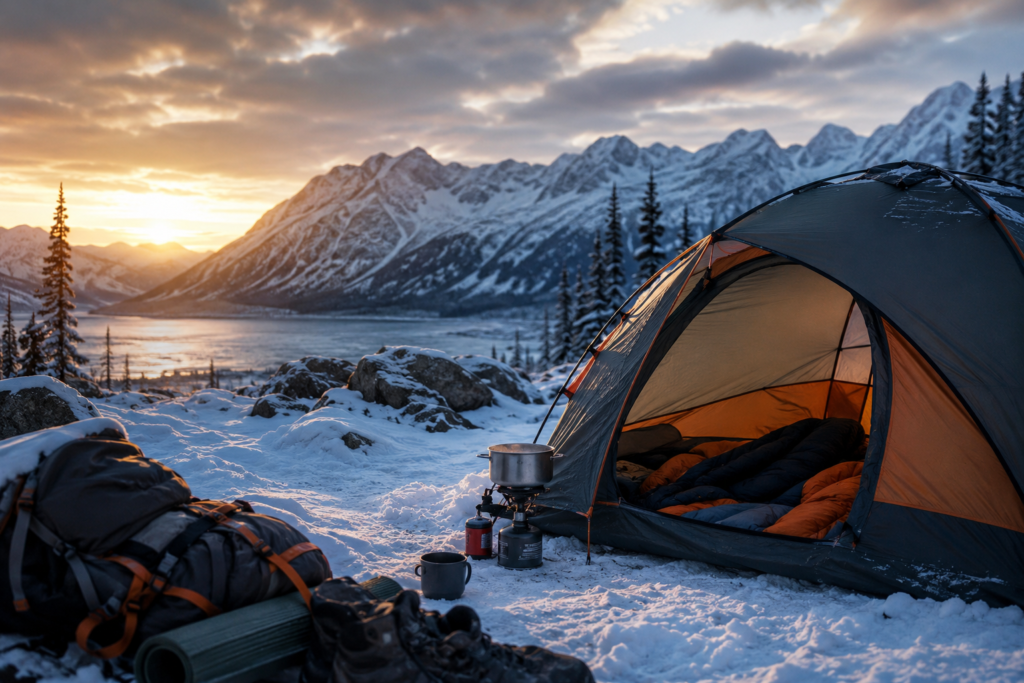
Cold Weather Camping Tips for Alaska
Camping in Alaska can be an incredible experience, but cold weather changes the equation quickly. A comfortable afternoon can turn into a chilly evening once the sun drops, and temperatures can feel even colder when wind, rain, or damp conditions are added to the mix. Whether you’re camping in the Interior, along the coast, or in the mountains, preparation is one of the biggest factors that separates an enjoyable trip from a miserable one.
Dress in Layers
One of the most important cold weather camping tips is learning how to dress in layers. Instead of relying on a single heavy jacket, use a moisture-wicking base layer, an insulating mid-layer, and a waterproof outer shell. This allows you to adjust throughout the day as temperatures change while helping you stay dry and comfortable. Cotton should generally be avoided because it holds moisture and loses much of its insulating ability once wet. If you’re unsure where to start, check out our Essential Layering System for Alaska Adventures guide.
Stay Dry
In Alaska, staying dry is often more important than staying warm. Even moderate temperatures can feel cold when your clothing is soaked from rain, sweat, or wet vegetation. Quality rain gear, waterproof boots, and extra socks are worth carrying on nearly every camping trip. A dependable rain jacket is one of the most valuable pieces of gear you can pack, especially during Alaska’s shoulder seasons. Our Best Rain Jackets for Alaska guide can help you find the right option.
Build a Reliable Sleep System
Many campers focus on their tent while overlooking the rest of their sleep setup. A quality sleeping bag rated for the conditions you expect to encounter can make cold nights far more comfortable, while an insulated sleeping pad helps prevent body heat from being pulled into the ground beneath you. Even the best sleeping bag can struggle if you are sleeping directly on cold or frozen ground. If you’re putting together a complete setup, our guide to Sleeping Gear for Cold and Wet Conditions covers the gear that makes the biggest difference during Alaska camping trips.
Choose the Right Shelter
Your tent is your first line of defense against wind, rain, and cold temperatures. While no tent creates heat, a quality shelter can help block the elements and provide a much more comfortable camping experience. A tent that handles rain, wind, and changing weather conditions is especially important in Alaska, where conditions can shift quickly. If you’re still building your camping kit, take a look at our guide to the Best Tents for Alaska Camping.
Eat, Drink, and Stay Warm
Food and hydration play a major role in cold weather comfort. Your body produces heat by burning fuel, so eating a warm meal before bed can help maintain body temperature throughout the night. Staying hydrated is just as important, as dehydration can make it harder for your body to regulate temperature effectively. A hot drink around the campfire can also go a long way toward helping you warm up after a long day outdoors.
Wear the Right Footwear
Cold feet can quickly make an otherwise enjoyable trip miserable. Waterproof boots, warm socks, and proper layering can help keep your feet comfortable throughout the day. Wet feet are one of the fastest ways to lose comfort during a cold weather camping trip, particularly during spring and fall. If you’re looking for recommendations, our Best Hiking Boots for Alaska guide covers options that perform well in wet and cold conditions.
Don’t Forget the Small Things
Small pieces of gear often have an outsized impact in cold weather. A warm hat, quality gloves, wool socks, and a neck gaiter can help protect the areas where heat is lost most quickly. Many campers also keep the next day’s clothing inside their tent or sleeping bag overnight so they don’t have to start the morning with frozen layers. These simple habits can make cold mornings significantly more comfortable.
Be Prepared for Wildlife
Cold weather often means fewer people on the trails, but wildlife is still very much present. Proper food storage, a clean campsite, and awareness of your surroundings remain important no matter the season. Before heading into the backcountry, review our Bear Safety in Alaska guide for practical tips on camping safely in bear country.
Expect the Weather to Change
If you’ve spent much time outdoors in Alaska, you already know that forecasts don’t always tell the whole story. Conditions can shift quickly, especially in mountain, coastal, and remote areas. Rain can arrive unexpectedly, temperatures can drop overnight, and wind can make conditions feel much colder than the thermometer suggests. Always prepare for colder weather than expected and carry enough gear to handle changing conditions.
Know When to Call It a Day
The best camping decision is sometimes heading home. If weather conditions deteriorate, gear fails, or someone in your group begins showing signs of hypothermia, don’t push forward simply to complete the trip. Alaska’s wilderness will still be there another day, and there is no shame in changing plans when conditions become unsafe.
Final Thoughts
Cold weather camping in Alaska can be one of the most rewarding ways to experience the state. Crisp mornings, quiet campsites, and fewer crowds often make the extra preparation worthwhile. With the right layers, a dependable sleep system, quality shelter, and a healthy respect for changing conditions, you can stay warm, comfortable, and ready for whatever Alaska decides to throw your way.