
Regions of Alaska
Alaska isn’t one place—it’s a collection of completely different regions, each with its own landscape, climate, wildlife, and way of life.
Distances here are massive. The road system is limited. And what you’ll experience in one part of the state can feel completely different just a few hundred miles away.
If you’re planning a trip—or just trying to understand Alaska better—start with the regions below. Each one offers a different version of Alaska.
Understanding Alaska’s regions can help you better plan travel, learn about local communities, and explore the natural features that define each area. The sections below introduce the major regions of Alaska and highlight what makes each one unique.
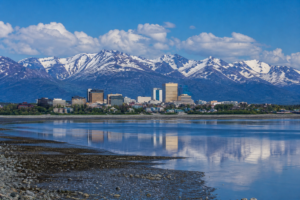
Southcentral is where most people start. It’s home to Anchorage and one of the most accessible regions in the state.
You get a mix of everything here—mountains, ocean, glaciers, wildlife, and a road system that actually lets you explore without needing to fly everywhere. It’s one of the few places in Alaska where you can drive from city to coastline to glacier in a single day.
This region is also home to the Dena’ina Athabascan people, whose history is deeply tied to the land and waters around Cook Inlet. Their presence is still felt today in place names, culture, and the way people live and move through this area.
This is where you’ll find Anchorage, Seward, Homer, and the Kenai Peninsula. It’s one of the best regions for first-time visitors because you can experience a lot without complicated logistics, while still getting a real sense of Alaska’s scale and landscape.
If you’re planning your first trip, this is the place to start. You can map out your route and timing in the Alaska Travel Planning Guide, then explore specific stops like Anchorage, Seward, and Homer through the city guides.
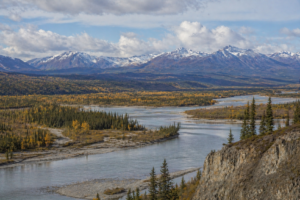
Interior Alaska is big, dry, and extreme. Summers are warm with long daylight hours, while winters are brutally cold with some of the best Northern Lights viewing in the world. This is where you really feel Alaska’s scale. Fairbanks is the main hub here, along with access to Denali National Park. The landscape shifts to boreal forest and tundra, and distances between places get much bigger.
Interior Alaska is home to Athabascan peoples who have lived in this region for generations, adapting to long winters, remote travel, and a lifestyle closely tied to the land and seasons.
If seeing the aurora is your goal, timing matters more than anything. This is where planning ahead really pays off—start with Best Time to Visit Alaska, then explore Fairbanks and Denali through the city guides.
Lorem ipsum dolor sit amet, consectetur adipiscing elit. Ut elit tellus, luctus nec ullamcorper mattis, pulvinar dapibus leo
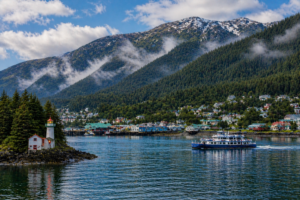
Southeast Alaska is completely different from the rest of the state. It’s coastal, rainy, and covered in dense temperate rainforest. There are no major roads connecting towns—you get around by boat or plane. This region includes Juneau, Ketchikan, and Sitka. It’s known for cruise travel, whale watching, fishing, and a strong mix of Native culture and maritime history.
Southeast is home to the Tlingit, Haida, and Tsimshian peoples, whose cultures are deeply tied to the ocean, forests, and coastal way of life. You’ll see that influence everywhere—from totem poles to local art and traditions.
If Southcentral feels like rugged accessibility, Southeast feels like remote coastal Alaska. If you’re planning to travel here, transportation works differently—use the Alaska Travel Planning Guide to understand ferries and flights, then explore Juneau, Ketchikan, and Sitka through the city guides.
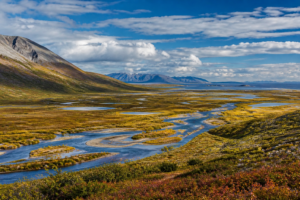
Western Alaska stretches along the Bering Sea and is made up of small, remote communities.
There are no road connections to the rest of the state. Travel is by plane, snowmachine, or boat depending on the season.
Places like Nome sit on the edge of the continent, with a mix of gold rush history and strong Alaska Native culture.
Many communities here are Yup’ik, with traditions closely tied to rivers, tundra, and coastal life.
This region is quiet, isolated, and deeply connected to the land. Travel here is less about sightseeing and more about experience—use the Alaska Travel Planning Guide to understand access, then explore Nome through the city guides.
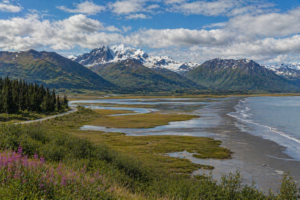
Southwest Alaska is wild, remote, and built around water. This region includes places like Bethel, Bristol Bay, and Katmai National Park. It’s known for massive salmon runs and some of the best bear viewing in the world. There are very few roads here. Most travel is by small plane or boat, and life revolves around seasons, fishing, and subsistence.
This region is home to Yup’ik and Alutiiq (Sugpiaq) peoples, where subsistence living—fishing, hunting, and seasonal harvests—is still a major part of everyday life. This is real, off-the-grid Alaska. If you’re heading here, planning becomes critical—use the Alaska Travel Planning Guide to understand logistics, then explore Bethel and Katmai through the city guides.
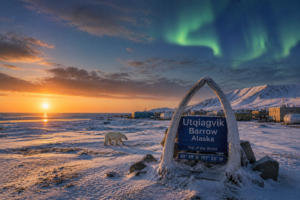
This is the far north—above the Arctic Circle. The landscape is open tundra with long, dark winters and continuous daylight in summer. Temperatures drop hard, and conditions can be extreme. Communities like Utqiaġvik and areas along the North Slope are some of the most remote in the country.
This region is home to the Iñupiat people, who have lived in the Arctic for thousands of years, developing deep knowledge of sea ice, wildlife, and survival in one of the harshest environments on Earth.
You don’t come here casually. But if you want to experience true Arctic Alaska, this is where it happens. If you’re considering travel this far north, preparation is everything—start with the Alaska Travel Planning Guide before going.