
Culture & History in Alaska
Alaska’s culture and history are shaped by survival, resilience, exploration, and deep connections to the land. From Alaska Native traditions that stretch back thousands of years to Russian settlements, gold rush boomtowns, World War II history, and modern frontier life, Alaska’s story is layered, rugged, and unlike anywhere else in the world. Click the sections below to explore the people, events, and stories that helped shape Alaska into what it is today.
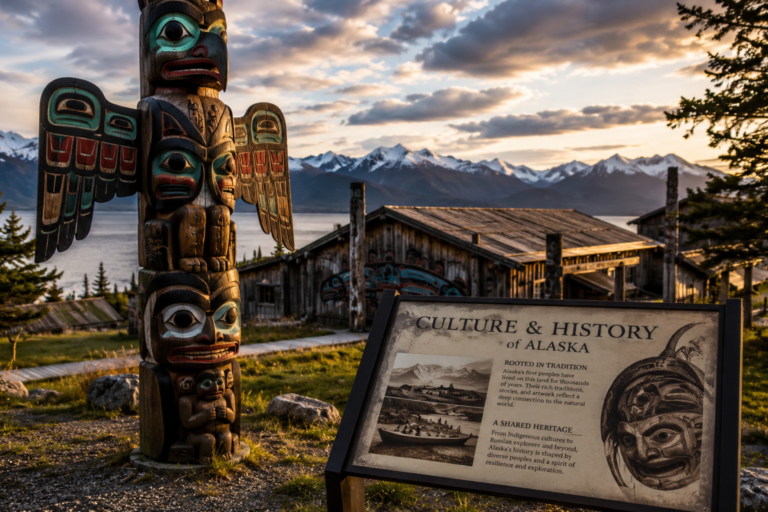
Alaska has been home to Indigenous peoples for thousands of years, long before modern borders or settlements existed. From the Inupiat communities of the Arctic to the Tlingit villages of Southeast, Alaska Native cultures are deeply connected to the land, water, wildlife, storytelling, and survival traditions that still shape Alaska today.
Before Alaska became part of the United States, it was a Russian territory centered around fur trading, coastal settlements, and Orthodox missions. Russian influence can still be seen today in Alaska’s churches, place names, architecture, and cultural traditions throughout coastal communities.
In 1867, the United States purchased Alaska from Russia for $7.2 million in a deal many people mocked at the time as “Seward’s Folly.” What once seemed like a frozen wilderness later became one of the most resource-rich and strategically important regions in North America.
The discovery of gold transformed Alaska almost overnight, bringing waves of prospectors, boomtowns, railroads, and frontier settlements into some of the harshest terrain on Earth. Many Alaska communities still carry the legacy of the gold rush era today through preserved buildings, trails, and local history.
Before becoming a state, Alaska spent decades as a U.S. territory with limited infrastructure, isolated communities, and growing industries tied to fishing, mining, transportation, and military expansion. This period helped shape the rugged independence Alaska is still known for today.
Alaska became a major military region during World War II, especially after the Aleutian Islands campaign brought active combat onto North American soil. Military bases, airfields, highways, and wartime construction projects permanently changed Alaska’s development and strategic importance.
Alaska officially became the 49th state in 1959 after years of political effort and economic growth. Statehood marked a turning point that expanded infrastructure, government services, resource development, and Alaska’s role within the United States.
Modern Alaska blends remote wilderness, Indigenous traditions, oil development, tourism, military presence, fishing industries, and rapidly growing communities. While much of Alaska remains wild and isolated, it continues to evolve while holding tightly to its strong regional identity.
Life in Alaska today is shaped by resilience, community, subsistence traditions, outdoor living, and a deep connection to nature. From Native celebrations and commercial fishing towns to modern cities and off-grid cabins, Alaska culture remains unlike anywhere else in the world.