
Alaska Statehood: How Alaska Became the 49th State
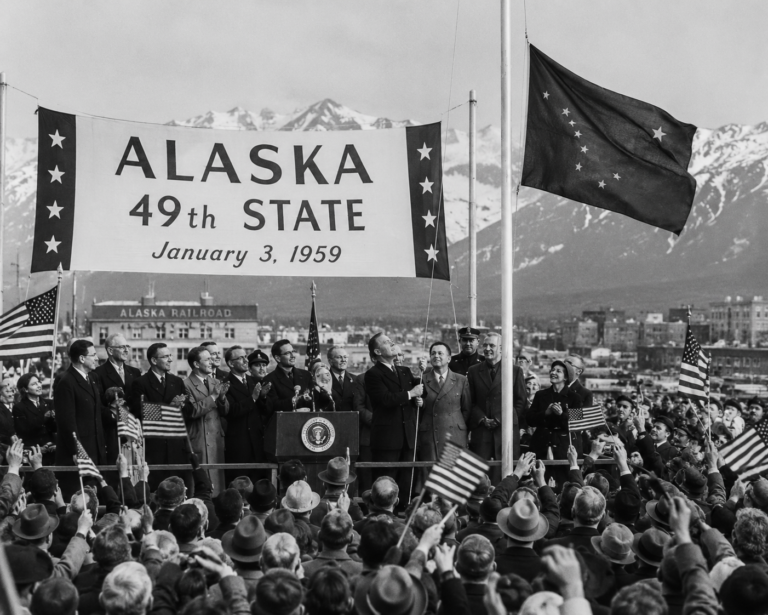
Alaska officially became the 49th state of the United States on January 3, 1959, marking a major turning point in the region’s history. Before statehood, Alaska spent decades as a remote U.S. territory with limited political representation, scattered infrastructure, and growing industries tied to fishing, mining, transportation, and the military. As Alaska’s population and economic importance grew, support for statehood steadily increased across the territory.
Statehood brought major changes to Alaska, including expanded government services, new infrastructure, increased development, and greater control over land and resources. Today, Alaska Statehood remains one of the most important milestones in modern Alaska history and continues to shape the state politically, economically, and culturally.
This page explores the road to Alaska statehood, the people and events that helped make it possible, and how becoming a state transformed Alaska for future generations.
Read more about Alaska’s Statehood below:
The Push for Alaska Statehood
Why Alaska Wanted Statehood
How Alaska Became the 49th State
The Alaska Statehood Act
January 3, 1959: Alaska Statehood Day
William A. Egan & Alaska Statehood
Bob Bartlett & the Fight for Statehood
Ernest Gruening & Alaska Statehood
The Constitutional Convention of Alaska
The Alaska Constitution
Public Opinion on Alaska Statehood
How Statehood Changed Alaska
Economic Growth After Statehood
Oil Development & Post-Statehood Alaska
Federal Land Issues After Statehood
Native Land Claims After Statehood
Military Expansion After Statehood
Infrastructure Growth After Statehood
Transportation Development After Statehood
Education & Government After Statehood
The Role of Anchorage After Statehood
Juneau as Alaska’s Capital After Statehood
Life in Alaska During the 1950s
The American Flag & Alaska’s 49th Star
Historic Statehood Sites in Alaska
Museums About Alaska Statehood
The Legacy of Alaska Statehood Today