
Freeze-up in Alaska
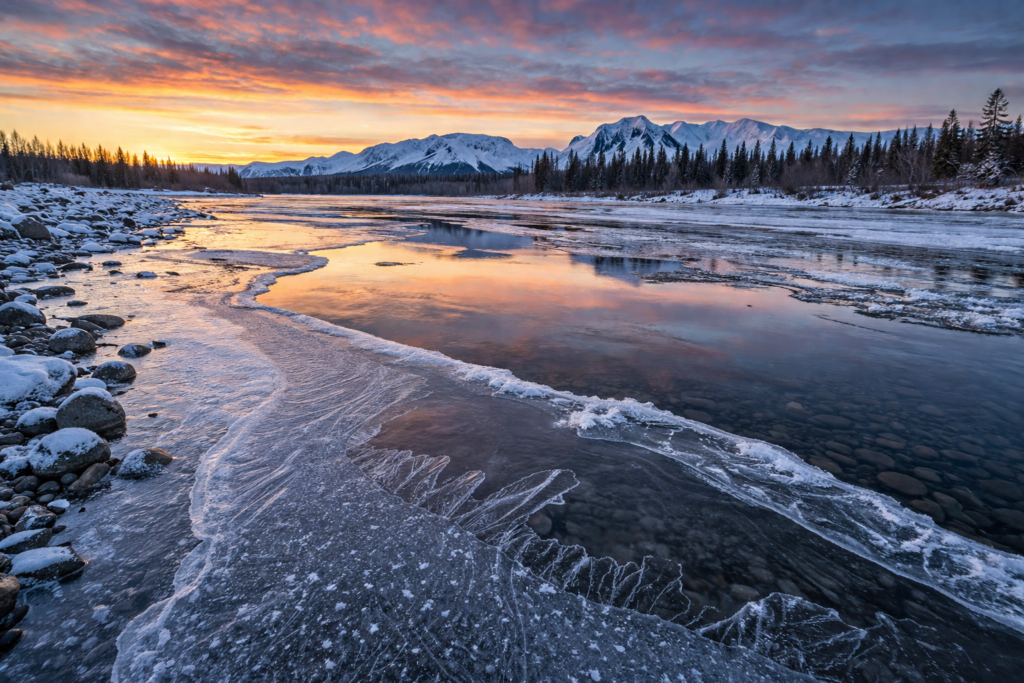
Freeze-Up in Alaska: When Winter Returns and What to Expect
Freeze-up in Alaska marks the transition from fall into winter, when rivers, lakes, and ground surfaces begin to freeze after months of warmer conditions. As temperatures drop, water that was recently flowing or open starts forming ice, and the landscape quickly shifts back into a winter environment. It’s a quieter transition than breakup, but just as important.
This time of year signals a major change in how people travel and live. Wet ground hardens, snow begins to stick, and routes that were muddy or unstable start becoming usable again. For many communities, especially in rural Alaska, freeze-up is the beginning of reliable winter travel.
Freeze-up typically happens between October and November, depending on the region. Interior Alaska often sees it first, with colder temperatures locking in quickly, while coastal areas may take longer due to milder conditions. Like breakup, timing varies each year based on weather patterns.
What Freeze-Up Looks Like
During freeze-up, thin layers of ice begin forming on rivers and lakes, gradually thickening as temperatures continue to fall. Snow starts to accumulate and stay on the ground instead of melting away. The landscape shifts from wet and muddy to firm and frozen.
Early in the season, conditions can look stable but still be unpredictable. Ice may form unevenly, and surfaces that appear solid can still be unsafe. Over time, everything locks in more consistently as colder temperatures settle in.
When Freeze-Up Happens
Freeze-up begins in Interior Alaska as early as October, especially around areas like Fairbanks. Southcentral Alaska typically follows later in the season, while coastal regions may not fully freeze until November or even early December.
Northern Alaska, including Arctic regions, can see freeze-up earlier due to consistently colder temperatures.
Why Freeze-Up Matters
Freeze-up changes how people move across the landscape. As ice thickens, frozen rivers and lakes can become travel routes, especially in remote areas. Roads and trails become more stable compared to the muddy conditions of fall.
However, early freeze-up can be dangerous. Ice that hasn’t fully formed can break under weight, making travel risky until conditions stabilize.
Where You Experience It Most
Interior Alaska sees some of the most noticeable freeze-up conditions, with rapid temperature drops and quick ice formation. River systems in these areas are especially important for winter travel.
You’ll also see freeze-up across Southcentral Alaska, though it tends to happen more gradually due to milder temperatures.
Travel Tips for Freeze-Up
If you’re visiting during freeze-up, be cautious around ice. What looks frozen may not be safe to walk or travel on yet. Stick to established roads and paths unless you’re familiar with local conditions.
Layering becomes important as temperatures drop quickly, and having proper winter gear makes a big difference in comfort and safety.
Basically,
Freeze-up is the quiet return of winter in Alaska. It doesn’t have the chaos of breakup, but it marks a major shift in the landscape and daily life.
As everything begins to freeze again, Alaska settles into its winter rhythm—cold, steady, and built around the conditions that define the season.